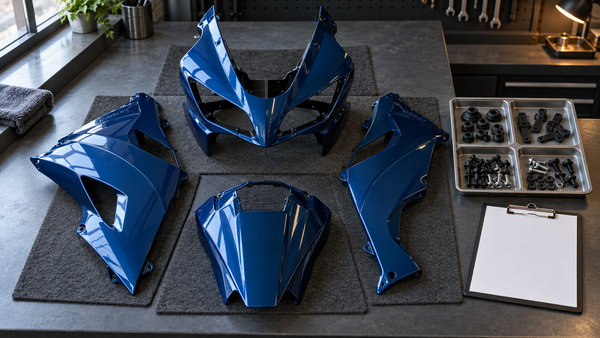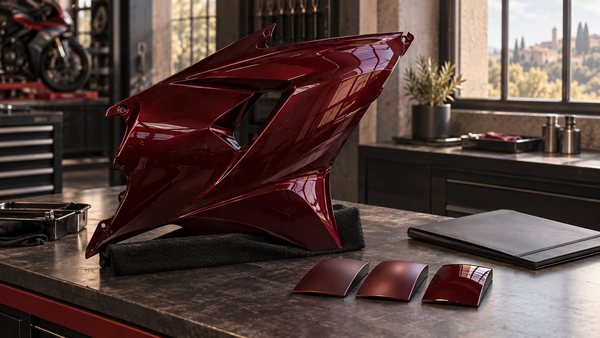
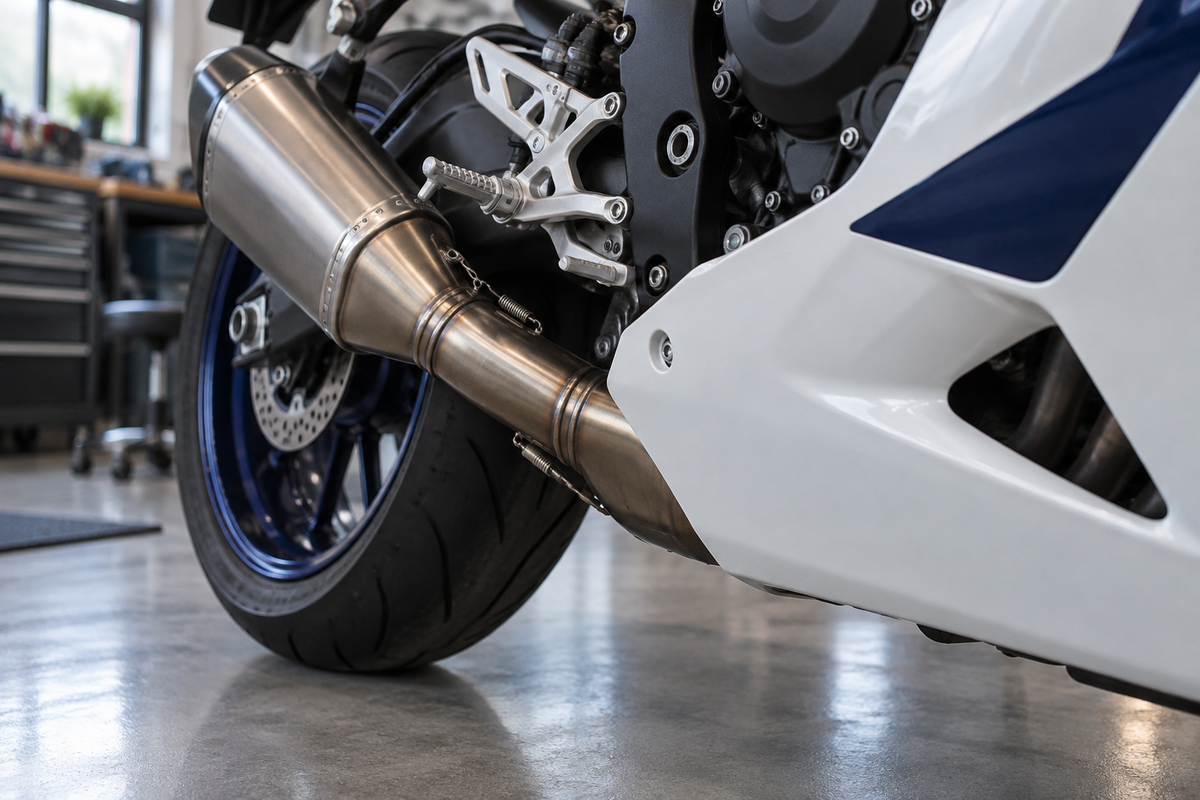
An aftermarket exhaust is relevant information when ordering replacement BMW S1000RR bodywork, especially lower panels. It does not automatically mean a kit will or will not fit. This guide uses a NiceFairings listing marketed for 2019–2022 S1000RR bodywork as the starting point for an enquiry. The listing is not compatibility evidence for every modified motorcycle or named exhaust. Record the exact bike, exhaust product and current configuration, then clarify the application with the suppliers and a qualified installer.
Images are AI-generated editorial illustrations, not photographs of the supplied product or evidence of model-year fitment, dimensions or safe installation. Use actual product documentation and motorcycle records for technical decisions.
Key Takeaways
A new exhaust can change which fairings fit your BMW S1000RR.
Have the actual lower-bodywork and exhaust relationship assessed; a photograph is not a clearance specification.
Confirm the exact model year, variant and product application rather than relying on a broad generation label.
Take pictures of your exhaust setup from different angles for the seller.
Keep the heat shield in place; never take it off just to make parts fit.
Confirm the specified supports and fasteners; do not assume a street kit uses race-style hardware.
Talk to a skilled installer and the seller to check that it fits.
Write down your motorcycle details and exhaust setup before you place your order.
Do Exhaust Changes Affect S1000RR Exhaust Fairings?
The Short Answer for 2019-2022 Owners
Yes. If you change your exhaust brand or model, your replacement fairings may not sit the same way. The shape of the exhaust system changes the space under the engine and along the lower sides. That space matters for the belly pan and the lower side panels. You cannot assume a fairing kit that fits a stock bike will fit a modified one without checking.
This listing does not establish compatibility with any named exhaust. It shows a custom-painted fairing kit marketed for the BMW S1000RR 2019-2022. It does not prove that your specific motorcycle with your specific exhaust will accept these replacement panels. A qualified technician must assess any exhaust brand or model change. That assessment should involve both component manufacturers. This step protects your investment and your safety.
Why Belly Pan Clearance Drives the Decision
The lower bodywork and exhaust can occupy neighboring space, so the exact configuration matters. This guide has not verified a universal catalytic-converter relocation, exhaust-exit change or clearance dimension between S1000RR model years. Use the actual motorcycle and exhaust documentation rather than an invented generational comparison.
Different exhaust products may affect different portions of the system. A silencer change and a full-system change should not be treated as identical. Record the exact installed product and any relevant associated changes. The suppliers and qualified installer should resolve required clearances and thermal provisions; this article supplies no universal gap or mounting-point rule.
What This Means Before You Order
You need a clear picture of your current setup before you order anything. Start with the exhaust. Note the brand, the model, and how it routes under the bike. Then look at the lower fairings on your motorcycle. Do they show signs of contact or heat exposure? Do they use the original mounting points? Has anyone modified them?
Next, think about the full scope of the kit. A complete set of fairings includes many pieces. The belly pan, the side panels, and the heat shield mounting points all interact with the exhaust area. You must confirm that the kit covers every panel you need. You must also confirm that the intended heat protection stays in place. Do not remove heat shielding to make a panel fit. Do not cut or trim panels yourself. Do not reposition hot exhaust parts on your own.
The safest path is a conversation. Talk to the seller about your exact motorcycle and exhaust configuration. Ask a qualified installer to review the fitment. Both parties should understand the goal. You want replacement fairings that work with your aftermarket exhaust, not against it. This listing is a starting point for that conversation. It is not a compatibility guarantee. It is not proof that every modified motorcycle fits. Treat it as a listing application, and verify everything on the actual order.
Prepare accessible photographs of the cool, securely parked motorcycle and any existing documentation of the exhaust. Do not go beneath an inadequately supported motorcycle or remove panels solely for this guide. Record the exact exhaust reference and known changes. Share sensitive identifiers privately only when needed, and ask which further information the supplier or installer requires.
Compare the actual product application and conditions. Some aftermarket products aim to retain the original configuration; others are intended for a defined conversion. Neither genuine nor aftermarket labels establish compatibility with an unrelated modified exhaust. Keep the supplier’s documented application separate from a visual impression or a general mold description.

Confirm Your S1000RR Generation First
2019-2022 vs. Later Model Years
The linked listing states a 2019–2022 application. Do not expand that claim to later years or assume a general generation label identifies every component. If the motorcycle or desired product differs from the listed scope, ask about an appropriate application rather than ordering on the basis of similar paint or styling.
Identify the motorcycle through reliable records and BMW or dealer information. Styling photographs are supporting context, not definitive model-year evidence, particularly when previous owners changed panels. This guide does not provide a headlight-shape test or an unverified comparison of intake and windscreen geometry.
Record the following areas as part of the actual configuration, without assuming specific cross-year differences:
Outer panels and any aerodynamic accessories already fitted, with their product references where known.
Relevant tank-area trim and neighboring bodywork if the quoted kit relies on them.
Rear bodywork, lamps and supports where they are included or retained in the proposed work.
These observations help describe the motorcycle. They do not certify its identity or prove which components interchange across years.
Where to Find Model Year and VIN Details
Use reliable motorcycle records and BMW or dealer clarification to identify the exact model year and variant. Registration year and manufacturing date can differ from model year. Record the relevant information without assuming a label or a casual VIN interpretation resolves every ordering question.
A previous owner may have changed bodywork or other components. Reliable identity records do not describe every modification. Provide the actual configuration as well as model information, and share a full VIN privately with an appropriate trusted party only where needed.
Why Generation Mismatch Causes Wrong-Fit Orders
Use the table as an enquiry worksheet, not a list of verified 2023 design changes. No component-by-component cross-generation compatibility survey was performed for this article.
Mounting Point / Component |
Information to verify for the actual order |
|---|---|
Subframe |
Required original or replacement rear supports, if relevant to the selected kit |
Side panel mounting points |
Exact panel application and attachment requirements |
Front fairing bracket |
Required front supports and their condition |
Winglet mounting points |
Whether any aerodynamic accessories are included, retained or outside the listing scope |
Intake ducts |
Required associated guides or trim, without inferring their function from appearance |
Tank cover / airbox area |
Named cosmetic pieces included or retained in the proposed assembly |
Resolve the exact product application before comparing exhaust-related requirements. A different year does not prove that every component is incompatible, and a familiar shape does not prove a whole kit will interchange. Ask the relevant supplier or dealer about specific references and conditions.

Replacement Lower Fairings and Exhaust Routing
The lower part of your BMW S1000RR bodywork is closest to the exhaust system. Three areas matter most when you use an aftermarket exhaust: the belly pan, the heat shield mounts, and the side panel openings. Each area follows the exhaust path in its own way. A change to any part of that path can change how the new panels fit on your motorcycle.
Belly Pan Clearance
Identify which parts of the exhaust have changed and the exact product installed. A slip-on and a full system need not change the same area. This article does not recommend emissions-equipment changes or describe how to alter routing. The actual product instructions and qualified assessment determine the relevant bodywork relationship.
Do not assume the linked kit clears every modified exhaust. Equally, a visible gap is not by itself a fault or a clearance approval. Have the actual relationship assessed against the relevant requirements before deciding whether a panel is suitable. Do not force or reshape it to conceal an unresolved issue.
Provide photographs that can be taken safely with the motorcycle cool and securely parked. Existing installation records can be useful for hidden portions of the system. Leave underside access or removal to appropriate service arrangements. Images support communication but cannot establish dynamic or thermal clearance.
Heat Shield Mounting Points
Thermal protection depends on the actual configuration and required components. No generic sheet, shield or reflective material automatically makes a panel safe near an exhaust. Ask the component suppliers and installer which provisions apply and how their condition is assessed.
Aftermarket exhausts often change the shape and position of the pipe near the fairing. The original heat shield mounts may no longer line up. The shield itself may not fit the new pipe shape. You must keep the intended heat protection for your build. Do not remove shielding to force a panel into place. Do not use a homemade barrier instead of the real part.
Ask which thermal-related features or materials, if any, are part of the exact package. A cosmetic kit does not necessarily include every component required elsewhere on the motorcycle. Keep supplied inventory separate from required retained parts and any professional assessment of the modified configuration.
Side Panel Cutouts
Side panels frame the exhaust as it leaves the lower bodywork. The opening shape follows the pipe route. An aftermarket exhaust with a different exit angle or a larger size may not line up with the stock opening.
Look at your current side panels. Do they show signs of contact with the pipe? Are the openings original, or has someone changed them? Take photos of these areas before you order. Include close-up shots of the opening edges and the pipe position next to the panel.
The replacement kit must match your exhaust path. If the opening is in the wrong place, the panel will not fit well. You may see gaps, contact points, or an unfinished look. The seller needs your photos to check if the kit works for your setup. A qualified installer can compare the new panels to your existing setup and find problems before installation begins.
Aftermarket options vary in how they shape the lower sections. One kit may differ from another in opening placement and panel depth. OEM bodywork follows factory molds and factory exhaust paths. Aftermarket fairings use their own molds. That difference matters most around the exhaust exit. Your job is to write down your setup and check the details with the seller.
Unresolved exhaust contact or thermal concerns require qualified assessment before use. Correct application and installation matter, but this article cannot promise a lifespan or determine safety from a visible gap. Record the relevant product information and seek clarification rather than assuming a photograph verifies adequate protection.
BMW S1000RR Fairings: OEM vs. Aftermarket Behavior
How OEM Bodywork Sits Around Aftermarket Exhausts
Genuine bodywork has a defined application, but that does not certify compatibility with every aftermarket exhaust. A particular exhaust may retain relevant original relationships or may require different conditions. Check the exact exhaust product and motorcycle configuration instead of assuming that all changes move the collector or invalidate the original panels.
Some combinations may be documented as compatible and others may not. No list of approved exhaust combinations is supplied here. Obtain relevant product information and qualified assessment for the actual motorcycle. Do not infer that every exhaust change alters lower-panel space or that a visually acceptable gap proves safe clearance.
How Aftermarket Kits Differ in Lower Sections
Aftermarket lower-panel geometry and intended application vary by product. Some aim to replace a factory-style component; others target a defined configuration. A generic statement about different molds cannot establish more room or a particular exhaust fit. Ask the supplier for information relevant to the exact item.
Confirm the actual attachment and surrounding-component requirements rather than assuming a different fastening system is supplied. Paint and graphics are separate order choices; they do not certify application. An attractive finish should not distract from unresolved support, exhaust or thermal questions.
Read the exact listing and clarify any missing details in writing. Identify the exhaust product, known modifications and requested bodywork. Ask which original parts are retained and which pieces are supplied separately. A description of a fairing kit is not an exhaustive compatibility test for all modified motorcycles.
Reading Seller Fitment Notes Correctly
Seller fitment notes describe the intended application. They state the generation and model years for the kit. For 2019-2022 models, these notes are especially important. They may talk about stock exhaust routing. They rarely list every non-stock exhaust that works. Treat these notes as a starting point for your compatibility check.
Follow any stated application conditions and ask about unclear exclusions. Provide exact product references and relevant configuration details. A supplier may need additional information or may be unable to confirm an undocumented combination. Treat uncertainty as a reason for further assessment, not as approval.
Installation becomes hard when fitment is wrong. Durability suffers when a panel touches a hot pipe. Aftermarket options vary. Your bike needs the right fit. Take time to check everything before you buy. The bmw s1000rr fairings you choose must match your specific setup for proper durability. Do not skip this verification step.

Pre-Order Checks for Fairings and Exhaust
Making a checklist before you order keeps your project on track. Write down your exact s1000rr details and pipe routing first. Documentation stops costly mistakes. Talk to the seller and a skilled installer before you buy.
Photograph the Existing Exhaust Setup
Photos give the seller real info about your s1000rr. A written note cannot show the exact routing. Take pictures from different angles. Show the belly pan area where the pipe goes under the engine. Include shots of the side panels where the exhaust leaves the body. Show the heat shield mounting points and any changes on the bike.
Take clear overview and accessible detail photographs in suitable light. Ask which views the supplier needs rather than relying on one camera height or an arbitrary scale object. The images help explain the current arrangement; they cannot verify safe operating clearance or replace inspection of the actual motorcycle.
Confirm Heat Protection and Panel Scope
Heat protection matters for how long any new panels last. The pipe gets very hot during normal riding. The plastic needs proper shielding to avoid warping or color changes over time.
Check your current heat shield condition before you order. Does the shield attach to the belly pan or to the pipe itself? Note how it sits near the bodywork. Share this info with the seller.
Confirm the exact package contents and any required retained parts. “Complete kit” does not universally include every lower panel or thermal feature. The installer and relevant component suppliers should address the actual modified configuration. Do not assume a supplied material, mounting tab or picture proves the required protection is present.
Verify Hardware and Fasteners
Hardware differences between stock and aftermarket parts affect how fairings mount on your bike. Some kits use different fasteners instead of original stock screws. Other aftermarket options include new brackets or mounting tabs.
Find out what hardware your bike uses now. Note the fastener types on each panel section. The lower panels and belly pan may use different hardware than the upper parts. Share this info with the seller.
Ask the seller what hardware the kit includes. Make sure fasteners match your bike's mounting points. Check if you need to reuse any stock parts. The goal is to avoid surprises when the package arrives. A skilled installer should check the hardware before starting work. This step prevents delays.
Keep the seller’s application information and installer’s assessment together. This can clarify the order, but it does not guarantee that all questions can be answered before physical inspection. Ask which points are confirmed and which still require assessment; do not present unresolved items as verified fitment.

Street vs. Track Fairings: Which Order Fits You?
The way you ride decides which fairings you need. A street rider looks for different things in bodywork than a track rider does. An aftermarket exhaust adds one more thing to think about. The pipe changes clearance, heat exposure, and how the lower panels sit. You have to match your fairing order to how you really use the bike.
Street Riding Priorities
For road use, keep the required equipment and an appropriately assessed motorcycle configuration. A custom-painted bodywork listing describes an appearance and application option, not a guarantee of durability or road approval for a modified exhaust. Confirm the actual product’s conditions and required surrounding components.
Road requirements depend on the exact exhaust, motorcycle, market and installation. A brand name or “street” marketing label is not a universal noise or emissions approval. Consult the relevant product approval documentation and applicable authority or qualified professional. This guide does not approve any named exhaust system.
A fairing order should not be used to infer approval of a separate exhaust or lighting modification.
For road use, retain an appropriately assessed configuration and all required equipment and thermal provisions. Confirm the actual panel scope instead of assuming a full lower-body kit is always required or that a cosmetic listing establishes durability.
Track Riding Priorities
Track bodywork has product- and event-specific requirements. Do not assume that every race product is lighter, improves airflow or permits removal of required thermal protection. Confirm the intended configuration and relevant event requirements separately from the street-bodywork listing.
The linked product is used here only as a bodywork listing reference. No racing approval or compatibility with a separate carbon intake kit is established by this article. Claims from an unrelated race component must not be transferred to this kit.
An aftermarket exhaust on a track bike changes your fairing needs too. The pipe routing affects your belly pan and lower sections. You still need proper fitment. You still need to confirm that the panels clear your exhaust. Track use does not remove the need for careful checking.
Documenting Your Setup Before Buying
Before you order, write down your exact motorcycle details. Note your s1000rr model year and VIN. Record your exhaust brand and model. Take photos of your current bodywork and pipe routing.
Confirm the actual panels, selected finish, production estimate, delivery scope and current price. This article does not establish a discount or a compatibility guarantee for a named exhaust. Read the terms that apply to the exact order.
Discuss the exact proposed combination with the relevant suppliers and a qualified installer. Record what they can confirm and what remains conditional on inspection. Documentation supports a clearer order; it does not guarantee a modified motorcycle will accept a particular kit.
Always check the belly pan and lower bodywork clearance with your own exhaust before you click "buy." Write down your exact motorcycle and exhaust setup. Take photos of the exhaust you have now. Keep the heat protection that is meant to be there. Make sure you know all the panels included.
Any change to your exhaust brand or model needs a qualified technician to check it. Both part makers should be part of this review. This listing does not prove it works with any named exhaust.
Your order checklist:
Confirm the generation for your s1000rr.
Confirm how the exhaust is routed.
Confirm the hardware.
Confirm panels, paint, production, shipping, and price on the real order.
These steps protect your s1000rr replacement fairings investment. Aftermarket bodywork works best when you check fitment carefully. OEM guidance still applies. A custom kit serves you best when installation follows verified specs. Focus on durability, not speed.
FAQ
Does an aftermarket exhaust change which fairings I can order?
Yes. A different exhaust brand or model can move the pipe route under the engine. That change affects how the belly pan and lower panels fit. A qualified technician must check your exact setup with both part makers. This listing does not prove it works with any named exhaust.
How do I confirm my S1000RR generation before ordering?
Use reliable motorcycle records and BMW or dealer assistance for the exact model-year and variant information. Record known modifications separately. Do not rely on a styling cue, registration date or broad generation label as the only basis for ordering.
What photos should I take of my exhaust setup?
Provide safe accessible overview and lower-area photographs of the cool, securely parked motorcycle, plus existing exhaust installation records. Leave hidden access to appropriate service arrangements. The photos support the enquiry but do not establish operating clearance.
Can I keep my stock heat protection with a new fairing kit?
You must keep the heat protection that belongs on your build. Do not take off shielding to force a panel into place. Ask the seller if the kit has heat shield mounting tabs. A qualified installer should make sure heat stays away from the plastic after installation.
What hardware differences should I check before buying?
Some kits use different fasteners instead of stock screws. Others come with new brackets or mounting tabs. Find out what hardware your bike uses now. Ask the seller what the kit includes. Make sure fasteners match your motorcycle's mounting points. This step stops delays when the package arrives.
How does OEM bodywork behave around an aftermarket exhaust?
OEM panels follow factory molds and the stock exhaust path. An aftermarket exhaust may move the pipe or change where the collector sits. OEM fairings cannot change to fit these new parts. The gap between pipe and plastic may get smaller. Check clearance before you order any replacement panels.
Why does generation mismatch cause wrong-fit orders?
A kit must be selected by its actual documented application and surrounding-component requirements. This article does not establish specific changes to every 2023-on bracket, screw or subframe. Verify relevant component references rather than relying on an unsupported all-parts generation rule.
What should I confirm on the actual order?
Confirm the supplied panels and finish, application conditions, required retained parts, current price and delivery terms. Discuss the exact modified configuration with the suppliers and installer; this article does not add a fitment guarantee.