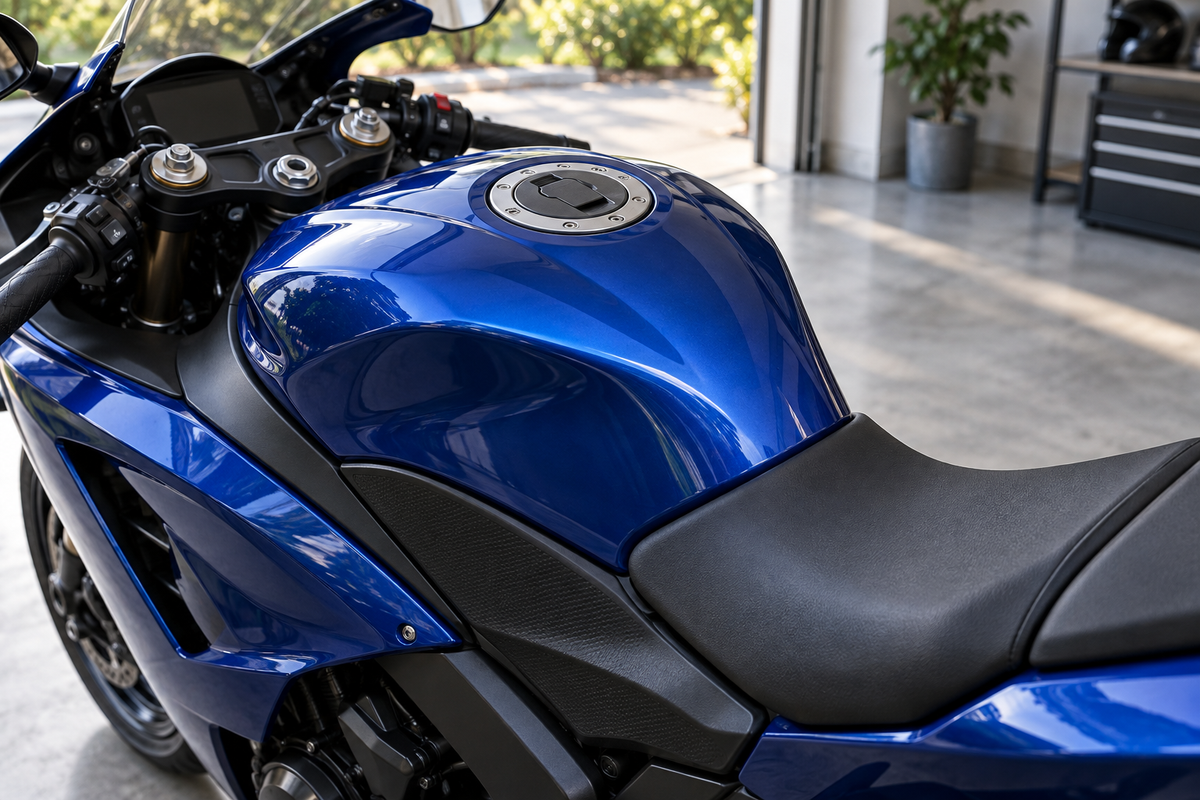
A cosmetic tank-area cover is not the fuel-holding tank. That distinction matters when comparing fairing kits: the exact cover or trim may be included, optional or absent, and a bodywork description is not a promise of fuel-system parts. Motorcycle layouts differ, so identify the named component before ordering. After a fall, the appearance of an outer cover cannot establish the condition of the tank or other hidden parts.
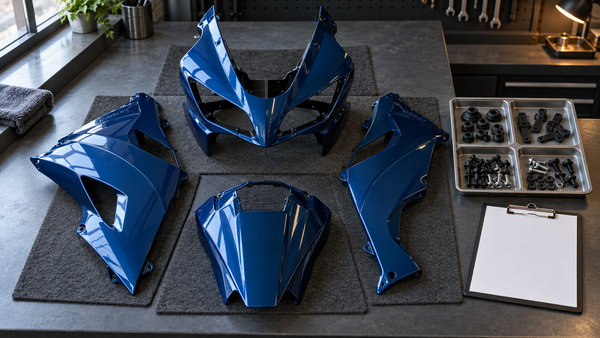
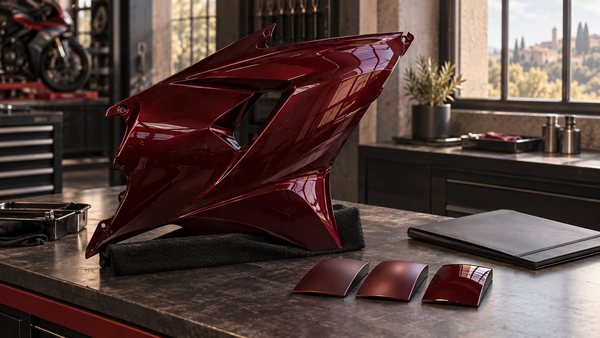
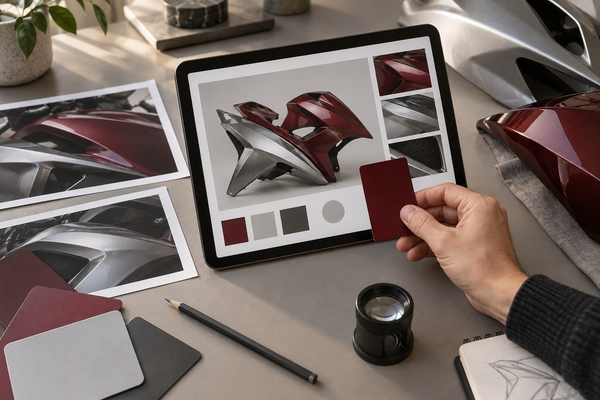
Images are AI-generated editorial illustrations, not photographs of the supplied product or evidence of model-year fitment, dimensions or safe installation. Use actual product documentation and motorcycle records for technical decisions.
Key Takeaways
A motorcycle tank cover is a cosmetic shell over the real fuel tank.
Cover inclusion depends on the itemized kit; do not assume fuel-system components are supplied.
Seams and fasteners are observations to compare with a model-specific parts diagram, not conclusive identification.
A cracked cover after a fall does not prove the fuel tank is safe.
Read the product description for 'tank cover included' before you buy.
Check your exact model, year, and market with the seller for proper fitment.
Get professional help if you suspect fuel tank damage.
Motorcycle Tank Cover vs Fuel Tank: Key Differences
Function and Location
The fuel tank stores gasoline and is part of the fuel system
The fuel tank is a fuel-holding component of the motorcycle’s fuel system. Its location, construction and relationship to surrounding bodywork vary. A panel that occupies the visually familiar “tank area” may cover a different component or only part of the tank. Use documentation for the exact motorcycle instead of assuming the internal layout from styling.
The tank cover is a plastic, fiberglass, or carbon fiber shell that wraps around the tank
A cosmetic tank cover or tank-area shroud can change the visible appearance without replacing the fuel-holding component. Some motorcycles have a full outer shell, others have partial trim, and some expose the finished tank itself. Broad labels such as CBR, R6 or GSX-R are not enough to identify that arrangement across every year. Check the actual component name and application.
Adhesive tank pads are decorative/protective stickers, not covers
Adhesive tank pads and grip pads are another product category. Their intended protection or grip role differs from a replacement shell, and their appearance and coverage vary. They neither replace a fuel-holding tank nor repair damaged bodywork. Confirm the product category before comparing its price with a molded cover.
Materials and Visual Cues
Fuel tanks are metal (steel, aluminum) or heavy-duty plastic
Fuel tanks can use different materials and manufacturing methods. Material appearance alone does not identify the component or establish its condition. A painted metal-looking surface may be a finish, and plastic can be used in more than one type of component. Confirm the layout through the correct documentation rather than a touch or visual test.
Tank covers are painted, gloss or matte, often with graphics
Cosmetic covers may be offered in different substrates and finishes. Identify the actual material specification separately from gloss, matte, graphics or a carbon-look finish. A decorative appearance is not proof of construction. The finish description also does not tell you whether the cover is supplied as part of a larger kit.
Use the model-specific parts diagram to interpret filler openings and surrounding trim
Every motorcycle model has a unique layout. The filler cap opening and surrounding trim differ between one-piece tanks and separate covers. Use the parts diagram for your exact model to see which parts are separate. Do not rely on filler cap look alone to tell the layout.
Identifying Your Parts Without Disassembly
Check for visible seams, plastic clips, or fasteners on the top/sides of the tank area
Record visible seams and attachment details without disassembly. They may help a supplier interpret photographs, but they do not prove that a full removable shell exists. A seam could belong to adjacent trim, and absence of a visible seam proves little. Use the exact model’s component diagram to identify what you are seeing.
Compare to official owner manual diagrams or parts fiche online
Use several sources together to identify the component. The table is an enquiry aid, not a removal procedure or a universal description of one motorcycle family.
Method |
How It Works |
|---|---|
Model-specific parts diagram |
Identify the named tank, cover and neighboring trim in the correct year and market reference. |
Present-motorcycle photographs |
Show the overall tank area and visible boundaries; disclose changes from the factory configuration. |
Exact product listing |
Compare the stated application and supplied part name with the component you need. |
Dealer or supplier clarification |
Ask which item is being supplied and how it relates to the existing assembly; do not infer an attachment method. |
Keep uncertain observations separate from confirmed information. A photograph can help ask a precise question, but it cannot establish fuel-system integrity or hidden attachment details. If the motorcycle has been modified, explain that in the enquiry. Our photo documentation guide helps organize the supporting views.

What Replacement Fairing Kits Actually Include
Typical Kit Inventory
Front cowl (nose), side fairings, lower fairings, front fender, seat cowl, and bolt kit
A bodywork kit may include various named outer panels, but there is no universal full-set inventory. The nose, side sections, lower pieces, fender or rear bodywork shown in a complete-bike photograph are not automatically all supplied. Ask which exact pieces, finish options, holes and separate mounting components are included in the quoted item.
Some kits include inner panels, windscreen, and mounting hardware
Some motorcycle fairing kits add extra items beyond the main panels. You may find inner panels, a windscreen, or extra mounting hardware inside the box. The table below shows common parts and what each one does.
Component |
Description |
|---|---|
Body panels |
Main painted panels made for the specific motorcycle model |
Windscreen |
May be included; check the tint and fit |
Bolt kit |
Fasteners for mounting |
Heat shield |
Any supplied thermal material needs its own documented application; inclusion is not approval for every configuration. |
Installation instructions |
Guide for putting it together |
A motorcycle fairing kit may come with a windscreen, a bolt or fastener kit, heat-shield material, and instructions for installing it. These items depend on the exact listing you buy. Do not assume they come as standard. A complete fairing kit is not the same for every bike. You must check each piece against what the seller says.
Tank Cover Inclusion Depends on the Exact Kit
Many brands list the tank cover as a separate add-on or sell it individually
A cosmetic tank-area piece may be included, separately available or not offered for the selected kit. Do not infer a market-wide rule from one listing. A complete-bike photograph can show retained or optional parts as well as supplied panels. Match the named inventory to the exact item you intend to buy.
Always read the product description for phrases like “tank cover included” or “tank cover not included”
Look for clear phrases in the product description. Words like “tank cover included” or “tank cover not included” tell you what to expect. If the listing does not mention the tank cover, ask the supplier directly. Do not guess based on photos alone. This step saves you from ordering a part you already have or missing a part you need.
Scope Beyond Cosmetic Bodywork
The actual fuel tank, fuel pump, fuel lines, or any internal fuel system parts
A cosmetic bodywork kit should not be treated as a fuel-system order. Confirm the written contents rather than assuming it includes a tank, pump, lines or associated fuel components. If damage is suspected, have a qualified professional establish what work is needed before placing a separate parts order. A new outer shell does not resolve a fuel-system problem.
Clarify Paint, Fitment and Warranty Terms
Assess promises about paint and fit from the actual product documentation. General words such as “OEM-style” or “full kit” do not define a warranty. Use the questions below to clarify the quote without treating another seller’s promotional language as an established product specification.
Topic |
What to request |
What not to infer |
|---|---|---|
Finish |
Exact supplied finish, graphic scope and any stated matching limitations |
A screen image guarantees a match to aged or repainted neighboring parts |
Application |
Named years, variants, surrounding-component requirements and exclusions |
An OEM-style label guarantees every modified motorcycle will accept the kit |
Terms |
Written inspection, warranty and return conditions for the chosen item |
All suppliers or custom orders have the same guarantees |
Compare documented scope rather than unverified claims about competing brands. Clarify whether the work involves a replacement cover, a finish service or some combination. Decorative film and paint can change appearance, but neither substitutes for a suitable underlying component. Keep fuel-system assessment outside the cosmetic-parts quotation.
When you shop for replacement fairings, compare the list of parts against your bike's current setup. Take photos of your motorcycle before ordering. This helps you confirm which panels you actually need. A replacement panel that does not fit your model wastes time and money. Always confirm the exact model, year, and market before you buy.

How to Tell If You Need a Tank Cover or a New Fuel Tank
Cosmetic Damage Does Not Establish Tank Integrity
Scratches, cracks, or fading on the plastic or painted shell
A visible crack, scratch or faded finish may identify a concern with the outer surface, but appearance alone does not establish which underlying components are affected. Do not assume the damage is cosmetic only. After an impact, obtain appropriate professional assessment before treating a new cover as the complete remedy.
Broken mounting tabs or the cover no longer fits snugly
A loose or misaligned cover may involve the cover, its attachments, adjacent parts or existing damage. It does not diagnose the condition of the tank. Record what changed and have the actual assembly assessed; do not force the new panel into place to conceal an unexplained fit issue.
Fuel System Damage – Tank May Be Affected
Dents, rust, or punctures in the metal tank under the cover
Visible damage near a fuel-holding component warrants qualified assessment. This article does not establish a threshold at which corrosion, dents or cracks are repairable, and it provides no internal inspection, cleaning, welding or fabrication procedure. Leave decisions about tank integrity and any fuel-system work to a qualified professional.
Fuel odor, puddles under the bike, or damage near the filler cap
A fuel odor, puddles under the bike, or damage near the filler cap are serious warning signs. If you suspect any leak, do not attempt to ride or repair yourself. Stop work and get qualified help right away. Your safety comes first.
If you suspect any leak, do not attempt to ride or repair yourself
Do not start, ride or attempt fuel-system work on a motorcycle when a fuel leak is suspected. Keep ignition sources away and arrange qualified assistance. A cosmetic parts enquiry can wait until the safety concern is addressed; do not assume structural integrity or undertake exploratory disassembly based on this article.
Checking for Hidden Damage
Have a qualified technician assess hidden damage; no fuel-system disassembly instructions
A qualified technician should assess any hidden damage. Do not try to take apart the fuel system yourself. This blog does not provide fuel-system disassembly instructions. Professional help keeps you safe and gives you a clear answer.
Record existing observations for the technician without investigating the fuel system
Tell the technician what happened and what you already observed, including any odor, visible fluid or change after an impact. Do not remove covers or use equipment near a suspected leak merely to obtain blog-style photographs. The professional assessment should determine what needs attention. A cosmetic cover cannot certify or restore the integrity of a fuel-holding component.

What to Check Before Buying a Motorcycle Tank Cover Kit
Compatibility with Your Exact Model
Even the same bike series (e.g., CBR600RR) may have different sub-models or years
A CBR600RR from one model year may use a different tank cover shape than another year in the same series. Manufacturers update bodywork across production runs. A cover that fits a 2007 model may not fit a 2013 model. You must confirm the exact year, sub-model, and trim level before you order. Check the listing for a year range. If the seller lists a broad range, ask for written confirmation that the part fits your specific motorcycle.
Confirm the Market and Any Relevant Application Distinctions
Include the sales market and variant in the enquiry when available. Some component applications differ, but do not assume that every European and US tank cover has a different shape or attachment. Ask the supplier to identify relevant distinctions for the actual listing. Photographs can support that enquiry without proving compatibility alone.
Material and Finish Options
ABS plastic (common), fiberglass, or carbon fiber – each affects durability and weight
Compare the documented construction of the actual products, not a universal ranking of ABS, fiberglass and carbon composite. Weight, durability and repair considerations depend on design, manufacture and use as well as material. A carbon-look finish is not proof of carbon-fiber construction. Ask which specification applies to the exact item.
Pre-painted, primer-only, or unpainted – know what you are getting
Clarify what “painted,” “primer-only” or “unpainted” means for the supplied item. A painted part can still require appropriate fit assessment and installation. Preparation for a further finish should follow the actual substrate and coating requirements, not an assumed universal sequence. Discuss matching to existing panels with the supplier or painter.
Does the Kit Require Your Original Fuel Tank?
Confirm the required original components and have suspected damage assessed separately
Ask which original components the proposed cover is designed to work with and which attachment parts are retained or separately required. Do not assume clips, adhesive or direct tank attachment without documentation. If the tank or surrounding assembly may be damaged, obtain professional assessment before deciding which parts to replace.
Factor in separate cost for a replacement fuel tank if needed
A replacement fuel tank is a separate purchase from any fairing kit. The cost adds up fast. Factor this into your budget before you order. The motorcycle wrap cost for cosmetic work is separate from fuel tank replacement. A fairing wrap cost covers decorative film, not structural parts. Plan for both if your tank needs replacement.

Practical Ordering Checklist for Riders
Review Kit Inventory and Photos
Compare product photos part by part with your current setup
Compare the quoted inventory with the actual work identified for your motorcycle. Good styling photographs do not establish hidden interfaces or condition. Record the current configuration and ask which additional views are useful. If existing supports may be damaged, leave access and assessment to an appropriately qualified installer.
Confirm the exact model and year range before ordering
Check if mounting holes are pre-drilled
Have uncertain support or attachment condition assessed by a qualified installer
Agree a product-specific pre-fit inspection within the supplier’s terms
Do not force, drill or modify a part to resolve unexplained misalignment
Contact the seller if your bike has mixed panels or prior crash damage
Look for openings (fuel cap, ignition) and labels in the photos
Photograph visible boundaries and openings that help identify the cosmetic piece, without disassembling the fuel system. Interpret any molded marks against reliable references; they may not be orderable part numbers. Our kit and photo guides explain an enquiry process, but their illustrative images are not technical evidence for your exact motorcycle.
Verify Tank Cover Shape and Fitment
Ask the supplier for model-specific confirmation before ordering
Send the exact model, year, variant and market to the supplier where known. Identify modifications and the selected listing. Ask for the applicable product conditions in writing. This supports a clear order; it is not a substitute for inspecting an actual damaged motorcycle or evaluating its fuel system.
For sportbikes, tank covers often have distinct contours for different years
Confirm the application for the exact component rather than assuming every year in a model family uses the same shell. Ask the supplier to explain a broad year range if you cannot reconcile it with your records. No specific contour or cross-year compatibility measurement is supplied by this general guide.
Make a Final Order List
List each needed part: tank cover, side fairings, front cowl, etc.
Write down every part you need before you order. Your list may include a tank cover, side fairings, a front cowl, a lower fairing, a front fender, and a seat cowl. Compare this list against the kit inventory. Check whether the seller includes a bolt kit or heat shield. Some fairings arrive with these extras. Others do not.
Note whether the tank cover is included, optional, or needed separately
Mark the cosmetic cover as included, optional, separately required or unresolved in your order list. Keep any film or paint service as its own scope. Separately record parts or work identified by the qualified technician if there is a fuel-system concern. Do not turn a visible dent or a cracked outer shell into an automatic replacement prescription.
A cover for looks is not the same as a new fuel tank. Check what is really in the kit instead of guessing what a fairing kit comes with. Always read the product description closely. Look for words like "tank cover included." Use inventory photos and confirm the fit with the seller before you buy. If you think the fuel tank is damaged, get professional help. For more details, visit NiceFairings kit-contents and photo guides. These resources help you check motorcycle parts and avoid costly mistakes. Remember that motorcycle fairings and tank covers are different for each model and seller. Stay safe and informed.
FAQ
What is a motorcycle tank cover?
In this article, a tank cover means a cosmetic outer shell or tank-area bodywork component, not the fuel-holding tank. Some layouts have only partial surrounding trim or an exposed finished tank. Confirm the actual component for your model instead of relying on a broad motorcycle category.
Does a fairing kit include the tank cover?
Kit contents vary by brand and listing. Some sellers include the tank cover. Others sell it as a separate add-on. Read the product description for clear phrases like "tank cover included" or "tank cover not included." Ask the supplier if the listing is unclear.
How can I tell if my bike has a separate tank cover?
Use the correct model-year parts diagram and supplier or dealer clarification, supported by photographs of visible boundaries. Seams, fasteners and material appearance are not conclusive on their own. Do not disassemble the fuel system to answer an ordering question.
A cracked cover after a fall — is my fuel tank damaged?
A damaged outer cover does not establish whether the fuel tank or surrounding parts are sound. Arrange qualified assessment after an impact when damage is uncertain. If a leak is suspected, do not start or ride the motorcycle or attempt a repair; obtain qualified help.
Can I install a new tank cover myself?
Many covers attach with clips, Velcro, or fasteners. Installation difficulty depends on your motorcycle model and the specific part. Check the product description and any instructions included. If you are unsure, ask a qualified technician for help.
What should I check before buying a motorcycle tank cover?
Confirm your exact model, year, and market with the supplier. Ask for actual photos of the part, not stock images. Check the material and finish options. Note whether the cover is included in a fairing kit or sold separately.
Do I need a new fuel tank if my cover is damaged?
Not necessarily, but the decision needs assessment of the actual components. A damaged cover may need attention separately from the tank, and visible appearance cannot certify hidden integrity. Do not assume either that both must be replaced or that a cover alone resolves the problem.
Where can I find reliable fitment information?
Use the correct manufacturer parts references and a supplier who can identify the exact quoted component. Contact NiceFairings about a specific order, and use our kit-contents checklist to record inclusions. Generic guide illustrations are not fitment photographs.