The panel price is only one part of the OEM-versus-aftermarket decision after a motorcycle drop. A second set also brings installation work, storage, another possible changeover and money tied up in unused bodywork. Those costs matter even if the bike never tips over again. Before buying a complete kit to protect the originals, compare the ownership plan with the smallest suitable repair.
This guide focuses on that extra commitment: when a second set earns its place in your garage, and when it turns a limited cosmetic job into a larger purchase. It does not assign a universal price, delivery time or resale premium to either type of fairing. Use current, itemized quotes for your motorcycle.
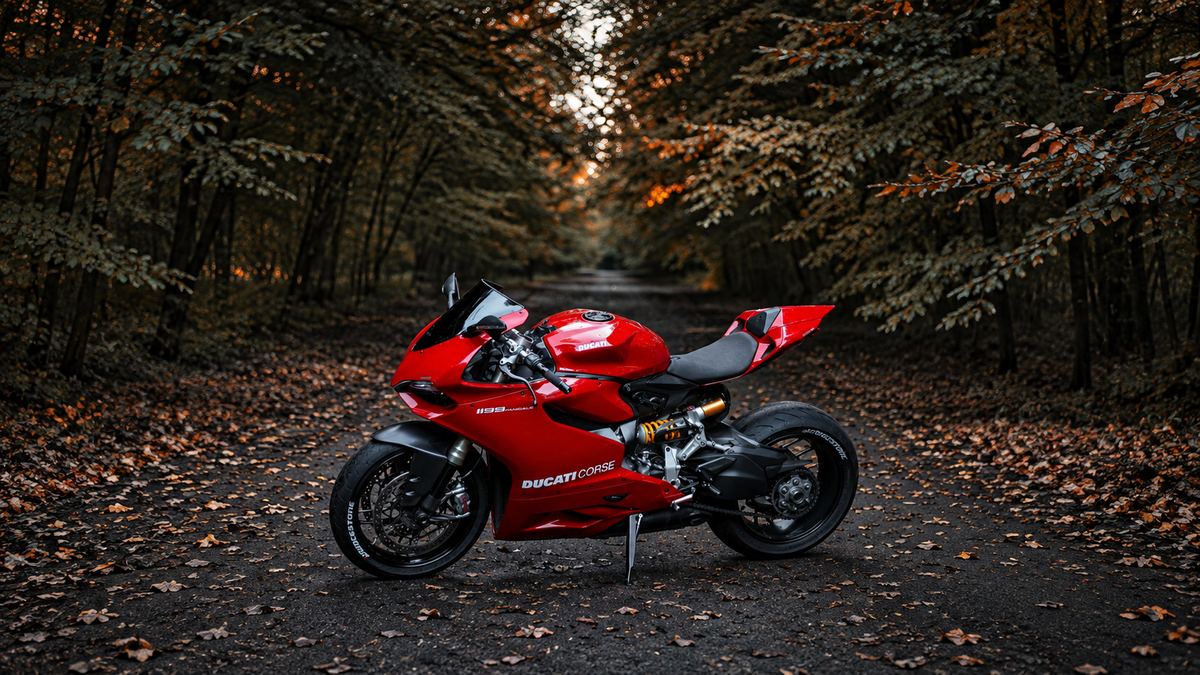
Cover image: horizontally reframed from a real red Ducati Panigale photograph by NORR FOTOGRAFIE on Unsplash. The woodland background was extended to fit the cover layout; this is not a NiceFairings product photograph, accident record or OEM-versus-aftermarket comparison test.
Start with the job you have, not the accident you imagine
After immediate safety concerns are addressed, have the motorcycle's condition assessed. Replacing visible plastic does not resolve damage to its supports or other components. Keep the required work separate from an optional appearance change. A new color may be something you want, but it should not silently become a necessary consequence of one scratched panel.
There are two different decisions here. One is how to deal with damage that already exists. The other is whether to spend money now to keep remaining original panels away from future use. Buying a second set cannot undo the first drop. If the original set is already damaged, restoring it for storage may create an additional project rather than preserve something that was still intact.
Write down your starting position: which panels remain serviceable, which need work, and which finishes you want to retain. Our panel-by-panel replacement guide covers that inventory. Bring the resulting scope into this decision instead of restarting with a blanket instruction to replace everything.
Then name the outcome. Perhaps you want the original appearance back with the least disruption. Perhaps several panels need replacing and you would welcome a new scheme. Or perhaps the bike is undamaged and you want to preserve its current bodywork while using a different design. These starting points should produce different shopping lists.
Compare three ownership plans
| Plan | What you buy now | What you continue to manage |
|---|---|---|
| Keep one set and address the affected area | Only the assessed repair or replacement scope | The appearance of old and new surfaces together |
| Replace the set you use | A confirmed kit plus necessary supporting work | One installed set; a decision about the removed pieces |
| Keep two sets | An additional compatible set and its installation | Stored panels, records and any later changeover |
The first plan deserves a fair comparison. If one panel is affected, ask about the correct OEM piece, any appropriate refinishing option and any available aftermarket single piece. Check the adjoining bodywork and finish with the supplier. A single aftermarket piece is not automatically compatible with an existing OEM or unrelated aftermarket set.
The second plan may fit a motorcycle with several affected panels or an owner who already wants a coordinated change. A kit photograph helps you see the proposed scheme, but the written contents list determines what is included. Lights, supports, fasteners and tank-related pieces need their own confirmation. Do not price the project as though every visible part of the motorcycle arrives in the box.
The third plan adds flexibility, but it is not free insurance. You own two sets and must look after both. One may remain stored for years without returning to the motorcycle. That can still suit you, particularly if retaining original pieces matters personally. Describe that benefit honestly rather than assuming the second kit must pay for itself.

The second set has an entry cost and an exit cost
The entry cost is what gets the alternative bodywork onto the motorcycle properly: the kit, agreed paint work, shipping, any applicable charges, required supporting items and installation. If you fit parts yourself, record the time and equipment the work actually requires. Your own time is not a shop invoice, but it still competes with other things you could do.
The exit cost is easier to overlook. If your plan is to reinstall the originals before selling, that later work belongs in the comparison now. Ask whether components would have to be transferred between sets and whether the installation procedure calls for any replacement items. Do not assume either that all hardware is reusable or that every fastener must be replaced on every swap.
Storage is another real commitment. You need enough room to support awkwardly shaped panels without loading their tabs or painted faces. Packing materials, labels and containers can cost money; space can be a constraint even when it has no separate bill. A set balanced above a busy workbench is not receiving the protection that justified buying another set.
Record what comes off the bike and retain relevant instructions. Bag and identify removed fittings by their actual location, and keep records of any components transferred or replaced. Photographs help you understand the stored inventory later. They do not replace the model-specific installation procedure when the time comes to refit it.

Put time on the calendar before putting it in the savings column
A lower parts price is less helpful if the project misses the date you need the bike. But neither OEM nor aftermarket automatically means faster delivery. Ask about the actual item: stocked finished part, part awaiting supply, made-to-order paint or a custom design that still needs approval. A dispatch estimate and an arrival estimate are different milestones.
Work backward from your intended ride. Allow for receiving the parts, checking the delivery, the installer's booking and resolving questions. Ask what stage a quoted lead time starts from. For a custom order, it might begin after the specification is agreed rather than after your first message. Keep the answer dated so you know which plan it supports.
Do not automatically count the whole delivery period as unusable riding time. Whether the motorcycle can be used in its present condition needs an appropriate assessment; a cosmetic description in a shopping discussion cannot settle that. Equally, do not assume a cracked or insecure panel is harmless because the engine still runs. Base the timetable on the assessed motorcycle and the required work.
Separate cash expenses from inconvenience. Alternative transport or an extra workshop visit can create a bill. Missing a favorite weekend ride may matter greatly without having a measurable cash value. Put both in your notes, but avoid inventing a daily dollar rate and presenting it as money a fairing kit will definitely save.
Test the plan without predicting a future drop
A common sales argument compares an aftermarket kit bought today with an expensive OEM repair that might happen later. The problem is the word “might.” You do not know whether another drop will happen, which parts it would affect or what either repair would cost then. A comparison that quietly assumes a future accident has already decided the answer.
Start with a no-further-damage case. If nothing else happens during your ownership, would you still be happy to have paid for the second set, installation and storage? Perhaps the new appearance and preservation of original pieces are worth the expense to you. If the purchase only feels worthwhile when a costly future accident is assumed, recognize that dependence before paying.
Then consider one additional cosmetic-damage case without assigning it a probability. Ask how you would source an individual replacement for the installed scheme. Can the seller supply a separate piece? What design information should you retain? Would matching work require the current part or another reference? These questions are more useful than assuming every future scratch means buying a whole new kit.
Finally, consider selling sooner than expected. You may not have time to justify a second set through years of use. Would you sell with both sets, refit the originals or sell spare pieces separately? Each choice has work and uncertainty attached. Do not count speculative proceeds from spare panels as guaranteed funding for today's order.
A simple incremental-cost test
Call the cost of the smallest suitable plan A. Call the complete cost of your preferred two-set plan B, including any planned later changeover. The difference, B minus A, is what you are paying for the extra ownership options. If B is lower, check that the two scopes genuinely cover the same required work before calling the difference a saving.
For illustration only, suppose an owner's itemized one-set plan totals $500 and their two-set plan totals $1,100. The additional commitment is $600. These are invented planning numbers, not NiceFairings prices, market averages or a quote for a particular bike. The useful question is whether retaining the originals and enjoying another design are worth that extra $600 to this owner.
Do not subtract a presumed resale bonus from that difference. If you later obtain evidence relevant to your exact motorcycle and market, record it separately. Until then, compare the cash you know you will spend with the benefits you personally value. Our fairing quote worksheet helps keep confirmed amounts, unknowns and optional work separate.
Preserving original panels preserves options, not a guaranteed sale price
Some buyers value original bodywork, but retaining it does not establish a fixed resale premium. A future buyer will also assess the motorcycle's condition, history, mileage, documentation and other factors. Removing OEM panels does not instantly erase a predictable amount of value, and reinstalling them does not return the whole motorcycle to its original condition.
Keep an honest record of why the panels were changed and what happened during ownership. Cosmetic replacement should not be used to hide an accident or substitute for accurate answers about the bike. Original panels and clear records give a buyer more information. They do not reverse mechanical wear, repairs or previous use.
If originality is central to your project, decide exactly what you want to retain. A repainted OEM panel, a surviving factory finish and a reproduction of a factory scheme are different things. The two-set approach may help you retain a particular finish, but only if removal, storage and later handling preserve its condition.
Resolve fitment questions before treating either quote as complete
A percentage such as “98% fit” is not a useful substitute for confirming the exact motorcycle, kit and required retained components. It does not tell you whether a particular mounting point is correct. Ask the supplier to identify the intended application, relevant modifications and what the installer must retain. Keep unresolved questions visible before committing to paint or assembly.
The words ABS and injection molded describe material and process categories; they do not independently certify crash behavior, a universal temperature limit or trouble-free installation. Product-specific evidence matters. Likewise, a photograph of neatly painted panels can show a design while leaving hidden attachments and installation clearances unverified.
Have the installation follow the applicable motorcycle and kit instructions, including required heat protection and fittings. If a part does not align, stop and identify the cause with the supplier or installer before forcing, drilling or modifying it. A two-set plan is much less reversible when either set has been altered to resolve an unexplained mismatch.
Make the decision around your actual next few years
A second set makes the clearest sense when you have a definite reason to retain the originals, a confirmed alternative kit, space to store removed parts and a budget that includes the changeovers you actually intend. It may also satisfy a design preference you would pay for independently of any future damage. That is a legitimate reason; it does not need a manufactured savings claim.
A smaller repair can be the better fit when the affected scope is limited, you like the current appearance or storage and fitting work would be a burden. Keeping one sound set in use is a valid ownership plan. Price the actual alternatives rather than assuming a complete kit is always the economical choice.
For an order discussion, send NiceFairings the confirmed panel scope and your preferred ownership plan. Ask what can be supplied for your exact bike, what remains separate and what timing applies. Check the production and shipping information against that specific order. The goal is a decision you can explain without relying on an imagined accident, guaranteed resale gain or unexplained fitment percentage.


