
A race livery can begin with a story rather than a color chart. Aprilia’s Perla Bianca tribute at Misano offers a useful starting point for a personal fairing project: decide what you want to remember before deciding how much of the motorcycle to decorate. This column explores that possibility as an editorial interpretation, not a description of the team’s design process. It is not a street-bike color launch, a replica-kit announcement or an aerodynamic conversion guide.
Key Takeaways
One special detail on your bike says more than lots of stickers.
Write down your ideas and the sources you used before you talk to a supplier.
Check your white paint or accent in both sunlight and garage lights.
Let a personal memory guide your design choice to make a lasting impact.
The Perla Bianca Livery at Misano
Source Facts and Official Report
In its September 13, 2026 announcement, Aprilia Racing presented the Perla Bianca RS-GP26 livery for the San Marino and Riviera di Rimini Grand Prix at Misano. The tribute marked Vespa’s 80th anniversary and drew inspiration from Gilles Villeneuve’s white racing suit from his 1981 Monaco victory, which carried a Piaggio Vespa logo. The original suit was displayed outside the team garage. These are the source facts; the personal-design discussion below is our interpretation.

The distinction matters when you save a photograph for your own project. A historical reference explains where an idea came from. It does not specify the paint formulation, panel construction or scope of a customer order. The name Perla Bianca alone is not a usable finish specification. Treat a press image as inspiration rather than a paint sample.
Vespa Heritage and Villeneuve Inspiration
A personal tribute can use the same general storytelling device without borrowing a famous racing identity. Begin with one object or memory and explain why it matters. That is a design option, not a rule that restrained graphics are better than elaborate ones. A detailed replica and a quiet accent can serve different aims.
For a rider who prefers a quieter design, one meaningful accent can provide a clear focal point. Color, placement and surrounding space work together. White is not automatically cleaner or better; its appearance depends on lighting and proportion. Compare your intended accent against the rest of your own motorcycle, rather than assuming a successful racing photograph settles those choices.
Aprilia Perla Bianca Fairing Design: A Study in Restraint
One Meaningful Accent Over Sponsorship Boards
For this editorial exercise, imagine choosing one accent as the visual focus. Think about your own bike for a moment. Your fairings already have a shape, a look, and a feeling. Decide whether additional graphics support the focus you want.

Here is the trick. Pick a story that only you can tell. Maybe your grandfather raced on dirt tracks in the 1970s. Maybe your first ride happened on a rainy Tuesday. That memory becomes your accent. A thin stripe in his old team color. A small number in her handwriting. In this hypothetical project, translate the memory into your own graphic rather than copying an entire photograph.
Where you put the color matters more than which color you pick. A white panel on the front looks different than one on the back. Light hits each part at a different angle. The size and shape decide if the result looks classy or empty. White is not always cleaner or better. Under flat garage lights, a big white area can look boring. Under track sun, the same area can shine. Test your idea in both lighting types before you decide.
For a personal tribute, you can choose a similarly focused starting point. Choose one accent. Give it space. Let the rest of the bike stay quiet.
One accent with a story beats ten stickers without one.
Documenting Your Own Reference and Scope
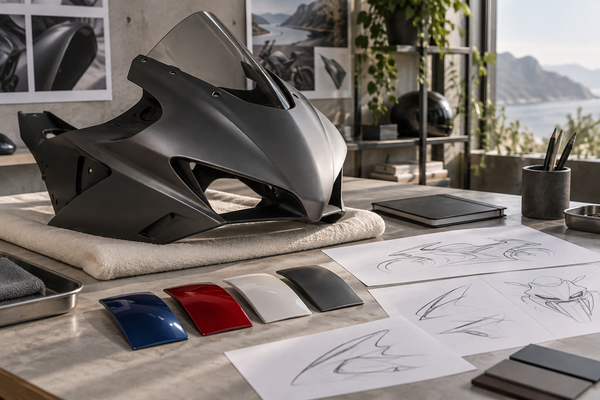
Inspiration fades fast. Writing it down keeps it alive. Start a simple folder before you talk to anyone. Drop in photos of the look you like. Add notes about which part matters most. Is it the shade? The spot? The empty space? Write it down. A supplier cannot read your mind, and a vague request gets a vague result.
Scope comes next. Decide what you really want changed. A full repaint is one project. A single accent panel is another. Ask the supplier to describe the work included in each option; a smaller visible change does not automatically mean a simpler job.
This is where a good talk with a supplier helps. NiceFairings offers custom fairing options and a discussion page at NiceFairings custom fairings. Browse the main site at NiceFairings to see how custom work gets discussed. Do not assume any specific model is in stock or offered. Ask directly. Tell them your reference clearly. Share your photos and notes. A supplier who asks good questions is worth your time.
Holding back can be a deliberate personal choice, not merely the default. You can make that same choice. Your Aprilia does not need a racing team's money. It needs your story, told once, told well.
Building a White Fairing Identity for Your Aprilia
The Perla Bianca livery at Misano tells one story. Your bike tells another. The trick lies in finding the connection between them without copying the whole package. White fairings can say a lot when you pick the right details. They can also fall flat if you just paint everything white and stop.

Think about what white means on a motorcycle. Under bright track sun, a white panel glows. Under cloudy skies or garage lights, it can look plain. The same color behaves differently in different settings. A sample viewed in the settings where you normally see the bike is more useful than a single ideal photograph.
Your own project starts the same way. Pick one reference point. Maybe it is a white stripe from an old race poster. Maybe it is the pearl tone of a vintage helmet. That one detail becomes your anchor. Everything else on the bike supports it. Restraint does not mean boring. It means choosing one strong idea and letting it lead. You may find that less decoration leaves the impression you prefer. Your project can do the same.
From Inspiration to Personal Expression
Inspiration acts like a compass. It points you somewhere. It does not draw the whole map for you. A reference can suggest a direction without determining the entire design. Your design can work the same way.
Start with a question. What moment in your riding life matters most? Perhaps your first long trip ended at a coastal town. The white foam of the waves becomes your accent. Or maybe a family member raced in the 1980s. A small logo on the tank pays tribute without shouting.
The shape of the accent matters too. A thin white stripe along the spine of the fuel tank looks different from a large white tail section. The size changes the feel. The placement decides the focus. Test your idea by looking at your bike from ten feet away. That distance tells you if the accent reads clearly or gets lost.
White itself needs attention. It is not automatically cleaner or better. A pure white under harsh sun can wash out the bike's lines. Off-white or pearl tones catch light differently. They create depth. Do not infer a particular pearl pigment or finish from a design name. The same principle applies to gloss levels. A glossy white reflects the world around it. A matte white looks softer. The choice depends on how you want the bike to feel.
Your personal expression does not need anyone else's approval. It needs your own conviction. If the white accent reminds you of something real, it will carry meaning every time you swing a leg over the seat.
Practical Considerations for Custom Fairings
Talking to a supplier works best when you bring clear references. Photos matter. Color samples matter. A written description of the idea helps too. The more specific you are, the fewer misunderstandings happen.
Consider the scope of your project. A full set of custom fairings in white with one accent panel is a larger job than adding a white decal to existing paint. Both approaches can work. The choice depends on your budget and patience.
Lighting plays a bigger role than most riders expect. Check your chosen white under sunlight and under fluorescent lights. Some whites look warm in one setting and cold in another. A good supplier should help you think through that step. Ask your supplier about white finishes. They have seen how different whites look on different panels. Different panel angles can change reflections; assess the intended combination together. These details matter more than the color code alone.
For this proposed personal design, keep the chosen focal point in mind. Pick one meaningful element. Give it room to breathe. Let the rest of the bike stay simple. That approach turns a fairing set into a story on wheels. Every time you look at that white accent, you remember why you chose it.
Supplier Scope and Custom Discussion
Understanding What Suppliers Offer
A supplier needs a clear brief and must confirm which parts of it they can provide. That truth shapes every good custom project. Walk into a conversation with vague ideas, and you get vague results. Walk in with clear references, and the odds swing your way.

Consider a hypothetical rider named Dana. Dana loves the pearl-white look from that Misano weekend. Dana does not want a full race replica. Dana wants one soft white panel on the tail. That single panel carries a memory of a grandmother's pearl necklace. Dana brings three photos, two paint chips, and a short written note to the supplier. The note says: "Soft pearl white, one panel, no logos." That clarity saves everyone time.
Asking the Right Questions Before You Commit
Good questions protect your project. Ask about the white finish first. Some whites look warm under garage lights. Others look cold under track sun. A pearl tone shifts with the angle. That shift can delight or disappoint. Ask your supplier how their whites behave in different lighting.
Ask about scope too. A single accent panel is a smaller job than a full set. Ask whether a limited visual change affects any other part of the order. Ask what the supplier needs from you. Photos? Color samples? A sketch? Clear answers help both sides.
For this hypothetical design, keep the intended focal point in mind. One meaningful accent beats ten random stickers. Ask your supplier to help you hold back. That conversation turns a fairing set into a story on wheels.
The Aprilia Perla Bianca story from Misano teaches a simple lesson. You do not need a factory racing livery to say something real. One white panel with a personal story can speak louder than a dozen sponsor logos. Find your own meaningful accent. Write down your references. Share them clearly with your supplier. A restrained design choice carries weight. It shows passion for your own identity. That quiet white fairing can mean as much as any loud billboard. Your bike becomes a story. You become the author. Ride with that story proudly.