
The familiar Yamaha YZF-R7 versus Aprilia RS 660 shorthand—simple Japanese twin against electronics-heavy Italian twin—no longer describes the current choice accurately. Yamaha substantially revised the US-market R7 for 2026 with a six-axis IMU, selectable rider aids, customizable ride modes, a bidirectional quickshifter, a five-inch TFT display, revised chassis and new aerodynamic bodywork. The current RS 660 still brings its own 659 cc twin, six-axis APRC electronics and layered aerodynamic fairings, but electronics alone no longer decide this comparison.
The better question is what each complete motorcycle offers for your roads, track plans, dealer support and repair budget. This guide uses manufacturer-published information available on September 28, 2026. Prices and availability can change, so obtain live dealer quotes rather than treating any online snapshot as a permanent cost.
It also separates motorcycle selection from fairing selection. A 2021–2025 R7 bodywork listing is not evidence of 2026 compatibility, and a generic “RS 660” label is not enough to identify bodywork across model updates or versions.
First, Define the Exact Comparison
For this article, “R7” means the 2026 US-market Yamaha YZF-R7 described on Yamaha Motorsports’ current model page. “RS 660” means the current standard Aprilia RS 660 described by Aprilia’s current product and technical information, not the higher-spec RS 660 Factory, a restricted-license version or the track-only Trofeo/SP program.
That distinction matters. A comparison that mixes a 2025 R7, a 2026 R7, a standard RS 660 and an RS 660 Factory can produce a confident-looking table that is technically meaningless. Before comparing a motorcycle or ordering bodywork, record:
- model year and market;
- standard or Factory/SP designation;
- ABS and electronic equipment actually fitted;
- original or modified lights, mirrors, exhaust and controls;
- VIN and production label;
- whether you are pricing a new motorcycle, used motorcycle or remaining inventory.
Verified Specification Snapshot
The table below uses current manufacturer-published figures. Yamaha’s US page does not publish a peak-horsepower figure for the 2026 R7, so this guide does not substitute a third-party dyno result into an “official” comparison.
| Published item | 2026 Yamaha YZF-R7, US | Current Aprilia RS 660, standard version |
|---|---|---|
| Engine | 689 cc liquid-cooled DOHC inline twin, 270-degree crossplane crank | 659 cc liquid-cooled forward-facing parallel twin with Ride-by-Wire |
| Published peak power | Not stated on Yamaha’s US specification page | 105 hp at 10,400 rpm on Aprilia’s current specification |
| Electronics basis | Six-axis IMU with TCS, SCS, lift control, brake control, engine-brake management and launch control | Six-axis IMU with APRC functions including traction, wheelie, engine-brake and engine-map control, cornering ABS and launch control |
| Quickshifter | Third-generation bidirectional QSS listed as standard | Bidirectional Aprilia Quick Shift listed as standard |
| Published running weight | 417 lb wet | 183 kg wet, approximately 403 lb |
| Seat height | 32.7 in | 820 mm, approximately 32.3 in |
| Fuel capacity | 3.7 US gal | 15 L, approximately 4.0 US gal |
| Front brake | Dual 298 mm hydraulic discs | Dual 320 mm floating discs with Brembo radial calipers |
The weight definitions come from different manufacturers and regulatory contexts. Yamaha defines wet weight with standard equipment, fluids and a full fuel tank. Aprilia’s technical sheet cites the EU method with standard equipment, fluids and at least 90 percent of usable fuel capacity. The figures are useful orientation, not a laboratory comparison.
The 2026 R7 Is No Longer the “Analog” Option
Older R7 reviews often praised minimal electronic intervention. Repeating that description for 2026 would mislead a shopper. Yamaha now lists a six-axis IMU and a rider-aid suite derived from the R1, with adjustable traction, slide and lift control, brake control, engine-brake management and launch control. Yamaha Ride Control adds preset Sport, Street and Rain modes plus customizable modes, including track settings.
The new five-inch TFT, smartphone connection and bidirectional quickshifter also change day-to-day interaction. A rider comparing a used 2022–2025 R7 with a new 2026 R7 is therefore comparing more than paint or graphics.
The chassis and bodywork changed too. Yamaha describes a revised steel tubular frame and asymmetrical swingarm, updated ergonomics, new wheels and aerodynamic styling with winglets and mirror-integrated turn signals. Our separate guide to 2025 versus 2026 Yamaha R7 bodywork explains why the model name alone cannot establish fairing compatibility.
What Still Makes the RS 660 Distinct
The current standard RS 660 combines a published 105 hp, 659 cc twin with Aprilia’s APRC suite. Its listed functions include adjustable traction control, wheelie control, cruise control, bidirectional quickshift, engine-brake control, engine maps, launch control and multimap cornering ABS. The fairing uses a double-layer side structure and integrated aerodynamic elements rather than treating the outer panels as simple cosmetic covers.
That does not make the Aprilia an automatic winner. It makes version control and setup more important. A prospective owner should understand the menus, assistance settings and service support available locally. If comparing the standard bike with an RS 660 Factory, account separately for the Factory equipment rather than transferring its suspension or specification to the standard model.
The published power difference also needs context. Yamaha does not state an official US peak number, and a peak figure cannot tell you which throttle response, gear spacing or riding position you will prefer on your normal road. Test the exact motorcycles where possible.

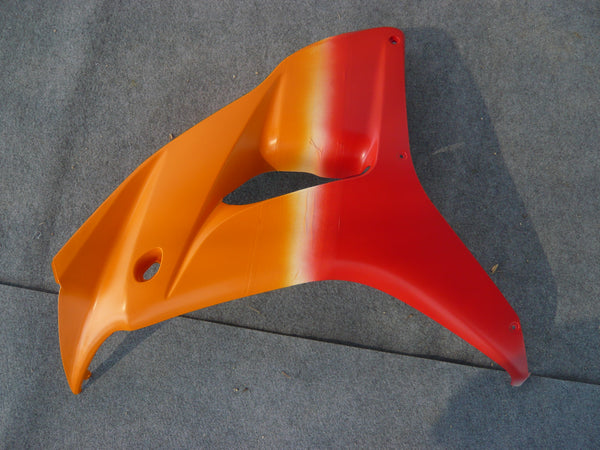
Editorial illustration: document each motorcycle’s aerodynamic details and keep removed panels and hardware separated. It is not model-year or fitment evidence.
Ergonomics: Test the 2026 Bikes, Not Their Reputations
Yamaha says the 2026 R7’s handlebars moved slightly higher and closer to the rider, while the seat and fuel-tank shapes were revised and seat height reduced to 32.7 inches. That means older comments about an uncompromising R7 posture may not describe the current bike precisely.
Aprilia describes the RS 660 riding position as active while retaining road comfort. Its published 820 mm seat is slightly lower on paper than the R7’s 32.7-inch figure, but seat shape, reach, footpeg position and suspension sag change how a motorcycle feels.
Use a structured test:
- Sit on each bike in the same riding equipment.
- Check wrist load in a normal road posture, not only in a racing tuck.
- Move from side to side as you would on track.
- Test steering lock and low-speed balance.
- Notice knee angle, heel clearance and tank support.
- Ask whether the display and controls remain understandable with gloves.
- Recheck comfort after at least thirty minutes when a longer ride is available.
For street use, cruise control on the Aprilia and the R7’s updated ergonomics may matter more than a headline power number. For track use, body position, braking feel, tires, suspension setup and the organizer’s requirements deserve equal attention.
Build the Ownership Budget From Quotes, Not Stereotypes
It is tempting to write that Japanese ownership is always inexpensive and Italian parts always take months. Those claims cannot be applied to every dealer, location, model year or damaged part.
Before buying either motorcycle, request comparable information from local dealers and independent specialists:
- scheduled-service items and labor rates;
- diagnostic capability and appointment lead time;
- insurance quote for the exact VIN or model version;
- price and availability for one left outer side panel, one upper cowl and the most vulnerable trim;
- whether painted panels arrive complete with graphics or require separate parts;
- return terms for electronic and painted components;
- estimated availability of common track consumables.
A quote dated today is evidence. A forum post from another country and model year is a lead, not your ownership cost.
The Bodywork Question Starts Before a Crash
Both motorcycles use layered front and side assemblies, and current styling makes the fairings functional as well as visual. A drop can affect the outer panel, aerodynamic element, light surround, inner duct, mounting tab, bracket or hardware stack. Replacing the most visible painted piece before inspecting what supports it can preserve the misalignment.
Photograph both sides of the assembled motorcycle before removal. Record the nose centerline, light openings, windscreen, mirror bases, aero elements and lower-cowl clearance. Then photograph accessible inner faces, tabs, grommets, collars and brackets. Keep R7 and RS 660 hardware in separate labeled containers; a shared engine category does not create shared bodywork.
For track use, decide whether you need road-equipment openings or closed race bodywork. Street-style replacement panels, dedicated fiberglass race bodywork and original painted panels solve different problems. Ask the event organizer which preparation rules apply, and do not assume that preserving OEM paint makes a motorcycle mechanically ready for the circuit.
Current NiceFairings Availability Requires a Clear Boundary
At the time of this review, the NiceFairings catalog search returned active painted and unpainted-style product listings identified for the 2021–2025 Yamaha YZF-R7. It did not return an Aprilia RS 660 product listing. The 2026 R7 has revised bodywork, so a 2021–2025 listing must not be treated as compatible with 2026.
Owners of the earlier Yamaha generation can review an example 2021–2025 YZF-R7 custom-painted ABS fairing listing, then confirm the exact year and written kit contents before ordering. A 2026 R7 or any RS 660 owner should contact NiceFairings custom fairing support with the complete model details and wait for explicit availability confirmation.
This is more useful than implying that a broad Yamaha or European collection contains a kit it does not currently show. Catalog availability changes, so recheck the live listing at purchase time.
Fairing Quote Checklist for Either Motorcycle
Send a supplier one organized package:
- make, exact model, year and market;
- standard, Factory or other version designation;
- VIN-derived model information with private details concealed where appropriate;
- full left, right, front and rear photographs;
- close views of lights, mirrors, winglets, ducts and every damaged seam;
- photographs of accessible tabs, brackets and fastener stacks;
- list of non-stock exhaust, signals, windscreen, sliders and track hardware;
- exact parts expected in the quote, including inner pieces and shielding;
- intended road, track or dual-use configuration;
- desired color and finish, with retained original panels identified;
- written application, inclusions, exclusions and approval process.
Do not accept “complete” as the entire parts list. Ask whether the quote includes inner trims, aerodynamic elements, heat protection, windscreen, fasteners and any pieces that appear in a marketing image. Ask what must transfer from the original motorcycle.
Installation Reality: No Universal Fitment Percentage
A universal “bolt-on percentage” cannot describe every kit, motorcycle and previously repaired bracket. Injection molding can support repeatable panel geometry, but final alignment still depends on the correct application, intact mounting structure, transferred parts, hardware and assembly sequence.
During the first fit:
- Compare the received parts with the written contents before changing anything.
- Inspect painted surfaces and all accessible tabs.
- Transfer only the parts identified for the exact kit.
- Install grommets, collars and heat protection in their documented locations.
- Assemble adjacent panels loosely before staged tightening.
- Stop if a fastener requires force to enter straight.
- Check steering, tire, fan and exhaust clearances.
- Complete a short low-speed test and recheck after a heat cycle.
Never use a screw to drag a misaligned hole into position. Plastic stored under tension can crack as vibration and temperature cycle through the assembly. Identify the bracket, spacer, grommet or sequence problem first.
Head-to-Head Decision Scorecard
| Buyer priority | 2026 Yamaha YZF-R7 | Current standard Aprilia RS 660 |
|---|---|---|
| Current electronic suite | Extensive IMU-based suite and customizable YRC modes | Extensive IMU-based APRC suite, including cruise control |
| Published engine information | 689 cc twin; Yamaha US does not list peak horsepower | 659 cc twin; Aprilia lists 105 hp |
| Ergonomic context | Revised for 2026 with higher/closer bars and 32.7-in seat | Active road-and-track position with 820-mm seat |
| Aero/bodywork identity | New 2026 fairing, winglets and mirror-integrated signals | Double-layer side fairing and integrated aero elements |
| Bodywork ordering risk | Confusing 2021–2025 listings with redesigned 2026 parts | Confusing standard, Factory, market and update details |
| NiceFairings catalog status checked Sep. 28, 2026 | Active listings found for 2021–2025 only | No active RS 660 listing found; availability must be confirmed |
| Best next step | Test the 2026 bike and quote 2026-specific parts | Test the exact version and verify local service plus parts support |
Which One Should You Choose?
Choose the R7 because the 2026 motorcycle fits your body, roads, controls and support network—not because an older review called it simple. Its electronics, chassis, ergonomics and bodywork changed enough that a used earlier R7 and a new 2026 R7 belong in separate evaluations.
Choose the RS 660 because you prefer the exact motorcycle’s engine, ergonomics, electronics and dealer relationship—not because the Italian badge guarantees an exotic experience or a specific resale outcome. Confirm whether you are considering the standard or Factory version.
For either bike, price the motorcycle, insurance, initial service, protective equipment, track preparation and one realistic cosmetic repair scenario. Then choose the individual bike with the stronger total ownership case.
FAQ
Is the 2026 Yamaha R7 still the simpler motorcycle electronically?
That old description is no longer accurate. Yamaha lists a six-axis IMU, multiple adjustable rider aids, customizable ride modes, launch control and a bidirectional quickshifter for 2026.
Does the Aprilia RS 660 make 100 or 105 horsepower?
Aprilia’s current standard RS 660 information lists 105 hp. Older model-year documents list 100 hp, which is why the model year and source date must accompany the number.
Will 2021–2025 R7 fairings fit the 2026 R7?
Do not assume they will. Yamaha redesigned the 2026 bodywork and related features. Use a listing that explicitly includes 2026 and obtain written confirmation for the exact motorcycle.
Does NiceFairings currently sell an Aprilia RS 660 kit?
The catalog search performed for this article did not return one on September 28, 2026. Contact support with the exact model, year, market and version, and wait for confirmed availability before planning around a kit.
Should I remove original fairings before every track day?
That depends on the event rules, transport plan, available bodywork, lighting requirements and your repair budget. Dedicated race bodywork and street-style replacement panels are different products. Build the plan around the event and exact motorcycle.
Which motorcycle is cheaper to repair after a drop?
There is no reliable universal answer. Damage scope, local labor, parts availability, paint, inner components and brackets determine the cost. Obtain comparable dated quotes for the exact panels and location.