A personal race number can make a street-bike fairing design feel like yours without covering it in graphics. Start with digits that are easy to distinguish, a contrasting background and enough empty space around them. Those three decisions usually matter more to the design than extra outlines or a complicated font.
This guide concerns decorative numbers on street-bike bodywork. It does not establish competition eligibility, replace a registration plate or prescribe a race organizer's number requirements.
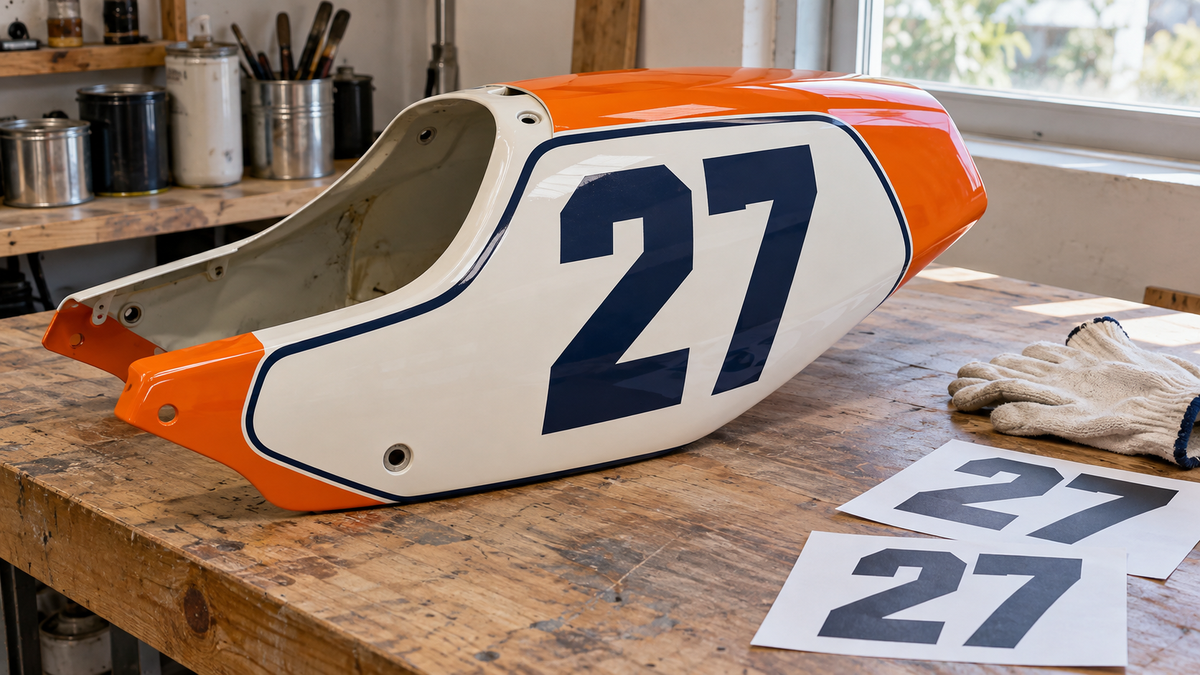
AI-generated design illustration for the hypothetical number 27 example; not a supplied product or customer installation.
Choose the digits before choosing the decoration
Write the exact number in the brief, including a leading zero if you want one. “7” and “07” create different shapes and take up different space. Do not leave that choice to a reference photograph that happens to show another rider's number.
Compare the actual digits in the proposed font. A stylized 1 may resemble a 7; a tightly drawn 6 may be hard to distinguish from a 9 when tilted. A compressed 8 can lose its internal spaces when the design is viewed as a small image. These are visual checks, not a demand that every owner choose the same typeface.
Begin with a bold, simple style, then add personality where it helps. One outline may separate a dark number from a busy background. Several outlines, shadows and slices can make the numeral itself harder to see. Review the simplest version beside the decorated version before deciding.
Give the number a quiet background
A dark number on a light panel or a light number on a dark panel gives you a straightforward starting point. Color names alone are not enough: navy on black and pale silver on white can blend together even though the paint colors are technically different.
Leave space between the number and nearby vents, stripes, logos and panel edges. That empty area helps the digits stand out. If the chosen location is narrow, simplify the surrounding artwork or choose a different position instead of squeezing the number until its shape changes.
Use a full-bike mockup and a smaller thumbnail to compare the options. These checks show how the graphic hierarchy reads; they do not prove a measured viewing distance or visibility at riding speed.

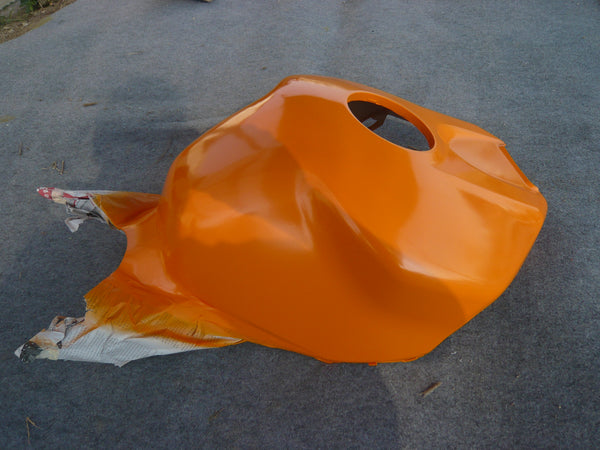
NiceFairings catalog photograph: clear painted areas are a useful starting point for discussing graphic placement. No personal number is applied in this photograph.
Choose a position that supports the bike's design
The nose, side and tail offer different amounts of uninterrupted space. A front number can become the main visual feature. A side number works with the larger color blocks. A tail number can be a quieter personal detail. You do not need to repeat the number at every location.
Keep lights, reflectors, vents and required markings clear. Ask the supplier to show the proposed graphic on the actual requested panel shape rather than assuming a rectangle drawn on a flat sheet will transfer unchanged.
Our separate guide to fairing graphics across seams and viewing angles covers cross-panel alignment. For a number, the simpler option is often to keep the complete numeral group within one visually clear area.
Three hypothetical layouts
- White tail, navy 27: a bold number with an orange accent kept outside its white breathing space. The tail is the focal point, so the side graphics stay restrained.
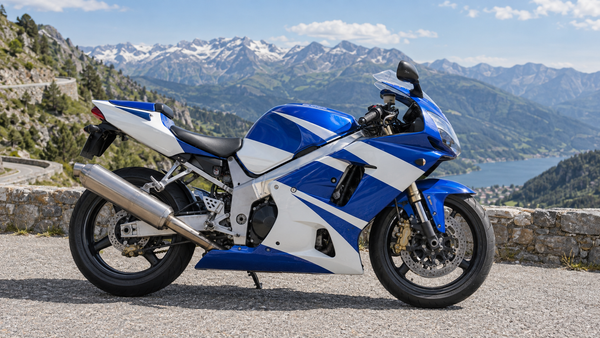
- Blue side panel, white 07: preserve the leading zero and leave a clear gap between the number and the nearest blue-and-white stripe. Ask to see both actual sides.
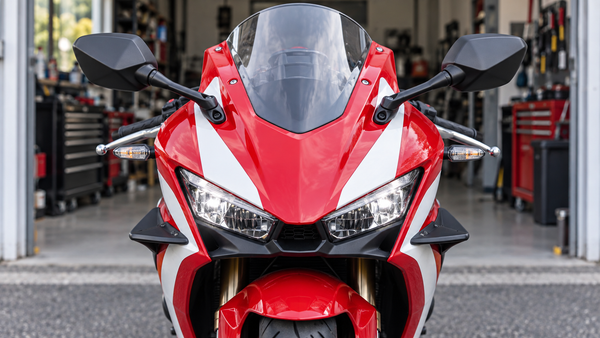
- Red nose, white number field: place dark digits inside a simple light field, provided the actual panel offers room without covering functional openings or lighting.
These are design examples, not customer installations, offered products or approved racing layouts. Adapt the idea to the confirmed panel set and the amount of space it really provides.
Send a short, unambiguous number brief
Include the exact digits, a font reference, the number color, any outline, the background color and the intended location. Mark what should be omitted as well: no shadow, no sponsor text or no repetition on the opposite tail piece, for example.
A useful hypothetical request is: “Please show navy 27 on the white tail area, with no shadow and one simple orange accent outside the number field. Keep both digits upright and show each side separately.” Attach current bike photographs and identify the exact model, year and requested bodywork.
Ask how the graphic will be supplied as part of the confirmed painted-fairing order. Do not assume separate decal sales, a specific application method or unlimited revisions. Check the written order against the final agreed layout so an early mockup does not become the accidental production reference.
Use the custom fairings page to start a design discussion, review current details in the FAQ, or send your number and model reference. A clear number, a calm background and a deliberate location can give the bike a personal identity without overwhelming its bodywork.