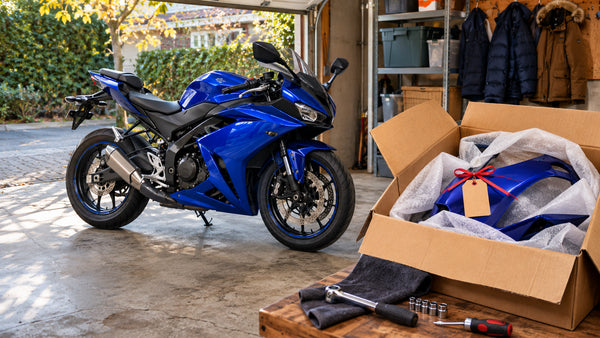
You have an Icon Blue Yamaha R9 and have found a dark or carbon-look fairing design you like. The question comes before checkout: what happens to the blue tank area? It may be tempting to order the panels first and find a matching cover later. A better plan is to decide which visible surfaces stay blue, exactly what the kit includes, and where the new finish will meet the original parts.
You do not need to make every panel black to get a purposeful dark build. Blue can remain the focal point, become a smaller repeated accent, or be covered by a separately confirmed component. Each route has different implications for appearance, budget and the ability to return to the original look.
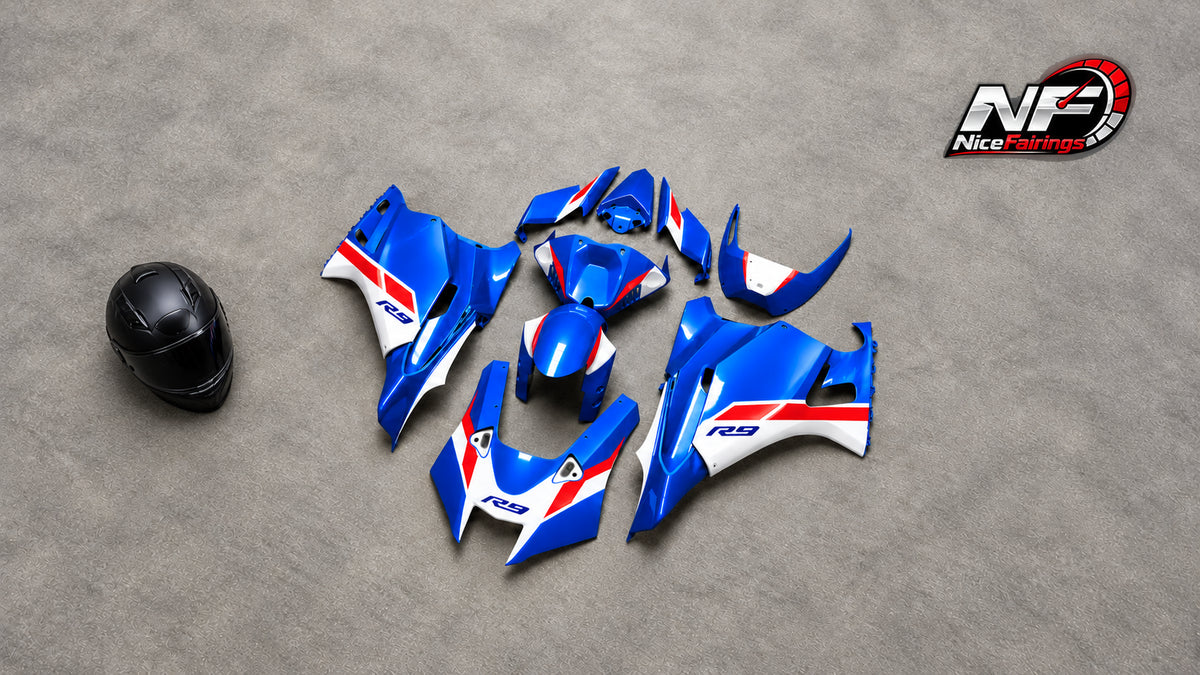
NiceFairings lists YZF-R9 fairings for 2025–2026. Those are aftermarket painted ABS offerings, not a statement that the store sells structural carbon-fiber panels or that every listing includes the same tank-area pieces. Ask about the exact product and selected finish before ordering.
Cover: NiceFairings R9 fairing design supplied by the store, with a decorative editorial layout. The image illustrates a color direction, not an installed motorcycle or proof of a particular order's contents.
Start with the tank you actually have
Yamaha lists Icon Blue among R9 color options, but your starting point is the motorcycle in your garage, not an unmodified catalog picture. Look at the blue paint in daylight and make a note of the visible tank-area surfaces, black trim, seat, frame, wheels and any existing pads or film. If the motorcycle was bought used, ask about previous repairs or repaints. Photographs of the same blue paint can look very different under a showroom spotlight and outside on an overcast day.
For a useful design brief, take left and right side views, a front three-quarter view and a view from above the tank with the motorcycle stationary. Show where your existing blue meets the surrounding panels. These images are references for a visual discussion, not templates for manufacturing a cover and not proof of exact color matching.
If a component is damaged or you suspect a fuel leak, deal with that separately with an appropriate professional. A cosmetic shell, wrap or fairing panel is not a repair for a fuel-system problem.
Three ways to make blue work with dark bodywork
| Direction | What remains visually prominent | What to decide before ordering |
|---|---|---|
| Blue tank, dark panels | The original blue becomes a deliberate focal point. | Where to repeat a small blue accent on the nose, sides or tail. |
| Blue-and-dark transition | The tank connects to darker bodywork through a planned color break. | Which specific panel edges carry blue and which remain dark. |
| Dark tank-area cover or finish | More of the upper silhouette reads dark. | Whether an appropriate cover exists, what it covers and how it is secured. |
These are starting points rather than fixed color formulas. The first route often asks the least of the existing paint: leave the blue visible, then repeat it once or twice in the new design. A narrow blue detail near the nose and a second near the tail can make the tank feel connected without asking a painter to duplicate every inch of Yamaha's finish.
The second route gives more weight to the meeting point between the tank and upper fairing. Choose a clear stopping point at a panel edge instead of requesting an invisible blend between an older surface and a newly painted piece. Make a simple note such as “keep the tank blue; use a dark upper side panel with a small blue line” and send photos of both sides. The left and right panel shapes are not guaranteed to accept a graphic in the same way.
The third route changes more of what the eye sees. Before ordering a separate cover, identify whether it is a full cosmetic shell, a partial trim piece or another product. Confirm its exact model application, the surfaces it covers, how it interfaces with the seat and surrounding trim, and whether it affects access to the fuel cap. Do not infer these details from a broad term such as “tank cover.”

Carbon fiber, carbon-look and a dark paint finish are different requests
“Forged carbon” can describe a real composite component, or it can be used loosely for a visual pattern. A dark painted ABS fairing, printed carbon-effect finish, vinyl film and structural carbon-fiber component are not the same product. A photograph alone cannot establish the material, manufacturing method or how a finish was applied.
If the look is your priority, describe the pattern and finish you want: fine woven appearance or irregular forged-style pattern, glossy or lower-reflection, and which panels should carry it. Ask the supplier what can actually be produced for the selected R9 kit and request finished examples that accurately represent the proposed method. Availability, detail and pricing need confirmation; a request is not a promise that a particular effect is offered.
If material is your priority, ask for the component's actual construction and any installation information for that specific product. Do not assume that a carbon-look coating saves weight or that a genuine composite part has been tested for a particular road or track use. Our R9 factory-aero guide explains why the visual similarity of an aftermarket panel does not establish Yamaha's factory aerodynamic performance.
Should you leave the tank, wrap it or add a cover?
Leave the original finish visible when you like the blue and want to minimize changes to it. Ask for a design that repeats or frames the existing color. New paint can look different from the older tank under changing light; a similar blue in a picture is a reference, not an exact match guarantee.
Discuss a professional wrap if you prefer to change the visible color without ordering a hard cover. Ask the installer what surfaces are appropriate, how the film will be maintained and removed, and whether existing paint, coatings or damaged surfaces make the job unsuitable. Results and removability depend on the material, surface and work; do not assume a wrap can be applied over an unsafe or damaged tank.
Consider an appropriate cover only once its application and scope are confirmed. Request a parts description and pictures of the actual component, not just a picture of a complete bike. Clarify whether hardware, trim or protective material is included, what remains visible and how access to the filler is maintained. Never obstruct a cap or vent, force an unconfirmed part into place, or drill a fuel-holding component to make a cosmetic piece fit.
Refinishing may be another choice, but a fuel tank requires appropriate preparation and professional handling. Request a quote from a qualified paint shop for the specific component and condition. Compare the written scope and timing rather than assuming a tank repaint costs the same as painting a removable plastic panel.
Our tank cover and fuel tank guide explains the distinction in more detail. The decision here is about planning a coherent R9 design around the parts you already have.
Build a panel-by-panel brief
Before contacting a seller, write the motorcycle's model year, market and known modifications. Then use this simple order of decisions:
- Retained surfaces: State whether the existing blue tank-area finish, wheels and seat will stay as they are.
- Main body color: Choose a dark gray or black reference and identify whether you want a glossy, satin or matte appearance. A picture on a phone is not a finish standard.
- Pattern: If you want a carbon-like look, specify the affected panels and ask what finish method is available. Keep this separate from any claim about the material beneath it.
- Blue accents: Mark the approximate areas where blue should repeat. Ask for left, right, front and tail views when available; a single side image can hide awkward transitions elsewhere.
- Order scope: Ask for an itemized list of the actual panels and hardware for the product and paint option. If a tank-area cover is not listed, do not assume it is included.
- Approval: Ask what finished photos or other confirmation are provided before dispatch, and how to raise a concern if the color or scope differs from the agreed brief.
If your R9 has sliders, aftermarket lights or other changes, include them in the discussion. A panel meant for the stated model year is not automatically cleared for every accessory. Our R9 slider planning guide covers why accessory instructions should be checked before any bodywork is altered.
A practical example: keep the blue, change the mood
Imagine an owner with a blue R9 who likes a charcoal fairing but has not confirmed an appropriate tank cover. The reversible starting plan is to keep the existing blue visible, use charcoal on the main replacement side panels, and add small blue accents on the nose and tail. Dark original trim can provide a natural visual transition, but the actual panel edges need checking on that motorcycle.
The owner can send the supplier a left view, right view and overhead view together with the exact kit link. The message should distinguish “I like the appearance of this carbon-style reference” from “I need a genuine carbon-fiber component.” It should also ask which pieces are supplied, whether a tank-area part is available, and what finish examples can be shown. If the answer is uncertain, keep the tank as-is while deciding; there is no need to commit to a cover based on an assumed match.
This is an illustrative plan, not a customer build or a completed installation. The exact shades, panel layout and supply depend on the selected product and the agreed design.
What to check when the panels arrive
Compare the received pieces against the order-specific list before installation. Inspect finish and graphics in suitable light, photograph any visible shipping damage and contact the seller promptly if something is missing or differs from what was agreed. Keep the original pieces and hardware organized until the replacement has been checked.
Have the motorcycle and panels assessed by a qualified installer if supports are damaged, accessories interfere or the fit is uncertain. An attractive paint scheme should not require forcing a panel over a misaligned mount or compromising a safety-relevant component. Confirm any modifications with the appropriate component manufacturer or professional installer.
Plan the transition before the reveal
A blue tank next to darker R9 bodywork can look deliberate when the color, finish and panel boundaries are planned together. Start with what stays on the bike, then select the bodywork and ask the supplier to confirm what can actually be supplied.
Browse the 2025–2026 Yamaha YZF-R9 collection or send your photographs and preferred palette through NiceFairings custom design. Include your exact motorcycle details, the product link and the question of whether the quoted kit includes any tank-area component.
Frequently asked questions
Can a blue R9 tank look good with black fairings?
Yes. Treat the blue as an intentional focal point and repeat it selectively, or use a clearly defined transition at a panel boundary. The best balance depends on your existing tank, wheels and chosen graphics.
Does a carbon-look fairing mean real carbon fiber?
No. “Carbon-look” can describe a visual finish. Ask the seller about both the underlying material and the method used to create the pattern before buying.
Does every R9 kit include a tank cover?
Do not assume it does. The contents depend on the exact listing and selected option. Ask for an itemized answer and clarify whether a full cover, partial trim or neither is supplied.
Can a tank cover be added later?
Possibly, but only after confirming the exact motorcycle, component application, mounting method and fit with the surrounding parts. This article does not establish availability of a separate cover.
Will new blue panels match my existing tank exactly?
An exact match is not guaranteed by a screen image or a color name. Discuss the reference and approval process with the supplier, and consider an intentional contrast if an exact match cannot be agreed.
Reference: Yamaha's R9 introduction describes the factory motorcycle; Yamaha's European brochure identifies Icon Blue among its R9 colors. Specifications and color offerings can differ by market.