The front of a ZX-10R is where its identity is concentrated: screen, lights, central intake, painted nose and projecting wings. It is also an exposed assembly. A stone can mark one surface; a fall can affect several panels and the structure behind them. Those events call for different shopping lists. For a 2026 ZX-10R, do not order a complete fairing kit because one wing is scuffed, and do not order one painted nose because the wing mount or front stay may be bent. Identify the damaged parts first, then price the smallest complete repair.
One correction matters before we begin. The 2026 wings are visually designed into the front bodywork, but Kawasaki's 2026 OEM parts catalogue lists wing elements and their associated pieces as separate service parts. “Built into the look” does not mean “molded permanently into the painted nose.” Depending on the impact, variant and precise assembly, the answer may be a wing element, a cowl, several fasteners or a larger repair. An online comment about a part being difficult to refit is not proof that it cannot be removed.
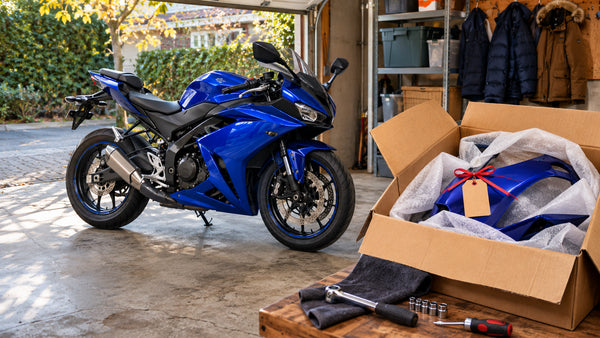
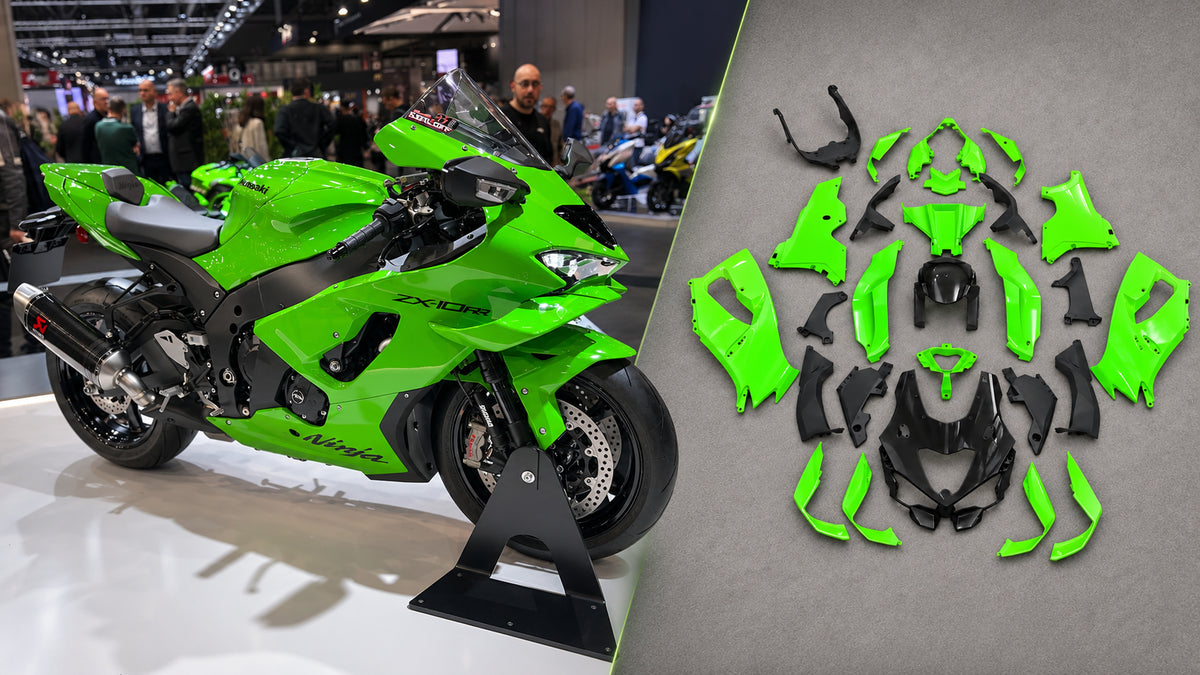
Cover image: an editorial composite pairing a real 2026 ZX-10RR show-floor photograph with the NiceFairings 2026–2027 ZX-10R painted kit flatlay. The motorcycle and kit were photographed separately; the image does not show this kit installed on that motorcycle or prove fit. Ask for a written parts list before assuming that any specific wing, bracket, lamp or fastener is included.
Start with two questions, not a price
First, is the motorcycle safe to move or ride? If the impact may have affected steering, forks, wheel, brake lines, lights or the front support structure, stop the cosmetic discussion and have a qualified technician inspect it. A front fairing can hide damage. A smooth replacement shell does not repair a bent stay or an electrical fault. If the lights or mirror mounting are disturbed, do not rely on appearance alone to decide roadworthiness.
Second, what is the actual damage boundary? Make a simple record before dismantling: a straight-on front photograph, both front three-quarter views, both sides, a close-up of each wing, the screen edge, headlight openings, intake lip, and the seams where upper and side panels meet. Photograph the bike with the bars centered. If it has already been disassembled, photograph the parts laid out with their fasteners and any detached tabs. Do not force a cracked assembly back into place just to obtain a prettier picture.
Mark observations rather than diagnoses: “right outer wing scuffed,” “gap above right light larger than left,” “screen mount appears loose,” or “upper cowl cracked at fastener.” A photograph can support a quotation; it cannot confirm that a hidden bracket is straight. Note whether the motorcycle is an ordinary ZX-10R or a ZX-10RR and confirm its market and model year. A similar-looking part number from another variant is not automatically interchangeable.
What changed at the 2026 front
Kawasaki describes compact hybrid projector/reflector headlights, a repositioned ram-air intake and larger, outward-projecting winglets in its 2026 launch material. Kawasaki claims approximately 25% greater downforce than the preceding design under its comparison conditions. That figure describes Kawasaki's motorcycle package, not a guarantee attached to replacement aftermarket bodywork. The revised visible shapes also change the repair conversation: what seems like “one scratch on the nose” may cross the boundary between a wing, a painted upper cowl and a side panel.
Use the factory parts catalogue to name parts and understand the assembly; use a shop inspection to determine what is damaged; use the seller's own panel list to determine what a fairing kit supplies. None of those three sources is interchangeable. The OEM catalogue is not a NiceFairings contents list, and a NiceFairings product photo is not a factory repair manual.

A front-cowl panel from the linked NiceFairings kit. Its visible openings and holes are useful questions for a parts discussion; this photograph cannot establish installed alignment or identify hidden supporting hardware.
Separate the visible damage from the supporting assembly
| What you see | What to check before ordering | Likely purchasing question |
|---|---|---|
| Cosmetic scuff on one wing | Cracks around its attachment, symmetry and whether mounting points remain sound | Is that wing element available separately in the correct finish? |
| Cracked painted nose | Light openings, screen mounting, intake lip, joining edges and front stay | Is a front cowl plus associated trim sufficient? |
| Several scratched front and side panels | Panel edges, clips, fasteners, paint match and concealed supports | Is a complete same-generation painted set more coherent than separate pieces? |
| Uneven headlight or screen gap after impact | Stay and lamp support position, tabs, damaged hardware | What structural or electrical work must precede cosmetic parts? |
These are inspection prompts, not diagnoses. An experienced repairer may discover additional damage once panels are safely removed. Keep a contingency in the estimate rather than ordering from the first photograph.
“I removed the wing and it will not go back”
A rider's 2026 ZX-10R winglet question is a useful illustration of confusion, but the repair answer should come from the actual parts arrangement. Kawasaki names outer and inner stabilizer wing pieces in the applicable OEM catalogue. That establishes that pieces can be catalogued separately; it does not tell us why a particular removed part will not seat. A missing clip, incorrect alignment, damaged tab, wrong-side part, intervening panel or distorted mount are different possibilities. Avoid drilling, trimming or forcing a part to make it fit until its identity and mating pieces are confirmed.
Take photographs of both sides and the removed part's inner face. Record any part numbers and the order in which pieces were removed. A dealer or technician can compare the parts diagram with the actual bike. A broad internet statement such as “the wing is one piece with the fairing” misses the distinction between visual integration, service parts and aftermarket kit supply.

The product gallery shows these molded pieces separately. Do not identify them as particular OEM wing parts from appearance alone; request the kit's written piece list and compare it with the correct Kawasaki catalogue.
Why the nose cone can turn into a larger job
The nose does more than carry paint. It interfaces with lighting, the screen, mirrors, inner trim, air-intake pieces and adjoining side panels. Removing it can reveal brittle clips or earlier repairs. An older ZX-10R owner forum thread about nose-cone removal conveys that frustration, but it is not a 2026 service procedure. Follow the manual for your exact year and variant, especially around electrical connectors, fastener sequence and reassembly. If uncertain, budget professional labor before buying parts.
A frequent trap is treating a gap as a property of the new shell. If an impact moved the front stay, a correctly made cowl can look crooked. Compare headlight and screen alignment before blaming replacement plastic. Another trap is assuming a “full kit” includes the lights, wing hardware, screen, mirrors, grommets or heat shielding. Sellers use “full” to describe different scopes. Ask for a written piece count and a photograph or diagram of the exact supplied set.
Single front piece, front section or complete kit?
Choose a single replacement only when the damaged boundary is genuinely isolated, the support structure is sound, the part is available and the finish can be matched acceptably. That may be the best solution for a small scuff or a cracked removable piece. Check whether the painted surface is factory color, a prior custom job or a faded finish. A new piece with the nominally same color can still look different next to older panels.
A front-section order is sensible when the wing, upper cowl, inner trim or adjacent nose pieces are damaged together but the side and rear remain sound. Build the quote from the parts diagram and seller's actual inclusions. Include hardware, labor, shipping, paint matching and possible concealed damage. A collection page is only the beginning of that calculation.
A complete painted kit may make sense when damage crosses multiple panels or you intentionally want a uniform new livery. It is a design and cost decision, not a structural repair. Keep serviceable original components where practical and document what was removed. If the motorcycle is used on track, confirm the event's bodywork and safety requirements separately; do not assume a street cosmetic kit satisfies racing rules.
The simplest comparison is not “one piece costs less than a kit.” It is total repair cost for an acceptable, safe result. Put the same items in every quote: inspected support work, exact replacement panels, missing original pieces, paint or graphics, installation, taxes and shipping. If the single-piece estimate relies on a paint match that is unlikely to satisfy you, say so in the comparison. If a full kit quote excludes wings or fittings, add those costs rather than comparing unlike baskets.
Order the correct generation
The new 2026 front is not a drop-in cosmetic update for a 2021–2025 bike. The lights, intake, wings and surrounding shapes are part of a revised front system. Confirm VIN/model year and variant, then compare the actual 2026–2027 ZX-10R collection with the separate 2021–2025 collection. The year ranges organize the store; the precise product listing and your bike's current bodywork still govern the purchase. For the styling and generation question, see our 2026 front-design comparison.
For a damaged 2026 bike, send the seller five things: model year and variant; front and both side views; close-ups of the damage and mounting area; the desired color or existing kit reference; and a list of parts a technician has already identified. Ask the seller to reply with the actual panel list and exclusions. If the bike wears prior aftermarket bodywork, mention that explicitly. Do not guess from the paint or the badge.
You can start with our 2026–2027 ZX-10R fairing options and front pre-fit guidance. The best outcome is not automatically the largest order. It is a written repair scope that restores sound mounting, correct lighting and the appearance you actually wanted.