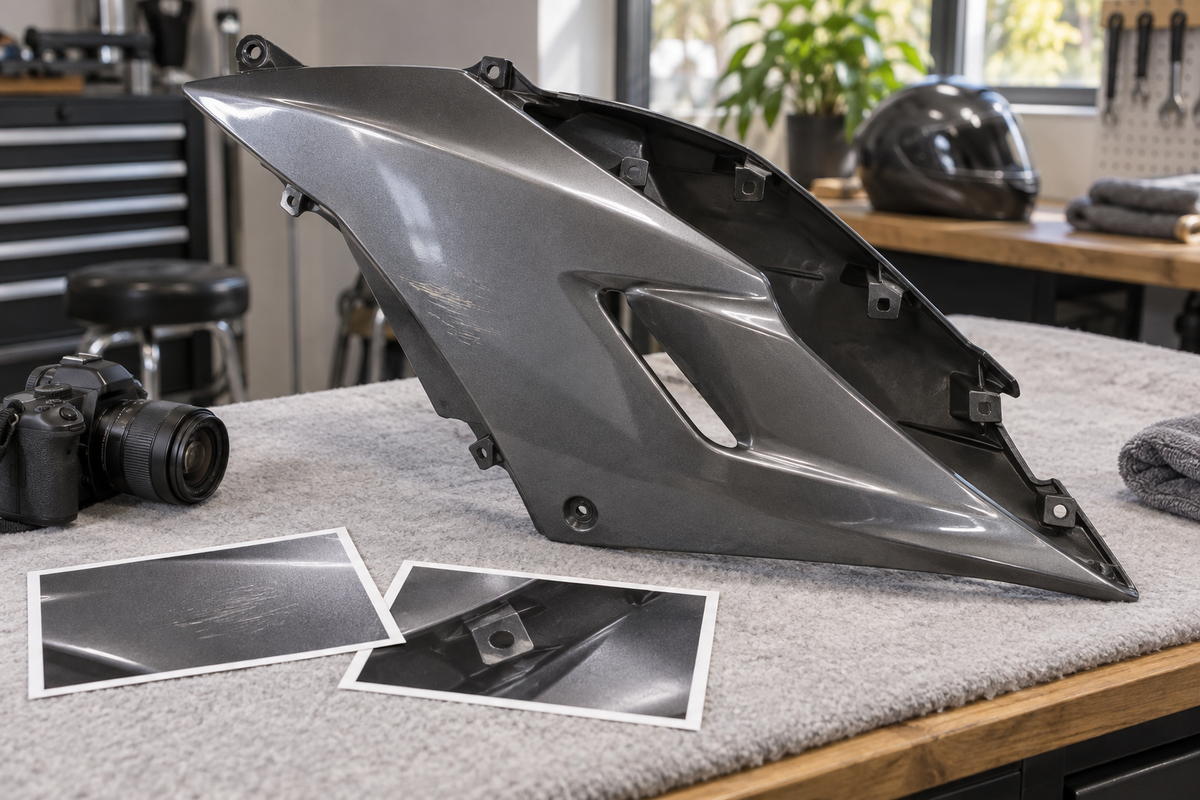
Before buying a used OEM fairing online, look for current photos of the actual part, a specific condition description, identifying references, included pieces and clear sale terms. A painted outer panel has tabs and mounting details that are difficult to assess from one photo. Listing information helps you evaluate the offer; it cannot replace an inspection.
This article covers one detached used OEM fairing from an online listing versus a new made-to-order replacement. It does not cover checking a whole used bike or ranking OEM against aftermarket parts in general.
Key Takeaways
Confirm the exact model, year, side, and position before you buy.
Demand clear photos of both sides and all mounting tabs.
Get a written description naming specific flaws like cracks or missing tabs.
Check what pieces come with the part and the return policy.
Compare other verified offers, including a new made-to-order option, if a used listing leaves essential questions unanswered.
What Used OEM Fairings Listings Must Show
A useful listing starts with identity. You need to know exactly what part you are looking at before you judge its condition or price. The seller should name the motorcycle model, the model year, the side of the bike, and the position of the panel. A fairing that fits a 2018 model may not fit a 2019 model, even when the bikes look similar. A left-side upper may differ from a right-side upper in shape, mounting points, and cutouts. The listing should state these details in plain text, not just in a photo caption. If the seller writes "fits many years" or "universal fit," treat that as a warning sign. Ask for the exact model and year the part came from. Ask which side and which position it occupies on the bike. Without that information, you cannot confirm the part will work for your repair.

Exact Model, Year, and Side
The model year matters because manufacturers change bodywork between production runs. A mid-cycle refresh can move tabs, change bolt spacing, or reshape a panel's edge. The listing should also specify the side—left or right—and the position, such as upper, lower, side, or tail. A seller who lists "front fairing" without more detail leaves you guessing. You should also check whether the part came from a standard model or a special edition. Some editions use different colors or trim pieces. The listing may not cover every variation, so message the seller when the description feels thin. Ask for the donor bike’s model year and version, plus a clear part reference when available. That history helps you decide whether the part matches your bike.
Part Numbers and Markings
OEM part numbers and molded markings give you useful clues. You can compare the number on the listing to a parts diagram for your model. A matching number suggests the part belongs to the right family of bikes. Molded markings on the back of the panel can also help. These clues do not prove authenticity or condition, though. A number can be copied, and a marking can fade or be hidden by paint. Ask the seller to confirm the part number in writing. Ask for a close-up photo of the marking. Part history matters too. The listing should say what bike the panel came from and whether it had prior damage. A panel from a crashed bike may have hidden stress cracks. Do not infer the extent of damage from a short description of an incident. The seller's honesty here helps you make an informed choice.
Markings and part numbers are clues, not proof. They help you ask better questions, but they do not replace a careful review of photos and a direct conversation with the seller.
An OEM label does not establish the present condition or fit of a used part. Previous damage, repairs, heat exposure or poor handling may affect its shape. Avoid conclusions about authenticity from a vague photo alone. Ask for identification and history, compare the evidence, and leave the listing if the seller cannot clarify essential details.
Photo Evidence Buyers Should Expect
Photos carry most of the weight in a used fairing listing. You cannot hold the part. You cannot tap it or flex it. The images are your substitute for a hands-on inspection. That makes photo quality a fair reason to walk away from a listing.

Both Faces and Tabs
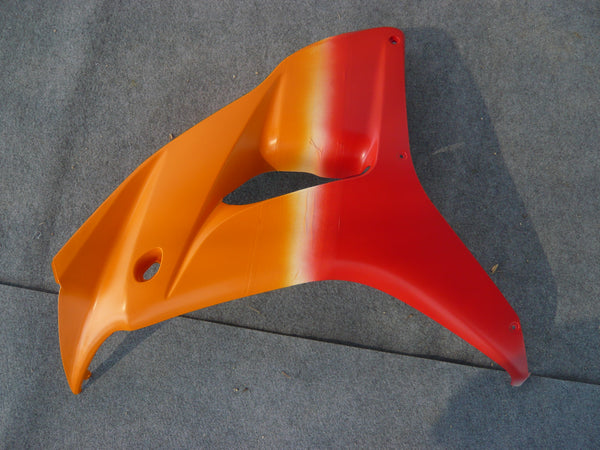
A complete photo set shows the painted face and the back side. The painted face tells you about color, gloss, and visible damage. The back side tells you about structure. Tabs, mounts, and attachment points live on the back. These small features hold the panel to the bike. A broken or missing tab can make a fairing useless for your repair. Ask the seller for clear shots of every tab and mount. Ask for a photo that shows the full back side, not just one corner. Shadows and angles can hide a lot. A seller who only posts the pretty side may not be hiding anything. Still, you cannot judge what you cannot see. Request more photos before you pay.
Close-Ups of Damage
Close-ups of scratches, cracks, and wear help you judge condition. A wide shot shows the panel. A close-up reveals more visible detail. Ask for close-ups of every flaw the seller mentions. Ask for close-ups of areas where damage often hides, such as edges, mounting holes, and lower lips. These photos are clues, not proof. A crack may look shallow in a photo and run deep in person. A repaired area may look smooth under paint. Photos cannot prove hidden structural health. They only show what the camera captures. Treat them as one piece of evidence among many.
Stock images are a common problem. A seller may use a manufacturer photo or a picture of a different part. That image may not represent the actual used OEM fairings you are buying. Ask for current photos of the specific part. Ask the seller to place a note with the date or their username next to the panel. That step provides additional context, although it does not independently authenticate the item. If the seller cannot provide fresh images, treat the listing with caution.
Label any image as a generic illustration when the exact model is not verified. This matters for you as a buyer and for anyone who reads your messages later. A generic photo shows the general shape and style. It does not confirm the part number, the model year, or the condition. When a listing mixes stock images with real photos, ask which is which. Do not assume the best-looking image shows the part you will receive.
Good photos answer questions before you ask them. They show both faces, every tab, and every flaw. They come from the seller's camera, not a catalog. They carry a label when the model is unverified. Use these standards to sort strong listings from weak ones. Then move to the next layer of evidence: the seller's written description of repairs and finish.
Disclosed Repairs, Repaint, and Finish
A used fairing often has a past. The listing should say if someone fixed, repainted, or refinished the panel. That information shapes what you can expect. A repainted panel may look nice in photos, but the new paint can hide scratches, cracks, or filler. The adequacy of a repaired tab cannot be established from paint appearance. Ask what was repaired and how it was assessed before deciding whether to buy. Ask the seller straight out about any bodywork, paint, or structural repairs. A vague answer like "it's in good shape" does not help. You need details about what changed and when.

Repaired or Repainted Status
The seller should say clearly if the panel has been repaired or repainted. A fixed crack may involve plastic welding, epoxy, or reinforcement on the back. A repainted panel may have a color that does not match your bike exactly. Paint fades over time, and a fresh coat on one panel can stand out against older factory paint. A refinish may also cover small flaws that the seller chose not to mention. None of this makes the part bad. It just changes what you can expect. Treat an undocumented repaint as a reason to ask about the underlying condition. Ask for photos of the repair area before paint. Ask if the seller used factory-matched color or a custom mix. These details help you decide if the panel fits your needs.
A repaint describes a surface treatment. It does not establish that any underlying damage was assessed or repaired, or that the result matches an original finish.
Written Condition Description
A written condition description should use plain words. Look for words like cracks, scratches, scuffs, and missing tabs. These words tell you exactly what to expect. Vague phrases like "normal wear" or "minor imperfections" leave too much room for guessing. A seller who writes "small scuff on lower edge, one tab missing on upper left" gives you real facts. You can compare that description to the photos. You can ask more questions about the missing tab. You can decide if the damage matters for your repair. Push for clear language when the listing feels weak. Ask the seller to describe every flaw in writing. That written record helps you later if the part arrives in worse shape than described.
Missing Pieces, Scope, and Offer Terms
A panel listing may omit adjoining pieces or hardware needed for your particular repair. The listing should state whether adjoining pieces, brackets, or hardware come with the part. You may need inner panels, heat shields, rubber grommets, or bolts to mount the fairing correctly. A seller who shows only the outer shell may leave you hunting for small parts later. Ask directly what the sale includes. Request a photo of every piece in the box. That simple step prevents surprises when the package arrives.

Adjoining Parts and Included Pieces
The listing should name each included item. Look for lines like "includes left bracket and two bolts" or "panel only, no hardware." Both answers help you plan. A panel-only sale may still work if you have the old mounts from your bike. A sale with extra brackets may save you time. Neither option is automatically better. The right choice depends on what you already have. Ask the seller to confirm the scope in writing. That message becomes your record if the box arrives incomplete.
Damaged mounts deserve special attention. A cracked tab or bent bracket may not show well in photos. Ask the seller to describe the mount condition in plain terms. If the mount looks uncertain, get a qualified assessment before you buy. A qualified repair professional may be able to assess the part in person. Seller confirmation helps, but a hands-on review gives you better evidence.
Returns, Shipping, and Packaging
Return and refund terms should be clear before you pay. Check the current policy on the listing page. Ask the seller about the return window and who pays return shipping. Do not assume every listing offers returns. Some private sellers sell as-is. That choice is theirs, and you need to know it upfront.
Shipping method and packaging details matter for a painted part. Ask how the seller plans to box the fairing. A stiff panel needs padding on edges and tabs. Ask whether the seller will use a box or a bag. A bag offers little protection. Request the carrier and estimated transit time, but treat any timeline as an estimate, not a promise. Check the actual delivery service and its current terms rather than treating an estimate as a promise. Focus on the facts you can confirm: the part, the pieces, the terms, and the packaging plan.
Used OEM Fairings vs. Made-to-Order Panels
When a Used Panel Makes Sense
A used OEM fairing makes sense in certain situations. You may be looking for an original color scheme for an older bike, while accepting that age, repainting and lighting make an exact color match uncertain. You could be on a tight budget and willing to accept minor wear. You might need a single panel for a discontinued model. In these cases, a verified used OEM panel is a practical option.
But the part comes with unknowns. You cannot see its full history from a listing. Hidden cracks, repaired tabs, or faded paint may appear after the part arrives. Use photos and seller messages to clarify what can be checked remotely, and recognize the remaining limits. Used OEM fairings work best when you have time to inspect the part carefully and the seller has good reviews. If you cannot confirm the condition, the risk may not be worth the price.
The NiceFairings Made-to-Order Route
A made-to-order replacement is another option to investigate. NiceFairings offers new painted ABS exterior fairings. Confirm availability, the exact model and year, the requested design and every included piece before production. That creates an agreed order scope; it is not a guarantee of fit or an exact match to an aged neighboring panel.
You can request finished photos when available. This step lets you see the part before it ships. NiceFairings does not sell used OEM parts. This comparison concerns its new made-to-order painted ABS fairing option. This means you choose between a used OEM panel with unknown wear or a new made-to-order option built fresh.
To explore the made-to-order route, visit the custom fairings page at NiceFairings custom fairings. You can also contact the team at contact NiceFairings to discuss your needs. Not every model is available. Confirm availability for your bike before ordering. The made-to-order option is worth comparing when used OEM fairings cannot be verified or when you prefer a new part with a clear history.
A good listing shows photos from many angles of both sides and the tabs. It also has a written description of the condition in simple words. It lists OEM part numbers with the exact model, year, and side. It includes seller info, return terms, and shipping details. Markings and photos are clues, not proof. Message the seller to confirm. Get a qualified check when mounts or tabs look unsure.
Ask questions before you pay. If you cannot verify a used panel, compare a made-to-order painted ABS option. NiceFairings builds these to your confirmed model, year, and design. You can ask for finished photos when they are ready. Visit NiceFairings custom fairings or contact NiceFairings to learn more.
FAQ
What can you do if a seller refuses to provide more photos of the fairing?
Walk away from that listing. Without current photos of both faces and all tabs, you cannot judge the part. The risk of hidden damage is too high. Look for sellers who share clear images without hesitation.
How do you verify an OEM part number from a used fairing listing?
Ask the seller for a close-up photo of the molded marking. Compare the number to a parts diagram for your bike model. Remember, part numbers are useful clues but not proof of condition or fit.
Is a used OEM fairing worth it compared to a new made-to-order panel?
A used panel works when you can confirm its condition through honest photos and clear descriptions. If the part cannot be verified, explore NiceFairings for a new made-to-order option. Visit NiceFairings custom fairings to check availability.