
When you put a sportbike on someone else's trailer, the transport plan and the condition record are two different jobs. Rated anchors and an appropriate restraint system keep the machine upright. A fairing handover record establishes what was visible before pickup, what changed during the trip, and what the rider and transporter still need to inspect. It cannot prevent a strap from rubbing paint, and it cannot prove who caused a mark by itself. It can make the next conversation much more precise.
Our existing sportbike transport guide covers loading, strap clearance and the bike-specific restraint plan. This article starts where shared transport becomes awkward: the owner, driver and destination contact may see the motorcycle at different times. It gives them a usable record without presenting a universal tie-down procedure or a guaranteed claim outcome.
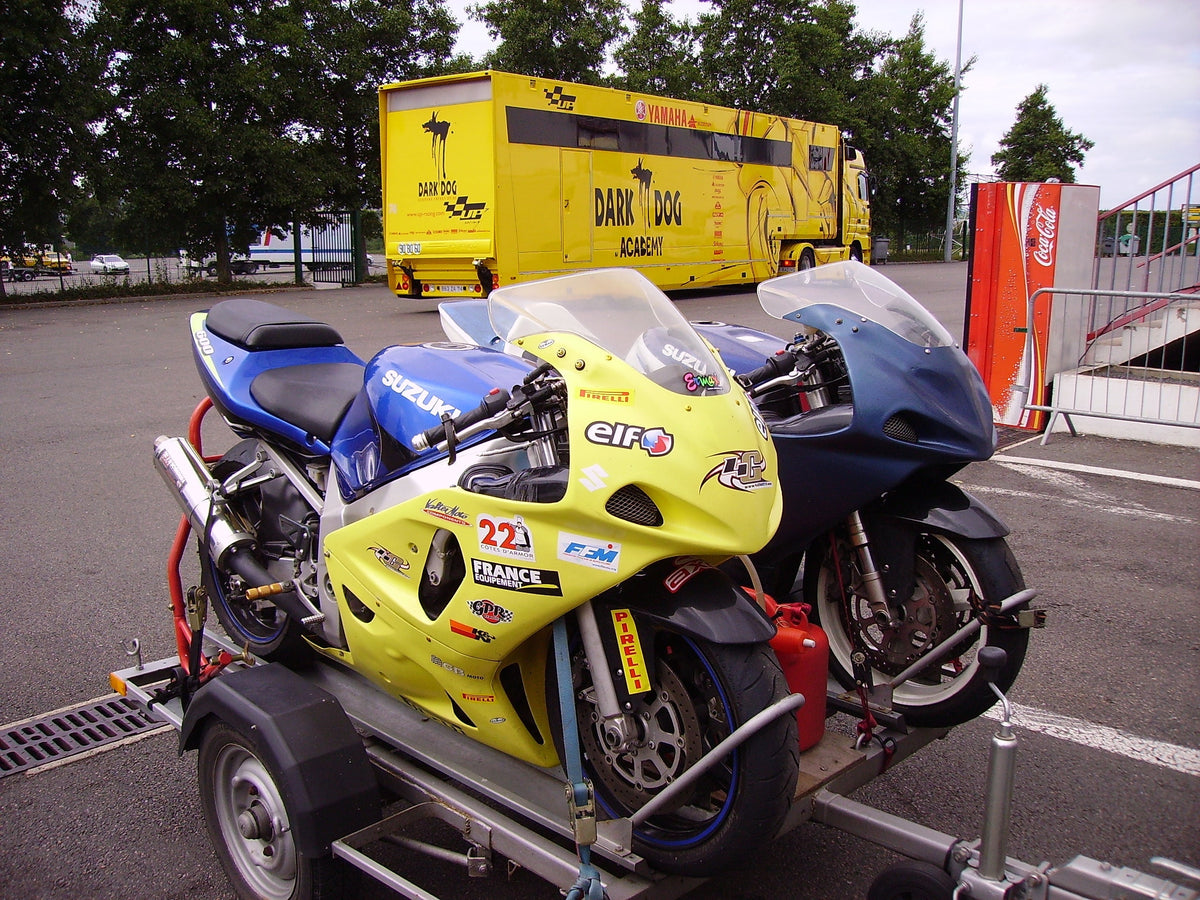
Cover photo: two Suzuki GSX-R race motorcycles sharing a trailer at Magny-Cours, photographed by Cjp24 via Wikimedia Commons, CC BY-SA 4.0. The original photograph is used unmodified. Editorial scene only; not a NiceFairings product or a loading-safety demonstration. Pictured brands do not endorse NiceFairings.
Agree who will see the bike at each handover
Write down who is present at pickup, who will load and secure it, who may check it en route, who receives it, and who is authorized to release it. That matters for a club trailer, a dealer pickup and a paid carrier alike. A friend who lends a trailer is not necessarily the person who handles the motorcycle. If the bike changes vehicles or spends a night in storage, treat each transfer as another handover rather than pretending the original pickup record covers the entire journey.
Confirm the practical details in writing: pickup and delivery windows, motorcycle identity, keys and alarms, removable accessories, loose parts, special clearance concerns and the contact to call if an issue appears. Ask the transporter what their contract or operating procedure requires before placing anything in the vehicle. This is recordkeeping guidance, not a substitute for their terms, your policy or local law. Do not photograph somebody else's private address or identification document for a public blog or group chat.
Make the before-loading images repeatable
Choose a safe, dry place where the bike can stand upright without moving it solely for a photograph. Take full-bike views from both sides, front and rear at roughly wheel height. Then take closer images of the nose and windscreen, both mirror bases, side-fairing leading edges, lower panels, tail edges, tank-to-panel seams and any existing chip or repaired tab. Add one image that locates each close-up on the whole bike. It is hard to interpret an isolated thumbnail of black plastic six days later.
Keep the original, unedited files with timestamps. A simple file naming pattern such as pickup-left-wide, pickup-left-nose and pickup-right-tail makes comparison possible. Note dirt, rain spots and reflections, because a polished scrape can disappear in one lighting condition and become obvious in another. Do not draw a circle over the only copy of a photograph; make a marked duplicate while keeping the original.
Record the motorcycle's year, model, registration or VIN privately, but mask those identifiers on any image you share publicly. Photograph aftermarket items that alter transport clearance: tall screens, rear-seat cowls, winglets, luggage mounts, frame sliders, auxiliary lights or unusual mirrors. A support that was already loose should be written down, not quietly treated as transport damage later.
Use a short condition grid instead of “looks fine”
A useful handover sheet has one row per area: nose/screen, left upper, left lower, right upper, right lower, mirror bases, tail, tank junctions and removed accessories. Give each row a simple status: clear in the photographs; existing mark described; not visible; or needs inspection. Link it to the corresponding file name. The word “clear” means no visible issue in the available view, not a mechanical certification. If a panel's inner tab cannot be seen, say so.
Keep observed facts apart from guesses. “Two-centimeter scuff at left lower edge, shown in image 06” is useful. “Shipping company cracked it” is an attribution that the pickup photo alone may not support. If a fairing had a pre-existing repair, record the seam, texture or adhesive visible at pickup without trying to diagnose its strength from a photograph. The same discipline protects the transporter from being blamed for an old mark and the owner from losing track of a genuine new one.
Record the loading arrangement without turning photos into instructions
Photograph the completed load from enough distance to show the bike, wheel restraint, anchor layout and nearby cargo. Then record close views of the strap paths and clearances at the nose, fairings, mirrors, cables and exhaust. The owner and transporter should check the actual motorcycle, trailer and restraint manufacturers' instructions. Harley-Davidson's truck-loading guidance, for example, tells readers to consult their operator's manual and keep straps from binding hoses or wiring. Its examples are not universal attachment points for a sportbike.
Mark each photo as “after loading” rather than mixing it with the pickup condition set. If a strap or buckle appears to touch painted bodywork, stop and resolve the path before departure; a towel is not a substitute for a sound load arrangement. If a wheel chock is present, do not infer from its photo that the bike is adequately secured. The chock and strap system must be used as designed. The record documents what was done; it does not certify cargo safety.
Detached mirrors, seats, screens or panels need their own line: item, condition, packaging, container and who has custody. A loose mirror placed beside the front wheel can scratch the bike even when the straps are perfect. If removal is needed, use the exact motorcycle procedure and label its hardware. The handover should state what the destination person expects to find.
At a safe stop, write the change—not a diagnosis
If the transporter makes a scheduled, safe stop, check the load according to their equipment instructions. Photograph a changed strap path, displaced sleeve, shifted cargo or new contact point before adjusting it, provided it is safe to do so. Then correct the restraint problem. Never enter a trailer or work around traffic in an unsafe position merely to complete a photo log. The motorcycle's stability takes priority over a perfect record.
A concise log might say: “Stop 1, left rear loose end secured; no observed buckle contact,” or “Stop 2, tool case moved; re-secured away from right lower fairing.” It should not say “no damage anywhere” unless the whole bike was actually visible and inspected. If an incident occurs, preserve the original files and note who was present. Do not rebuild a missing timeline from memory weeks later.
Inspect before the receiving rider rides away
At delivery, safely photograph the still-loaded bike before restraints come off. Then record the unloaded motorcycle from the same four wide angles and the same close-up zones used at pickup. Check detached accessories against the inventory. Comparison is strongest when light, angle and distance are similar; it is weaker when one set is a bright workshop and the other is a dark street. If conditions are poor, note the limitation and make a further safe inspection in daylight.
The receiver should distinguish finish marks, loose bodywork and possible mechanical or safety concerns. A fresh rub mark next to a buckle path and an old stone chip far from it are different observations. A crack at a mirror base may require inspection of the stay behind it. If a light, control, brake line, mount or wheel area is suspect, do not declare the bike roadworthy from photographs. Arrange qualified assessment before riding.
If a visible difference is found, describe it neutrally on the delivery sheet, identify the photos, and ask both sides to keep copies. Signatures, where used, should acknowledge what was observed or received, not be treated as automatic proof of fault or waiver of rights. The carrier contract, policy and jurisdiction govern any formal claim process. If someone was unavailable to inspect, write “received without full inspection” rather than silently checking “no damage.”
If a new mark appears, preserve the sequence
Do not wash, buff, repaint or replace the panel before its condition has been documented and any insurer or carrier inspection requirements are understood. Keep the pickup, loaded, stop and arrival files in separate folders. Save messages, job numbers, the condition sheet and any estimate revisions. If the difference is cosmetic only, ask a repairer whether it can be refinished; if a tab, bracket or adjacent safety component is involved, have that assessed first.
When obtaining an estimate, ask for the actual affected component, proposed operation and labor to be itemized. “Full new bodywork” is not an automatic response to one transport rub. Equally, polishing a scuff will not mend a fractured mount. Our older-CBR mounting audit illustrates the distinction between a painted panel and the support behind it; its model-specific findings are not a diagnosis for another machine.
Where replacement is appropriate after assessment, use the NiceFairings collections to identify the exact model and year, then verify the listing's included pieces. Do not promise that a kit includes a mirror, stay, hardware or labor merely because those appear in a transport estimate. If the existing design must be reproduced, the custom-fairings page is a place to discuss a color and graphic brief; reproduction and claim approval are separate questions.
A one-page handover template
Keep this short enough that a real person will use it: motorcycle identity and contact; pickup location and time; people present; keys and loose items; existing marks with image numbers; modifications affecting clearance; loading-system references; after-loading images; stop notes; arrival location and time; items returned; new observations; unresolved mechanical questions; and where the original files are stored. Leave unknown fields blank rather than inventing them.
| Handover field | Record at pickup | Update at delivery |
|---|---|---|
| People and time | Owner, loader, vehicle, pickup time | Receiver, arrival time, any intermediate transfer |
| Bike identity | Exact model/year; keep registration or VIN in private records | Confirm the same bike and returned keys |
| Condition zones | Nose/screen, mirrors, both uppers and lowers, tail; existing marks with photo IDs | Repeat the views; note new, unchanged or not inspected |
| Loose items | Removed parts, packaging, hardware and custodian | Inventory each item returned or missing |
| Loading and stops | Completed-load images, equipment reference and initial clearance observations | List safe-stop changes and any unresolved concern |
| Exceptions | Areas not visible or not inspected; reason | Further daylight or qualified inspection needed; person responsible |
This is a condition-record aid, not a cargo-safety certification, liability waiver or insurance form. Keep the original dated photographs and follow the actual carrier, equipment and policy requirements.
For a shared club trailer, the most important discipline is consistency: the same naming, zones and handover rule on every trip. For a paid carrier, ask how their form and claims process relate to your own record before departure. For a private friend, make the record collaborative rather than accusatory. The purpose is to give everyone a reliable description of the bike, not to write a legal conclusion on a loading ramp.
The safe order remains simple: first secure the motorcycle under the applicable equipment instructions; then record each custody change; then compare condition before riding or ordering panels. A clean handover record cannot eliminate transport risk. It can keep a fairing problem from becoming an argument built on two incompatible memories.

