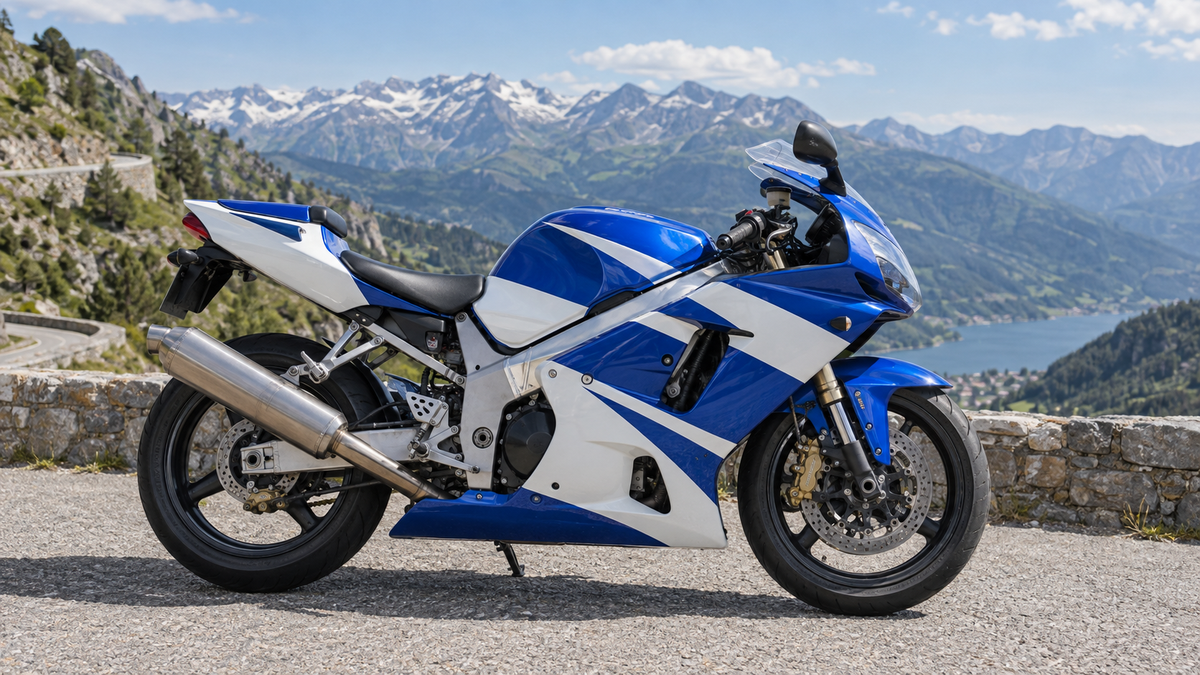
A 2000s sportbike can look convincing with its original color scheme, an era-inspired repaint or a completely personal design. The useful first decision is what you want the finished bike to represent. A new fairing set that resembles a factory scheme is a reproduction; it does not become surviving original bodywork because the colors look familiar.
This guide focuses on that visual choice. If the motorcycle needs mechanical or accident-damage assessment, arrange that separately before committing to cosmetic work.
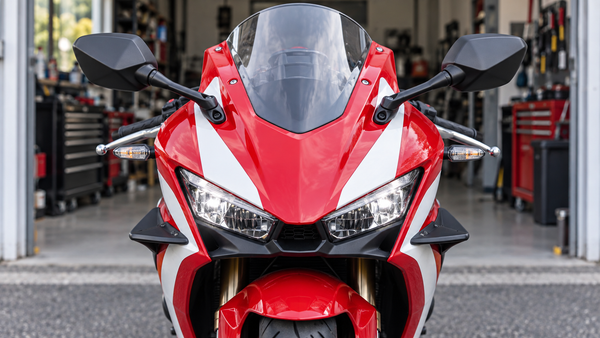
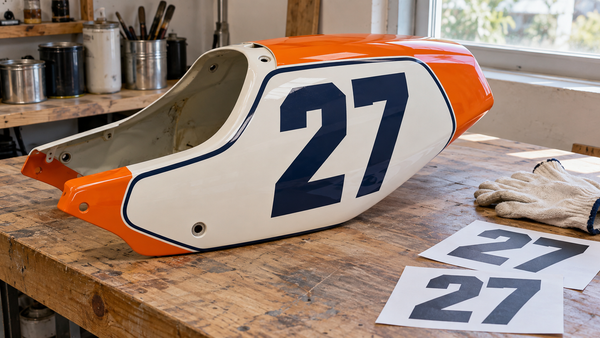
AI-generated styling illustration of a fictional build, not a customer motorcycle or a model-year fitment reference.
Choose the kind of project you actually want
Documented factory-style restoration
Choose this direction when the exact original appearance matters to you. Start with the model, model year and market, then collect factory brochures, manufacturer photographs and relevant parts references. Check both sides: a front three-quarter press photograph may hide a different graphic on the other panel.
Separate surviving original parts, replacement OEM parts and newly painted reproduction pieces in your records. These can belong to the same project, but they have different histories. Where a reference is missing, mark the detail as uncertain rather than filling the gap with a photograph of a similar year.
Era-inspired restomod
This approach borrows the visual language you like without claiming an exact factory specification. Broad color blocks, a restrained stripe and a simpler tail can suggest the period while leaving room for your own palette. The aim is a coherent interpretation, not a list of historical claims.
A hypothetical example: an owner keeps a blue tank and silver wheels, chooses white main side panels and repeats a blue accent on the tail. The result can feel appropriate to an older sportbike without being described as a genuine factory colorway.
Personal livery on a familiar silhouette
If originality is less important than daily enjoyment, choose the colors and graphics you want. An original personal design might use one strong body color and a small contrasting accent. It does not need to imitate a race team or collect sponsor marks to look finished.
Keep the request realistic for the actual panel shapes. A styling reference from a newer motorcycle is useful for color balance, but it does not establish that the newer bodywork will fit your older bike.
Build a reference board with a purpose
Use a small number of clearly labelled images. One group should document your actual motorcycle and retained parts. A second can show verified original appearance. A third can contain creative references, labelled with exactly what you like: the stripe width, the contrast or the amount of white space.
Do not send ten different bikes with the instruction “something like these.” Choose one main direction and identify the exceptions. A blue from one photograph and a graphic from another may look different when combined; ask to review the proposed combination rather than assuming the references are interchangeable.
For the separate task of recording an older bike's current bodywork, use our used-motorcycle fairing planning guide. Here, keep the reference board focused on what the finished design should communicate.

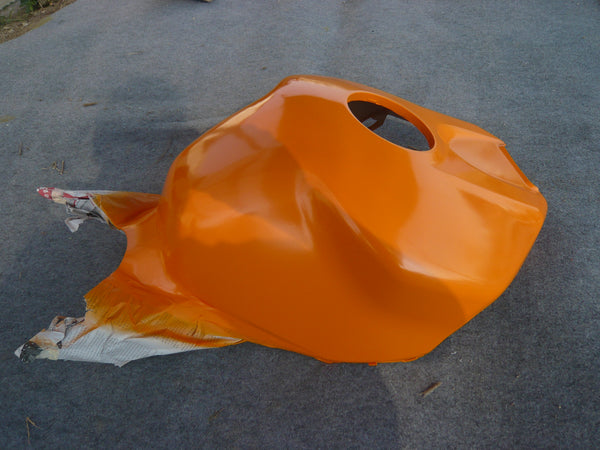
NiceFairings catalog photograph: a solid-color replacement kit illustrates a personal color direction, not an original factory finish. Confirm the listing application separately.
Let retained parts influence the new design
The tank, wheels, seat and visible frame remain part of the picture. Decide which of those finishes will stay before choosing the new fairing palette. A deliberate contrast can work just as well as a close match; what matters is specifying the relationship rather than discovering it after delivery.
If the tank stays blue, for example, you could use white panels with blue accents instead of requesting an exact match across every surface. If a close match is essential, discuss the available physical reference and the limits of matching an aged finish. A screen image cannot settle that question.
Consider the whole side view first, then inspect the nose and tail. Small details should support the main design. You can keep a distinctive period graphic while reducing other visual clutter; faithful details and a readable overall design are not mutually exclusive.
Turn the idea into a clear enquiry
A useful brief names the exact bike, the intended design direction, retained colors and the pieces being requested. Include current photographs and distinguish your styling reference from a compatibility reference. Ask the supplier to confirm the available kit and finish rather than assuming every reference can be reproduced.
- Direction: documented reproduction, era-inspired or personal.
- Bike: model, model year, market and relevant bodywork changes.
- Keep: tank, wheel and seat colors that must be considered.
- Design: main color, accent placement and any graphics to include or omit.
- Order: the panel list, finish, supporting items and unresolved questions.
Keep serviceable original bodywork if you want the option to revisit the design later. Our bodywork storage guide covers that separate practical task. Keeping parts and records preserves options; it does not promise a particular resale price.
Explore custom fairing design once the direction is clear, or send your model details and reference board for an order-specific discussion. A successful restomod begins with an appearance you can explain, not a claim that every changed part is original.