Your favorite fairing design can look completely different once it is next to the wheels already on your motorcycle. A bright blue rim may become the visual anchor of a black-and-grey kit; a warm gold wheel can make a cool silver look quite different from the product photo. You do not need to repaint the wheels to make the combination feel deliberate. Start with what you are keeping, choose the role the wheel color will play, and give the fairing supplier a clear panel-by-panel brief.
This guide is about the appearance of a fully faired sportbike, not wheel refinishing or a promise to match an existing finish. The examples are design options, not rules or popularity rankings. Before choosing a color, identify your exact motorcycle and the intended kit in the NiceFairings collections; the color plan cannot establish fitment.
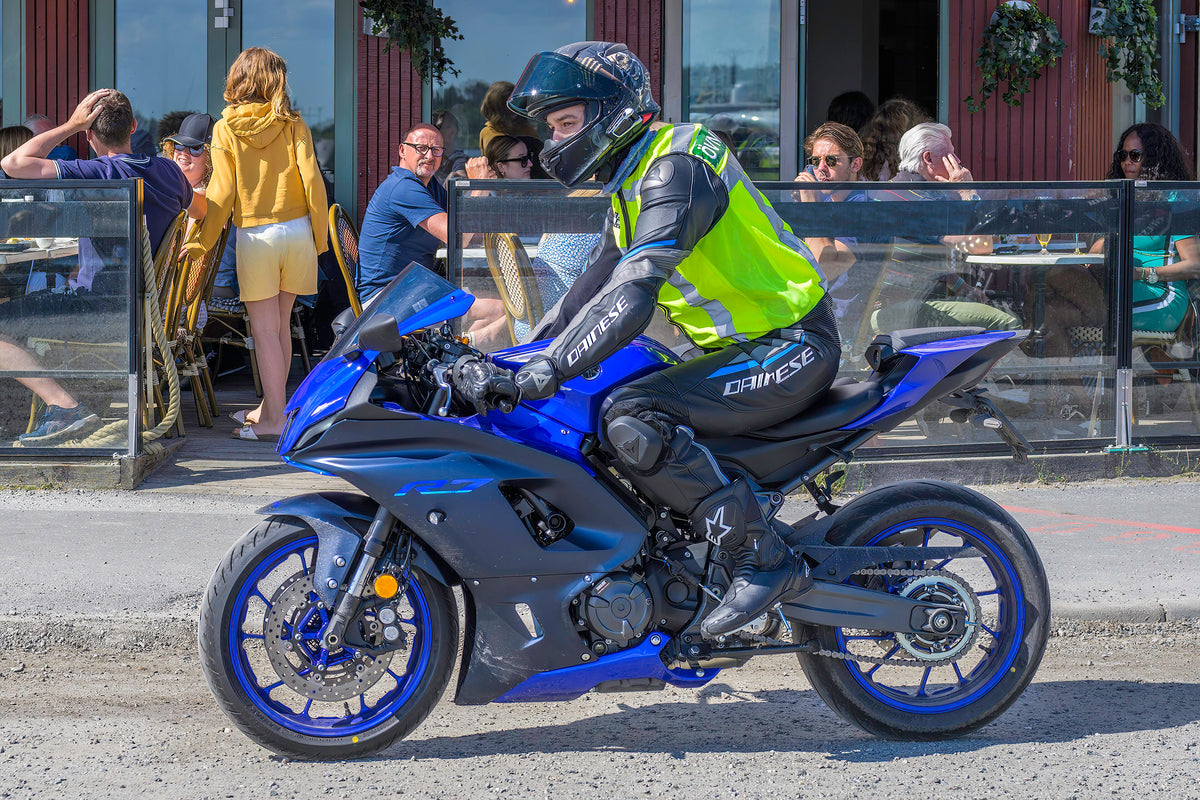
Cover: a Yamaha R7 with blue wheels photographed by Bengt Nyman, CC BY-SA 2.0. Resized for web; editorial photograph, not a NiceFairings customer installation or an example of a supplied kit.
First decide what is actually staying
Photograph both sides of the motorcycle before browsing designs. Include each complete wheel, the fuel-tank area, front fender, frame, forks, brake components, seat and tail. Record any existing wheel stripes or aftermarket parts that you intend to keep. A small close-up of the wheel in daylight helps, but the side view shows how much of that color is visible once the motorcycle is viewed as a whole.
Make three columns: keep as-is, replace with the kit, and undecided. A blue tank and blue wheels may need to work together even if the current fairings are leaving. If the tank is being wrapped, painted or covered separately, state that as an open decision rather than asking a supplier to infer it from the kit picture. The existing R9 tank and dark fairings guide deals with the retained tank; here the starting point is the wheel and the color seen low on both sides of the bike.
Wheel finish is not just a color name. A bright metallic blue wheel, a dark blue wheel and a blue rim stripe can each create a different balance. Take one view in open shade and one in daylight, without heavy filters. Phone screens and cameras alter color, so the photographs are discussion tools, not a substitute for an agreed physical sample when a close match matters.
Give the wheel one of three jobs
- Quiet anchor: Let the wheels ground the bike. Keep the lower area restrained and put the main color higher on the panels. Try this when existing black, charcoal or silver wheels already suit the scheme.
- Repeated accent: Echo the wheel color in a narrow stripe or defined graphic. This can connect a distinctive wheel color to the bodywork.
- Deliberate contrast: Choose a body color that gives the wheels room to stand out. This works when you like the wheels but do not want an all-matching motorcycle.
These are starting points. You can combine them, but write down which idea should dominate. If a wheel is already a strong visual feature, echoing its color on the nose, every vent, the tail, the fender and the seat can make it difficult to see the bodywork's shape. Start with one or two zones; add more only after viewing the full side profile.
Example: blue wheels without an all-blue motorcycle
Suppose the motorcycle has vivid blue wheels and a dark tank. One option is a satin charcoal body with a small blue line on the side panel and a blue detail on the tail. The wheels remain the most saturated parts, while the fairings connect front and rear. A second option uses a blue upper fairing and dark lower panels, allowing the wheel color to feel part of a larger theme. A third keeps the body largely white, black or grey and lets the blue wheels be the contrast.
None of these is a verified NiceFairings color combination or a claim of exact blue matching. A blue that looks right on a flat graphic may be too violet, too pale or too saturated next to the actual wheel. If an exact match is important, ask what physical reference the supplier can review and what approval process is available before you place an order.

Black, silver, gold and bright wheels: practical starting points
Black or charcoal wheels
Dark wheels can support a wide range of body colors because they do not add a second bright hue. That does not mean the rest of the design is automatically balanced. On a dark bike, tires, wheels, frame and lower fairings may merge into one mass in shade. A lighter tank, graphic or upper panel can make the silhouette easier to read; a fully dark finish can also be the desired outcome. Look at the bike from a few steps away as well as close up.
If the wheels are charcoal rather than black, compare them with the intended lower fairing. A charcoal wheel next to a warm brown-black panel may be an intentional contrast, but a product photo is rarely enough to settle the question. Describe whether your aim is matching, a small tonal difference or a clearly different finish.
Silver or bare-metal-looking wheels
Silver wheels can pick up light strongly, especially alongside dark bodywork. A silver graphic can echo them, but it need not copy their exact reflectivity. A flat grey stripe and a metallic wheel are different surfaces; ask for both the hue and the visual effect you want. If the motorcycle also has silver forks or frame sections, decide whether those pieces form one family or whether the wheels should stand apart.
The proposed design can be quiet: dark blue fairings with a narrow pale graphic and the existing silver wheels. Or it can be brighter: white panels with a darker lower area. Neither combination promises the look of a particular factory color. Use it as a brief to discuss, then compare it against a reference before approving production.
Gold or bronze wheels
Gold and bronze can range from a pale champagne appearance to a deeper brown-gold. A warm grey, cream, dark green or black fairing may be a starting point, but there is no single correct pairing. The important distinction is whether you want the wheels to look like jewelry against the body or to sit quietly with other warm details.
Gold forks, decals and wheels can appear different even when all are described as gold. Do not assume a photograph establishes identical paint, anodizing or metal finish. If you use a gold graphic, ask whether the goal is an exact reference, a coordinating warm accent, or simply a contrasting line. The last two may be easier to approve honestly than an unsupported promise of a perfect match.
Red, blue, orange or another saturated wheel
A saturated wheel can carry the design on its own. The bodywork does not have to repeat it. A dark grey motorcycle with red wheels, for example, can leave the wheels as the only red elements; alternatively, a restrained red tail detail can make the front-to-rear composition feel more connected. If the tank is another strong color, compare all three before choosing graphics: wheel, tank and fairing.
For especially bright wheels, check the design at thumbnail size. Small accents may disappear in a product listing; large blocks can make the wheel feel less important. Look at an unfiltered side view on your own phone and computer where possible. This is a preference test, not a color measurement.
Plan the colors around the bike, not around one loose panel
The front fender sits close to the front wheel, so a matching color will create a more concentrated visual area than the same color on a tail panel. The side fairing links the front and rear wheels, while the nose establishes the front view. A graphic that looks subtle from the side may be dominant from the front. Request or mark up views from both sides and the front, using the actual parts you intend to retain.
Build the plan in this order:
- Identify the fixed colors: wheels, tank or tank-area trim, frame and seat.
- Choose a main fairing color: name a reference and describe the desired lightness and finish.
- Choose an accent role: matching, coordinating or contrasting with the wheels.
- Assign each zone: nose, left and right sides, lower panels, front fender and tail, only where those pieces are included.
- Mark unresolved parts: windscreen, tank cover, solo-seat cover, hardware and any trim that may be reused or supplied separately.
Write left and right separately if a graphic is asymmetrical. Mark where a stripe begins and ends at a panel edge, rather than writing “blue stripe like the picture.” Our graphic planning guide goes deeper into seams and viewing angles. A reference showing a different model is useful for mood, but its panel boundaries and mounting points may not exist on your bike.
Finish matters as much as hue
Gloss, satin and matte describe the character of the surface reflection. A gloss blue graphic can look brighter than a low-gloss blue next to it, even if a photograph gives them similar names. Metallic and pearl effects add another variable as the viewing angle changes. Ask for a reference that shows the intended color and surface effect; do not assume that a wheel finish and a painted plastic fairing will reflect light identically.
If exact color matching matters, ask for the supplier's available sample or approval method and discuss its limits. A display, a compressed message attachment and a phone camera are not a calibrated measurement. Even an agreed reference should be discussed under more than one lighting condition. Do not promise that a graphic will reproduce the color of a wheel in every environment.
The matte and gloss guide covers finish choices panel by panel. This wheel-first plan answers a different question: what happens when the color you cannot see in a loose fairing photo remains on the motorcycle after the new kit is installed?
Build a supplier brief that can be answered
Send the exact model, model year, market and a link to the specific kit you are considering. Include both side photographs and a front view, identify modifications, and list the parts you intend to retain. Explain whether the wheel color is a reference for an accent or whether you are looking for a close match. Ask what is included in the selected listing and whether the particular design request is available; do not assume a pictured accessory or optional piece comes with every kit.
For example, a useful request might say: “The blue wheels and tank stay. I am interested in a dark body with a small blue accent on each side and a dark front fender. Please confirm the kit for my exact motorcycle, which panels are supplied, and what color reference you need before quoting.” That is a hypothetical request, not a claim that a particular finish or free preview is available.
If a supplier sends a rendering or sample, check the proposed panel locations, the retained tank, the wheel color relationship and the finish. A rendering is a planning aid: it does not prove physical fit or reproduce the final appearance in every light. Resolve unanswered questions in writing before approving a custom order. Keep the original reference and the approved revision together so an installer or supplier can see what was actually discussed.
Browse the motorcycle fairing collections for your confirmed model and use the custom fairings page to discuss a design. The best result is not necessarily the one with the most matching parts. It is the one where the wheels, retained pieces and new bodywork look like a choice you made together.
Frequently asked questions
Do my wheels and fairings have to be the same color?
No. They can match, share a small accent or contrast. Start with the actual wheels and retained parts, then decide which element should draw attention.
Can a supplier match my wheel color from a photo?
A photo can communicate direction, but lighting, screens and surface finish can change its appearance. Ask about a physical reference or available approval process, and agree on the limits of any match before ordering.
Does choosing an R7-inspired design mean it fits my motorcycle?
No. A photograph can inspire a palette, not confirm fit. Verify the exact model, year, market, modifications and listing with the supplier before ordering.
Will the fairing kit include a tank cover or front fender?
Contents vary by listing and option. Ask the seller to identify the supplied pieces and items you must retain or purchase separately. A color illustration is not a packing list.