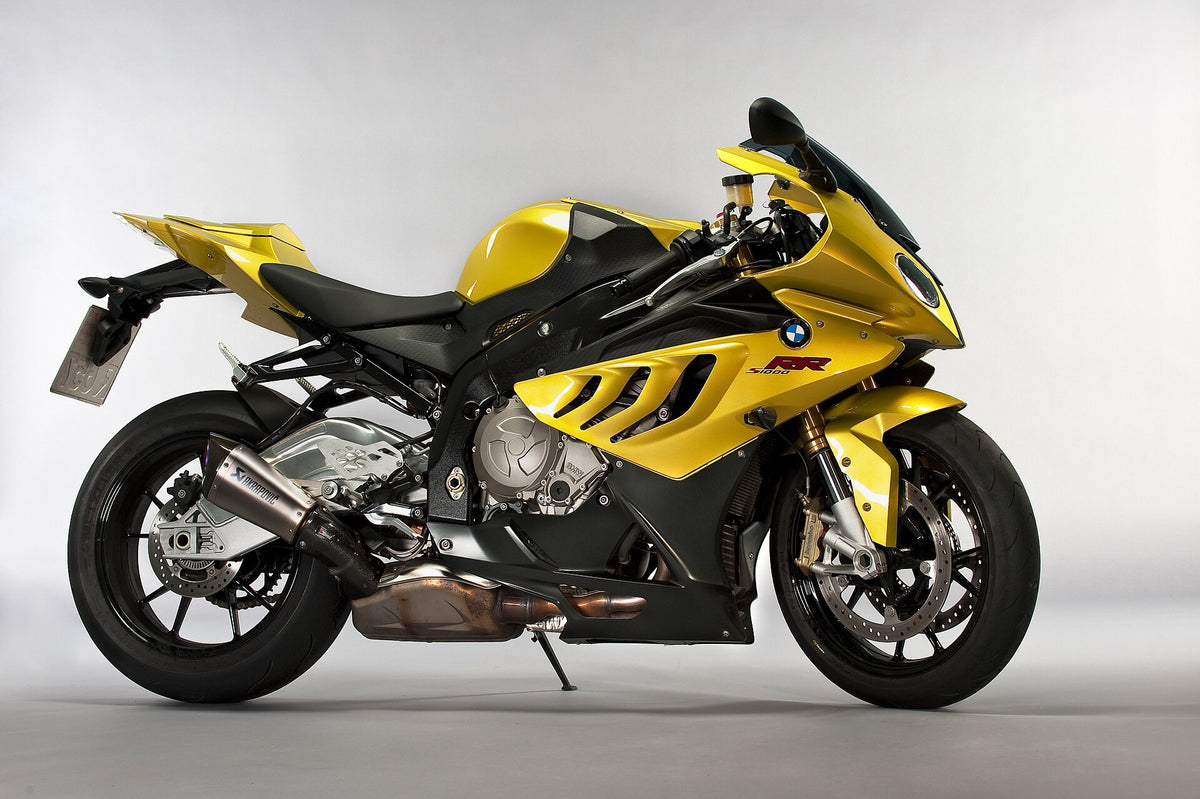
Cover photograph: yellow and black BMW S1000RR by Stefan Krause, Germany, Wikimedia Commons · CC BY-SA 3.0. Photograph unchanged; display crop may vary. Earlier-generation motorcycle reference, not a NiceFairings product or a completed newer-look conversion.
A newer-looking fairing set is not evidence that it fits your S1000RR. Before ordering, establish whether the seller is offering a replacement in the original shape, a cosmetic interpretation of a later design, or a documented conversion that changes connected components. This guide helps you turn that proposal into a parts list you can discuss with the supplier and a qualified installer. The aim is to find missing scope before you pay, rather than discover it halfway through assembly.
Key Takeaways
Record the exact model, model year, market specification and existing modifications. Styling and registration year alone are not enough to identify the bodywork you need.
Make a scope table that shows each panel, the parts it connects to, and if you reuse or replace them. Get part numbers and written proof from the supplier.
Stop if parts bind, mounting points disagree or the supplied instructions do not explain the proposed configuration. Do not modify parts to resolve an unexplained mismatch.
Place your order only when every row in your scope table has written proof. Wait if any row still shows that proof is pending.
A supplier part reference identifies an item; it does not, by itself, establish compatibility. Ask for the application and supporting installation information too.
Replacement or Conversion: Know the Difference
Like-for-Like Replacement Panels
A like-for-like replacement is intended for the original body shape and mounting arrangement. It can still have a custom color. You must check the actual application, included hardware and condition of the supporting parts; an unchanged appearance does not guarantee a simple installation. The important distinction is whether the proposal keeps the original arrangement or asks you to change it.
If you are simply replacing damaged panels in the original shape, start with your model-specific listing. This article addresses a different question: what else must be accounted for when the seller describes the bodywork as a newer-look conversion?
A Conversion Needs a Documented Parts Scope
A newer-look proposal may mean only revised styling, or it may depend on a different nose, light assembly, support, duct or adjoining panel. Ask which meaning applies. Do not assume that every conversion requires all of these changes—or that a bag of painted panels includes all the associated parts. The seller should identify the exact configuration they intend to supply.
Start with the exact listing and its written application. Ask whether the supplier actually offers the proposed conversion for your bike; a catalog of ordinary replacement fairings does not establish that service. Treat the scope as a buying check, not engineering approval.

Identify Your Bike Before Any BMW S1000RR Fairing Conversion
Confirm Model Year, Generation, and Market
Use the manufacturer identification information and, where needed, BMW or dealer assistance to establish the exact model year and variant. Do not rely only on an advertisement, registration year or current paint scheme. Record which parts are original and which are known replacements. If you do not know, label the item as unconfirmed rather than treating it as stock.
BMW's announcements provide useful design landmarks. Its 2015 S1000RR release describes revised styling with asymmetric headlights. The new 2019 model announcement followed in November 2018. The 2023 model release introduced winglets. BMW then described revised winglets, a new front wheel cover with brake ducts and new side panels in its 2025 model announcement.
These landmarks help explain why “2023+ look” is an incomplete description. They do not provide a parts interchangeability chart. Ask the seller to name the intended appearance and the actual donor-bike application separately. A launch photograph cannot tell you whether a particular aftermarket kit uses original or redesigned mountings.
Inventory Modifications and S Versus M1000RR
Keep the S1000RR and M1000RR names distinct. An M-inspired color scheme is not an M1000RR conversion. If the listing uses both model names, ask exactly which applications it covers and which components that claim includes. Do not infer shared or incompatible parts from the name alone.
Next, write down the modifications that may affect the bodywork: windscreen, lights, sliders, exhaust, brackets and previous panel changes. Include photographs and identifiable part references. For an altered exhaust, use the separate S1000RR exhaust and fairing order checks to document the relevant configuration without guessing clearance from a stock-bike image.
Do not assume parts are shared between generations or between S and M models. Where the supplier uses its own item codes instead of OEM numbers, record those codes and the stated application. The distinction between an OEM part number and a seller SKU matters: neither should be treated as a compatibility conclusion without the associated information.

BMW S1000RR Fairing Conversion Scope Table
List the Components and Their Supports
A scope table turns a vague promise into a clear list. Build one row for each proposed component, then ask which surrounding parts and supports must work with it. For the nose, that may involve the headlight assembly, front stay, screen and ducts. The precise connections depend on the actual design, so use the applicable parts diagrams and supplier instructions rather than a universal diagram.
Mark each item as retained, supplied with the kit, separately sourced or unresolved. A painted panel and its support may be separate purchases. If a seller says “reuse your original hardware,” ask which hardware that means and whether there are exceptions for the proposed conversion. Save the listing and the answer together.
Leave Unknown Items Open
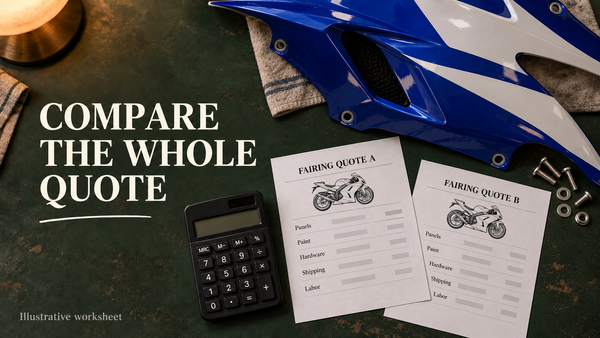
The worksheet below is deliberately blank on inclusion and reuse. It is not a parts list for a particular conversion. Complete it with the supplier, using the actual kit references and any installer questions.
| Area to resolve | What to ask | Record in your proposal |
|---|---|---|
| Nose and headlight | Which nose and light assembly does the proposal use? What supports them? | Item reference; retained/supplied/separate; evidence or question pending |
| Front stay and screen | Are the existing support and windscreen retained? Which replacements are required? | Item reference; retained/supplied/separate; evidence or question pending |
| Ducts and adjoining panels | Which ducts, trim and adjoining panels are included or reused? | Item reference; retained/supplied/separate; evidence or question pending |
| Wing elements, if present | What is the documented attachment arrangement and which mounts or hardware are included? | Item reference; retained/supplied/separate; evidence or question pending |
| Lower panels and front fender | What is retained, and what must be checked against installed equipment? | Item reference; retained/supplied/separate; evidence or question pending |
| Wiring and small fittings | Which clips, grommets, light connections and other fittings must be transferred or separately obtained? | Item reference; retained/supplied/separate; evidence or question pending |
Complete this table before committing to the proposed scope. Written answers make omissions visible, but they are not a test result or engineering approval. If the proposal requires changes beyond ordinary panel replacement, have a qualified installer review the actual parts and instructions before deciding to proceed.
A useful answer links a specific item reference to your exact application and explains what must be retained or changed. “It fits all years” without that detail leaves the question open. Ask the supplier to resolve the uncertainty rather than filling it in yourself.

Supplier Evidence and the Message Template
Ask About Headlights, Ducts, Mounts, and Wings
You need written answers before you trust any listing. A photo of a finished bike does not prove the parts fit your build. Ask the supplier to confirm the exact listing, the kit contents, and the panel-by-panel scope in writing. This step turns a vague promise into a record you can check.
Send a short message. Ask about the headlight, ducts, front stay, screen, adjoining panels and any wing attachment. Ask what installation instructions are available and what equipment or specialist work the proposal requires. Photographs of the supplied pieces and their mounting areas can help identify omissions, although they cannot establish installed fit by themselves.
“My bike is [verified model/year/market] with [listed modifications]. I am considering [exact listing/reference]. Please state whether this is an original-shape replacement or a conversion. Please identify the parts supplied, parts to retain, parts to buy separately and any unresolved requirements for lights, stays, ducts, screen, adjoining panels and wings. Please provide the applicable instructions and confirm which configuration your fitment claim covers.”
Separate Styling Labels from Application
If a proposed design borrows the appearance of another model, ask the seller to separate the visual description from the actual application. The label “M-style” can describe graphics; it does not tell you which light assembly or bracket the kit uses. Keep those answers in the parts scope.
Before payment, also check how the seller handles an unresolved fitment problem and whether any proposed modification would affect return eligibility. Keep your correspondence and photographs. Do not assume parts remain returnable after fitting or alteration; the relevant order terms govern that question.

Trial-Fit Stop Conditions and Decision Summary
Stop Conditions Before Any Modification
Once the parts arrive, compare them with the agreed scope before assembly. A qualified installer should use the applicable instructions to check the actual arrangement. Keep packaging, labels and photographs while any issue is being resolved. Trial fitting can reveal problems, but it does not replace the full installation checks required for the motorcycle.
Pause if a panel must be forced, a support appears damaged, a mounting point does not agree with the instructions, or the proposed parts interfere with another component. Do not drill, file, bend or add improvised spacers to resolve an unexplained mismatch. Photograph the issue and ask the supplier or installer to establish the cause first.
Hardware, washers and any fastening products must follow the applicable specification. Their presence is not automatically evidence of a bad fit; using them to conceal an unexplained mismatch is the problem. This guide does not supply universal torque values or installation procedures.
Document the exact parts involved, the label or reference on each, and a clear view of the mismatch. Ask for a specific resolution rather than a general instruction to “make it fit.” Do not ride with incomplete, loose or unresolved bodywork.
Go, Pause, or Walk Away
Separate the purchase decision from the installation decision. Before ordering, you need a credible, documented parts scope and clear responsibility for separately sourced components. After delivery, you need the actual supplied parts checked and correctly installed. A successful trial fit cannot be a prerequisite you have already completed before purchasing an unseen kit.
Pause the order if a necessary component is still unidentified or the conversion requires work nobody has agreed to undertake. Pause installation if the received parts differ from the scope or an unexplained fitment issue remains. These are different checkpoints, so keep them separate in your notes.
Choose another proposal if the seller cannot explain the intended application or the required supporting parts. For original-shape replacements, browse the BMW S1000RR fairings collection and confirm the exact listing for your model. A replacement-kit listing should not be read as an offer of cross-generation conversion parts.
The useful outcome is a clear answer to three questions: what changes, what stays, and who has confirmed the requirements? If those answers are missing, a newer-looking fairing photograph is still only a styling reference. Resolve the parts scope before committing to the look.



.jpg)
