A painted fairing set can look persuasive in one photograph. That is also its limitation: the picture shows the visible shells, not the exact motorcycle, the parts behind them or the history of repairs to your bike. This matters especially for an older Suzuki GSX600F or GSX750F. The model name may appear in a listing alongside a four-year range, while the motorcycle in your garage may have its own combination of original and replacement parts.
NiceFairings currently lists a black-and-purple GSX600F/GSX750F 2003–2006 fairing set. The listing is a real starting point, not independent proof that every GSX-F with a similar silhouette accepts every piece shown. In fact, the most useful work happens before choosing the flame graphic: put a model-specific parts drawing, the actual motorcycle and the product images side by side. This guide explains how to do that without turning a catalog title into a promise it cannot make.
The product photo is evidence of appearance, not a fitting test
The NiceFairings image below shows the outer pieces in the advertised black-and-purple design. It helps you judge their shapes, openings and finish. It does not show the reverse of every mounting point, prove the condition of your stays, or establish a complete box contents list for a particular order. The product description asks buyers to refer to the photos for included body panels. If an unseen inner trim, bracket, fastener, lamp or screen matters to your repair, ask about that item by name before paying. Do not silently count it because the finished motorcycle would need one.

NiceFairings product photograph. The picture represents the advertised design, not a tested fit on the motorcycle shown in this article's cover photograph.
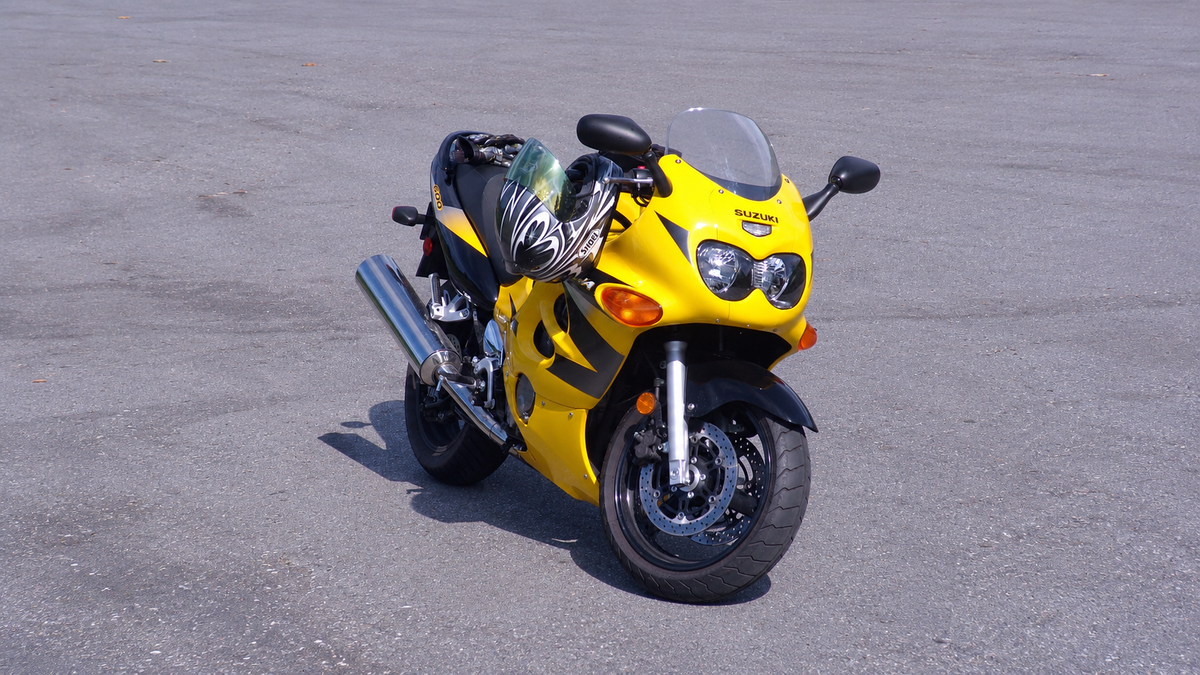
The cover is a genuine outdoor photograph of a yellow GSX600F. It was taken in 2005, but its exact model year and original-part status are not established by the file record, so it is used to show the assembled motorcycle's bodywork relationships—not as proof of the 2003–2006 kit application. Compare its nose, side opening and lower seam with your own bike; then let the correct parts record settle the question. A photograph is a prompt to inspect, not a substitute for identification.
Read the Suzuki parts catalog as a map of separate questions
The parts catalogue for a 2006 GSX750F separates the fairing, cowling body installation parts, under cowling, headlight and indicators into different entries. The 2006 GSX600F catalogue likewise lists separate fairing, installation, under-cowling, headlight and indicator groups. That organization is more useful than a single marketing photograph because it reminds you that an outer shell is only one component of a working front and side assembly.
There is another warning in those catalog menus: entries can distinguish K4, K5 and K6 versions. That does not prove a specific panel does or does not interchange across those years; it tells you to inspect the correct drawing and part reference rather than flattening all three into one assumed part. The market code in a drawing matters too. If your motorcycle is an import, record its market specification and ask a Suzuki parts specialist to resolve an ambiguity. We have not physically cross-fitted the advertised NiceFairings set to every 600 and 750 variant.
A usable parts map has three columns. In the first, write the OEM drawing's name for the piece. In the second, record what is actually on your motorcycle, including whether it appears original, repaired, missing or unknown. In the third, record what the exact NiceFairings listing visibly offers or what support confirms in writing. The columns should not be collapsed. “Shown in the OEM drawing” does not mean “included in the aftermarket carton,” and “shown in the carton photo” does not mean “my existing bracket is sound.”
Start with the upper cowl and headlight opening, then move around the windscreen, mirrors and indicators. Continue down the side panel, lower cowling and frame-cover area. Finally record the front fender, tail and every visible joining edge. The Suzuki catalogue's separate 2006 GSX750F fairing page even lists small spacers, cushions, grommets and clips around a frame cover. That is a concrete reminder to look beyond the large painted surface, not a claim that those OEM items are supplied by NiceFairings.
Record what this particular motorcycle has become
On an older bike, the paperwork identifies the underlying motorcycle; it does not guarantee that every piece of bodywork currently installed is the factory piece for that year. A previous owner may have repaired a stay, replaced one side panel, fitted an aftermarket screen or retained a different fastener arrangement. Conversely, a familiar-looking shape or decal cannot establish the engine size or original specification. A GSX-F is not a GSX-R because it has Suzuki lettering and a full fairing.
Gather six useful views in daylight: both complete sides, a straight-on nose, a front three-quarter view from each side, and a rear view. Add close-ups of the lamp surround, screen edge, mirror bases, indicator mounts, the meeting point between upper and side pieces, the lower edge and each damaged or repaired tab. Photograph the reverse side of a removed panel only if it can be removed safely following the correct service information. Keep fasteners labeled by location, not in one anonymous pile. The aim is to make a question answerable, not to perform an undocumented teardown for a blog post.
If a fairing gap is uneven, do not decide that a new shell will fix it. The issue might be a distorted support, missing rubber part, incorrect fastener stack, repaired tab or another part sitting under tension. A newly painted panel should not be used as a lever to pull a bracket into place. If the bike has collision damage or uncertain steering, lighting or electrical condition, have a qualified technician address those systems before treating the project as cosmetic. Our older-bike bodywork audit explains the same evidence-first distinction on another platform; the Suzuki still needs its own model-specific drawing.
Decide the repair scope before choosing the livery
There are at least three different purchases hidden inside the phrase “I need fairings.” One owner has a sound motorcycle and wants a coordinated visual change. Another has a cracked outer side panel but good adjacent pieces. A third has an impact that also damaged mounting hardware or internal supports. A complete painted set can make sense for the first or perhaps the second; it is not a diagnosis of the third.
For a one-panel repair, compare the cost and availability of a single replacement, the condition of retained paint and the likelihood of a visible color difference. The exact GSX-F listing presents a coordinated black-and-purple design; it does not state that its pieces are sold individually. Ask before planning a single-piece purchase. For a full-set change, map the old and new pieces and identify which original components must be reused. The general complete kit versus stock bodywork guide is helpful for defining the scope, but its generic categories do not replace this model's own checklist.
Do not hide a structural or electrical problem under a new color. After a low-speed tip-over, photograph the side where the bike landed and note cracked tabs, skewed lamp position, rubbed wiring or a screen that no longer sits evenly. Those observations may justify an inspection before any order. A professional's diagnosis can be more valuable than an extra gallery picture: it tells you whether the project is primarily cosmetic or whether the mounting system first needs repair.
Ask the seller questions that a product page can actually answer
Send a concise enquiry referencing the exact black-and-purple listing, the motorcycle's GSX600F or GSX750F designation, documented year, market, and clear images of its current front and sides. Identify any known previous replacements or custom parts. If a particular shell or opening is the reason for your order, circle that area in a copy of your photo and name it in words. “Will this fit my Katana?” leaves too much unresolved.
Ask for a written clarification of the pictured outer pieces and whether the parts you plan to reuse—screen, headlight, indicators, mirrors, inner pieces and supports—are expected to transfer. Ask separately about any damaged bracket or missing hardware. A supplier can confirm the offered kit's application and scope; a product photograph alone cannot inspect your motorcycle. If the answer depends on a missing photo or an unknown model code, pause and collect the missing evidence. A cautious answer is better than a confident but unsupported one.
The GSX600F/GSX750F 2003–2006 collection currently offers this design, and the broader Suzuki fairings collection shows the brand range. Those are navigation aids, not a claim that the collection title overrides the exact listing or an OEM parts reference. If you are still at the model-identification stage, browse only after you have recorded the bike's actual designation. The older GSX-R ordering article illustrates why a neighboring Suzuki name and a similar-looking painted shell are weak evidence of compatibility.
A sensible stopping rule protects the finish and your budget
Before approving a design, you should be able to say what bike you have, which exterior pieces need replacement, what remains behind them, what the seller is offering, and which questions are still open. If any of those answers is “unknown,” you have a task, not a reason to guess. The model-specific parts drawing can help name a question; the real motorcycle and the seller must help answer it.
The reward is not simply avoiding a return. It is preserving the logic of the motorcycle: lamps, screen, panels and hardware have to relate to one another, not merely look good in separate photographs. Once that map is clear, choosing between the pictured GSX-F purple-flame set and a custom-design enquiry becomes a creative decision instead of a gamble about basic fit.
Cover photo: Chad Teer, “Suzuki GSX600F Katana 01.jpg”, CC BY 2.0. The surrounding asphalt was extended for a wide blog card; the motorcycle is based on the real photograph. Its exact model year and fit to this store kit are not verified. It is an editorial image, not a NiceFairings product installation.