Two older Kawasaki ZX-6Rs may share the Ninja name and a green paint scheme, yet belong to different bodywork generations. If you are choosing replacement fairings, a useful first clue is the tail and exhaust arrangement. An original 2007–2008 road bike has an underseat exhaust; the redesigned 2009 model moved to a lower side exhaust. A modified motorcycle can tell a different story, so use the exhaust as a clue—not as a substitute for the model code and a check of the actual parts on the bike.
NiceFairings lists separate 2007–2008 ZX-6R fairing kits and 2009–2012 ZX-6R kits. Choose the collection that matches the motorcycle's verified year and present bodywork, then ask about the specific kit and hardware before ordering. These store groupings are a shopping starting point, not proof that every individual part interchanges within a group.
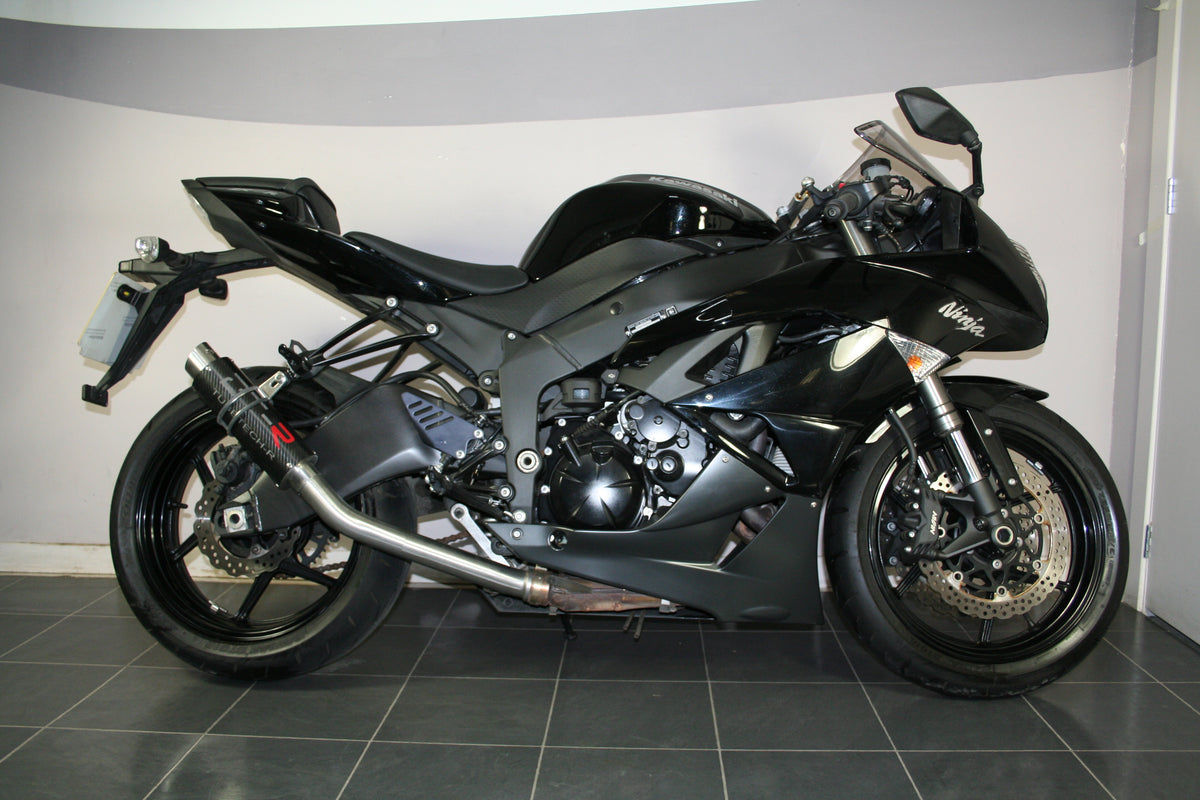
Cover: a real 2009 ZX-6R with an aftermarket Tubetech-R exhaust, photographed by Lavender1988 / Wikimedia Commons, CC BY 3.0. It is an example of a modified motorcycle, not a NiceFairings installation or fitment test.
Why the 2009 boundary matters
Kawasaki described the 2009 European ZX-6R as a full model change. That is a reason to examine the motorcycle and its replacement parts carefully around the change, not a complete compatibility chart for every market or component. The US Kawasaki owner center has separate parts records for the 2008 ZX600P8F and the 2009 ZX600R9F. Select the actual model and market when consulting a dealer or catalogue.
The most visible difference in a stock configuration is the route of the exhaust at the rear. The earlier design places the silencer under the tail; the 2009 redesign uses a lower right-side arrangement, as documented in this period report on the 2009 launch. This affects what an owner should inspect around the rear assembly. A previous owner can change an exhaust or bodywork, so the visible location alone cannot establish the exact model year or certify a replacement tail.

A 2007 ZX-6R on display. The rear bodywork and exhaust area are worth documenting before ordering. Photograph: Rich Niewiroski Jr. / Wikimedia Commons, CC BY 2.5. The photo is a reference, not evidence that a specific aftermarket kit fits.
Start with the bike you have, not the ad you found
A registration date and a model year are not always the same. Check the model designation, year and market against appropriate vehicle records, a Kawasaki dealer or the manufacturer’s lookup. For a used bike, also note whether it has a replacement exhaust, race tail, aftermarket lights or a repaired subframe. A VIN can help identify the motorcycle as built, but it cannot tell the seller what a previous owner installed later.
Take a side photograph showing the complete tail and exhaust, one from the rear showing the seat and lights, and one of each side of the bike. Include the front and headlight in a separate view: the nose and side panels also need to match the actual assembly. For damage, photograph the intact side as well as cracked panels, mounting points and any visible heat shielding. Avoid dismantling hot exhaust parts merely to make a photo.
| What you see | What to record | Why it matters |
|---|---|---|
| Exhaust under the tail | Exhaust brand, route, heat shields and any altered mounts | The painted tail may meet exhaust-related trim or protection |
| Lower side exhaust | Silencer and pipe route, and any non-stock brackets | Aftermarket exhausts can change clearance near bodywork |
| Race or modified tail | Lights, seat arrangement and support hardware | Street replacement panels may depend on parts no longer present |
| Cracked or uneven rear panels | Both sides, tabs, supports and neighboring seams | Cosmetic damage can hide a damaged support |
These are questions for your own motorcycle. They are not an installation procedure or a statement that an exhaust type proves the complete tail is original.
What a replacement kit does—and does not—answer
An online picture may show painted tail panels, a seat cover, inner trim, lights or exhaust-adjacent pieces together. Ask for the written contents of the exact product and identify which original components must be reused. If the exhaust or its heat protection is missing or modified, tell the seller and installer; a painted tail panel cannot replace a required shield or repair a bent bracket.
For an underseat-exhaust bike, compare the area around the silencer and the pieces between the exhaust and the tail. For a bike with a side exhaust, inspect its actual route near the lower and side fairings. The correct clearances and heat protection depend on the motorcycle and exhaust manufacturer’s instructions. If a panel is touching a hot component, or a required shield is missing, stop and have the assembly assessed before riding. Do not push a panel into place or assume an adhesive heat barrier makes contact acceptable.
The 2008 Kawasaki muffler parts diagram and the 2009 muffler catalogue help identify factory assemblies for those specific US model references. They do not list the contents of a NiceFairings kit or validate an aftermarket exhaust. Ask the relevant manufacturer or an experienced technician when the bike has been altered.
A useful message to send before ordering
Send the seller your model year, market and variant, the exact product link, and the photographs of the motorcycle as it sits today. Name any exhaust, tail conversion or damaged mount that is not original. Ask for a list of supplied painted parts, the original pieces and hardware to retain, and any questions that cannot be confirmed remotely. If you want a different color, discuss it through NiceFairings custom design after the application and parts scope are clear.
If the existing tail is damaged, decide whether you need one replacement piece or a coordinated kit only after identifying the damage and confirming availability. A new panel can change the appearance; it does not straighten a damaged motorcycle-side support. When working near lighting, exhaust or the rear structure, use model-specific service information or a qualified shop.
The five-minute decision
- Confirm the model designation, year and market from reliable records.
- Check whether the current exhaust and tail are original or modified.
- Compare the appropriate 2007–2008 or 2009–2012 product listing.
- Obtain the exact parts list and identify the shields, trim and hardware that must be retained.
- Resolve any damage or clearance question with the installer before ordering or riding.
The exhaust location is a useful way to start a conversation about the tail. The final choice comes from the documented motorcycle, the parts actually fitted and the specific product being offered.