
A cheap street Aprilia RS660 can look like the perfect start to a club-racing build. The sticker price is visible; the rest of the project is easy to underestimate. Before ordering an upper fairing or removing the road equipment, write down the rulebook, the technical inspection requirements and the total cost to reach the grid. The bodywork decision follows from those answers.
Treat the forum number as one builder's experience
In a Trackdays discussion about a street RS660, one commenter who said they had built two 660s estimated roughly $10,000 for a full club-race build, excluding the motorcycle and using mostly their own labor. The same person suggested $12,000–$14,000 as a reasonable shopping range for a prepared example. These are one rider's estimates, not verified market prices or a quote for your build. They are useful because they force a complete comparison: the street bike plus conversion, versus a race-prepared bike whose condition you can inspect.
The poster initially listed safety wiring, fluid, pads, protection, slicks and rain wheels. Replies added race bodywork and related electrical parts, rearsets, controls, suspension and more. Your list will differ by class and organization. That is why “what does it cost to change the plastics?” is the wrong first question. Ask what it costs to make this exact motorcycle legal, safe and maintainable for your planned events.
Let the organizer's rules decide the lower fairing
WERA's 2026 rulebook sets technical requirements for participating machines and discusses bodywork, inspection access and oil-retaining lowers. Other organizations and classes may specify different containment, fastener and lighting rules. Download the current rules for your actual club and class, then ask tech inspection about any ambiguous point before purchasing. A street replacement kit is not automatically compliant race bodywork. A fairing described as “race style” is not a certificate of eligibility.
This distinction matters for NiceFairings. The current RS660 2020–2024 range is advertised as painted ABS replacement bodywork. It may make sense as a street repair or a second street set. Do not assume it includes a sealed race belly pan, the correct openings for your class or any electrical bypasses your specific conversion may require. Ask the organizer and the supplier separately; they answer different questions.

When should the street panels come off?
If you are doing occasional track days and riding home, first read that event's street-bike preparation requirements. Some events permit taped lights and intact street bodywork, while race organizations can be stricter. Do not dismantle a working street bike just because a race kit looks professional in a photograph. Preserve the stock lights, brackets, fasteners and fairings so the road configuration can be restored if your plan changes.
If you are committing to club racing, buy the required bodywork after confirming your class and the exact year of your RS660. Dry-fit the upper, tail and lower before paint or decals. Check fluid containment and access for technical inspection. Only after the full assembly is accepted should you invest in a finished livery. Otherwise, one rule interpretation or a bracket problem may force you to cut a brand-new paint job.
Build a complete cost sheet
Use five lines: acquisition and inspection of the bike; mandatory safety and class work; consumables for the first events; transport and entries; and a repair reserve. Price labor separately even if you plan to work yourself. Add any tools you do not already own. Estimate the resale value of the removed street plastics conservatively: undamaged original panels may have buyers, but sale proceeds are neither immediate nor guaranteed. Do not subtract a hopeful listing price from the build cost before the parts are actually sold.
Compare that total with a prepared bike. Inspect a race bike just as carefully as a street bike: frame and fork condition, documented maintenance, wiring quality, spare parts and whether it can pass your own club's tech check. A cheap race build with unknown crash history can simply move the risk from labor to inspection and repair.
A sample comparison without a fake total
Suppose you find a street RS660 at an attractive price. Do not add the forum's $10,000 estimate to it as if that number were a universal conversion invoice. Instead, build a line-item sheet using your club's current requirements and local quotes. Put each requirement into one of three columns: mandatory before the first race, useful after the first events, and optional for performance. A race lower or fluid containment system, required safety wiring and technical inspection items belong in the first column if your organizer says so. A second set of wheels may be important for a rain strategy, but whether it is mandatory depends on your events and goals. A flashy livery belongs well after the bike passes inspection.
For each line, record the part, source, purchase price, labor hours, any special tools and whether the part can be reused after a fall. Include tires, entry fees, transport, fuel and wear items that will recur. Those expenses exist whether the fairings are beautiful or scratched. If your budget only covers the bike and bodywork, the project is not fully funded. This is the practical value of the Trackdays comment: it forces you to confront categories that a listing photograph hides, not to accept one stranger's figure as a forecast.
Now compare a prepared race bike. Ask for recent photos with the lower removed, receipts for suspension and engine work, and the race organization's class history if it has been campaigned. Inspect the frame, fork stops, wheels, controls and wiring in person with someone experienced. A seller's claim that a machine “passed tech last year” is useful context but does not guarantee it passes a different inspector or current rules. Budget for its first service and any parts you would immediately replace. The prepared bike is only a bargain when its condition, legality and spares are understood.
The bodywork decision tree
| Your actual plan | Bodywork priority | Why |
|---|---|---|
| Occasional track days, ride home after the event | Preserve functional street equipment unless the event says otherwise | A full race conversion may create unnecessary road-return work. |
| First club race in a named class | Confirm that class's current bodywork and fluid rules | A visually “race” kit may fail the specific tech inspection. |
| Full-season race bike | Choose serviceable, repeatable mounts and a spare-panel plan | Repair time and access matter more than a perfect first-day paint job. |
| Uncertain whether racing will continue | Avoid irreversible cuts and store OEM pieces | You preserve options while testing the commitment. |
For the full-season case, think about repair logistics. Can you remove the lower easily for tech inspection? Are the fasteners common and replaceable in the paddock? Does the tail allow access to the seat and electrical system? Are spare panels available for the exact bodywork shape? A kit that looks clean on a web page can be frustrating if every service task requires awkward disassembly. These are questions for the race-bodywork supplier and the rider who will maintain the machine.
Do not confuse “can survive a fall” with “safe to race”
Some riders choose cheaper or more flexible panels because a track bike may slide. Material and price alone do not settle safety or rule compliance. A damaged piece with a missing mount, sharp edge or oil-containment failure may need repair or replacement before another session. Inspect after every incident, including the parts you cannot see while the lower is fitted. Ask the organizer how it treats repaired bodywork and what must be shown at tech inspection. The strongest bodywork choice is one you can inspect and replace reliably, not one advertised as crash-proof.
Keep the original street plastics clean, labeled and wrapped if you remove them. Take photographs of each bracket and rubber piece before the conversion. If you later sell the bike, document which road components are present, absent or altered. Do not assume that selling the original fairings is automatically wise: it may be difficult or costly to return a race bike to the road, and local registration and insurance rules vary. Your decision should follow whether the bike will remain permanently track-only.
Questions to settle with the club and the seller
Send the club technical inspector the exact model year, class and intended bodywork type. Ask which lower containment standard applies, whether lights must be removed or disconnected, what inspection access is required, and whether any aftermarket tail limitations apply. Keep the current rulebook link with the answer. For the supplier, send the same bike information and ask for a panel list, mounting hardware, material, finish state and photos of the actual lower. A supplier can describe a kit; only the organizer can interpret its rules.
If either answer is unclear, delay paint and graphics. A dry-fitted, unpainted race set is much easier to adjust after a tech clarification. A finished painted set may still be a satisfying part of the build, but it should be the visible end of a sound plan rather than the first purchase made because it photographs well.
Two sets can be sensible, but only for a real use case
Keeping street bodywork in storage can protect a road-going configuration and give you repair options. Keeping separate track bodywork can also simplify quick replacement after a slide. But two sets create costs in paint, storage, hardware and time. For a rider still deciding whether to race, prioritize the rulebook and the budget. For a committed racer, prioritize fitment and technical compliance. For a street RS660 needing cosmetic repair, inspect the year-specific NiceFairings replacement range with the understanding that it is a street-bodywork offer, not a promised race-tech solution.
Frequently missed decisions
Should I buy the cheap street bike before contacting the race club? Ideally, no. Obtain the current class list and technical rules first, then confirm that the exact model and year are eligible for the class you intend to enter. A motorcycle can be attractive financially and still be the wrong platform for a particular local series. Class placement, required modifications and inspection interpretation belong to the organizer, not to a bodywork seller or a forum vote.
Is the bodywork the first crash-protection purchase? Not automatically. Identify what is mandatory for tech, what protects vulnerable components and what is primarily cosmetic. Engine-case protection, controls and a serviceable mounting plan may deserve attention before a perfect color scheme. No accessory makes a crash harmless. Evaluate each part for the actual bike and rules rather than following a generic “race build essentials” shopping cart.
Can street plastic fund the race conversion? It may offset a portion of the cost if it is undamaged and there is a buyer, but the exact amount and time to sell are unknown. Compare the likely proceeds with the cost of replacing those panels if you later return the motorcycle to street use. Include storage and shipping effort. A hopeful online asking price is not cash available for tires or entry fees.
What if I only want to try one race weekend? A reversible, documented preparation plan is particularly valuable. Ask the organizer what is required for that event and do only the work needed to meet it safely. Keep the original pieces and hardware grouped by location. If the experience changes your plans, you can build further with real knowledge of the class; if it does not, the bike is not unnecessarily stripped or cut.
Can a NiceFairings RS660 kit be my race lower? The reviewed listing describes painted replacement ABS bodywork for an advertised year range. It does not establish fluid-containment volume, class eligibility or tech approval. Ask for the exact lower construction and consult the organization; if the required evidence is unavailable, purchase purpose-built race bodywork from a supplier that documents those requirements. NiceFairings' street kit can remain relevant for a separate street repair, but the two uses must not be confused.
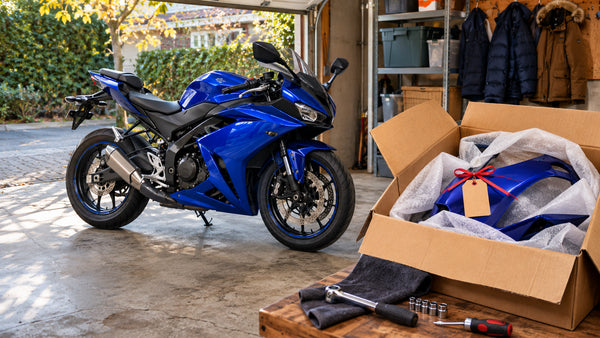
Cover photo: AVMOTO / Wikimedia Commons, CC BY-SA 4.0. Cropped and expanded to a wide editorial layout. This real RS660 Trofeo was photographed at EICMA 2024; it is not the forum rider's motorcycle, a NiceFairings product, or evidence that a street replacement kit passes club-racing tech.