Useful links: Browse the matching NiceFairings collection, view a model-specific fairing kit, review the custom paint process, check production and shipping, follow the pre-fit checklist, visit the NiceFairings FAQ, and use the official Honda CBR1000RR-R Fireblade SP page for manufacturer context.
A good Honda CBR1000RR-R fairing-care routine is simple: clean gently, follow the paint supplier's product instructions, inspect fasteners and heat-control pieces, and store or transport the motorcycle without rubbing the bodywork. This guide is written for 2024??026 owners, but the exact owner's manual and product instructions always take priority.
Care protects appearance; it cannot restore cracked mounting tabs, distorted brackets or structural damage. After an impact, separate cosmetic issues from problems that need professional inspection.
Wash on a Cool Surface
Let the motorcycle cool and work out of direct sun when practical. Rinse away loose grit before touching the fairings. Use a clean, soft wash mitt and a mild motorcycle-safe cleaner, moving from cleaner upper areas toward dirtier lower panels. Separate tools for wheels and bodywork so brake dust is not dragged across paint.
For bugs or road film, soften the contamination first rather than scrubbing harder. Test any unfamiliar product on an inconspicuous area and avoid harsh solvents unless the paint or fairing supplier explicitly approves them. Rinse thoroughly and dry with clean, soft towels or filtered air at a safe distance.

Choose Protection That Matches the Finish
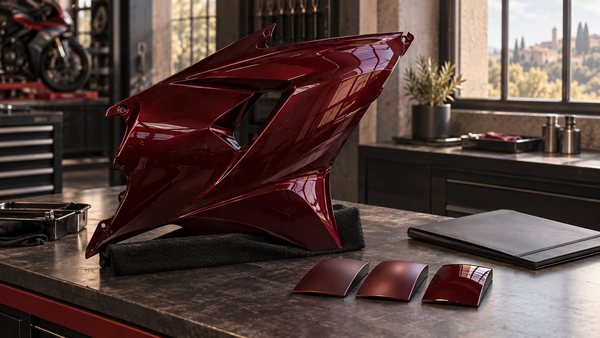
Wax, sealant, ceramic products and paint-protection film are not interchangeable. Compatibility depends on the paint and clear coat. Follow the coating manufacturer's instructions and confirm that the product is suitable for glossy, matte or graphic-covered surfaces. A product that adds shine may permanently change the look of a matte finish.
Paint-protection film can be considered for high-impact areas, but installation quality affects edges, seams and appearance. Use an experienced installer for complex curves. Do not treat any coating as impact armor; it is an appearance-maintenance tool with limits.

Inspect Fasteners, Rubber Pads and Heat Shields
Cleaning is a useful time to look for missing fasteners, loose well nuts, displaced rubber pads, edge rubbing and heat shielding that has moved. Compare anything unusual with the owner's manual or the installation instructions for the fitted bodywork. Do not invent a tightening torque; use the correct service information for the motorcycle and hardware.
If a panel buzzes, sits closer to the exhaust than before or has a growing stress mark around a hole, stop and find the cause. Replacing a fastener is inexpensive; forcing a misaligned panel can turn a small interface issue into a crack.

Store and Transport Without Rubbing the Panels
For storage, keep the motorcycle clean and dry. Use a breathable, correctly sized cover when a cover is appropriate, and make sure it cannot flap against dirty paint. Avoid placing tools, gloves or straps on the fairings. During transport, secure the motorcycle using proper hard points and keep straps, hooks and loose ends away from painted panels.
After transport, inspect the bodywork before riding. Look for shifted panels, loose fasteners and contact marks. If the bike was tied down by a method you do not recognize, verify the chassis and control clearances rather than assuming the fairings are the only concern.

After a Tip-Over: Cosmetic, Mounting or Structural?
Light surface marks may be cosmetic, while a crack through a mounting hole, missing tab, distorted fairing stay or interference with controls deserves closer attention. Remove panels only when you can document fastener locations and electrical connections. If steering, braking, lighting or structural components may be affected, use a qualified motorcycle technician.
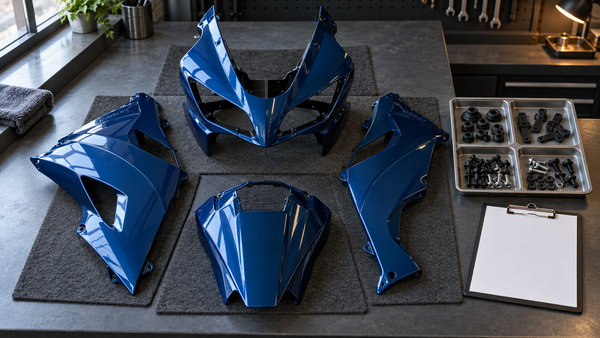
When replacement is appropriate, match the exact model year and dry-fit the complete set before final assembly. The CBR1000RR-R 2024??026 fairing product and production process explain what to confirm for a painted replacement. For recall checks, use the official NHTSA recall lookup with the motorcycle's VIN.
Fairing Care Checklist
- Cool the motorcycle and pre-rinse loose grit.
- Use clean, paint-compatible tools and products.
- Soften bugs and road film before wiping.
- Inspect fasteners, pads, tabs and heat shielding.
- Keep covers and transport straps from rubbing paint.
- Investigate cracks or changing panel gaps promptly.
- Use exact model-year fitment when replacement is needed.
Consistency matters more than aggressive detailing. Gentle washing and regular visual checks preserve the finish and expose small mounting issues early. If a panel needs replacement, start with the NiceFairings Honda collection and confirm the exact 2024??026 listing before choosing a color.