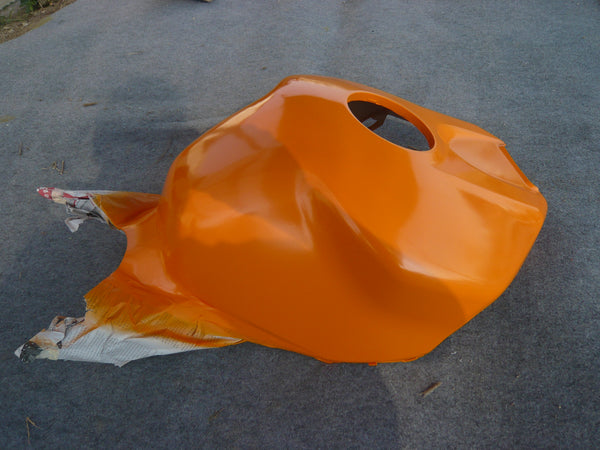
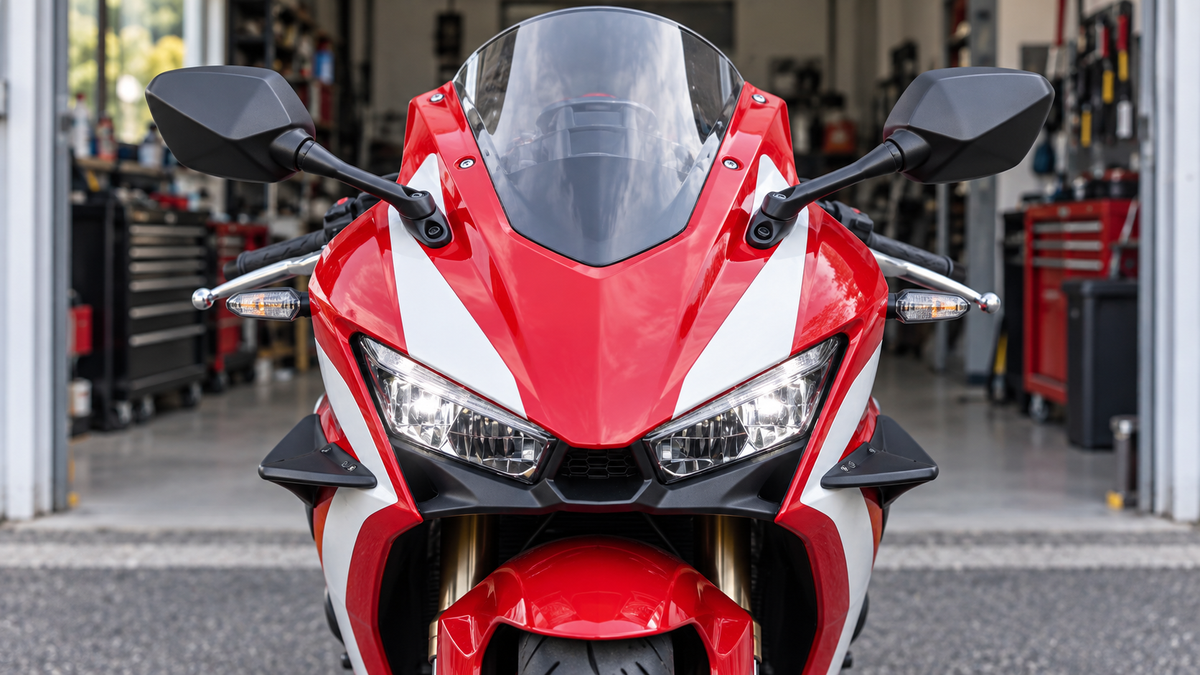
A damaged sportbike winglet does not tell you the complete replacement order. The visible wing element, the painted fairing panel and the mounting parts may be separate items, part of a larger assembly or a mixture of retained and replacement components. Confirm that scope before comparing prices or choosing a finish.
If an impact may have affected the motorcycle or its mounting structure, have a qualified specialist assess it before riding or ordering a cosmetic solution. Photographs can help identify parts and questions; they cannot certify roadworthiness.
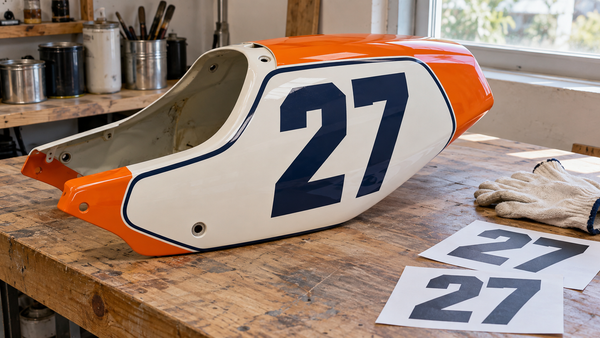
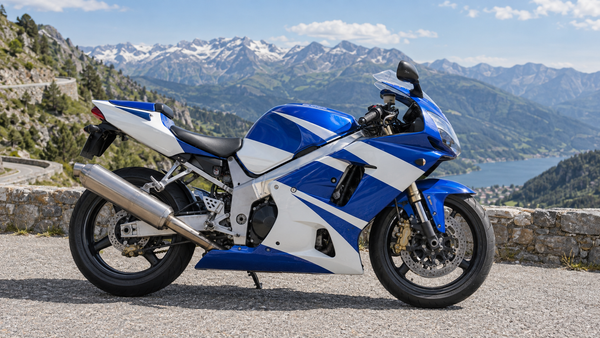
AI-generated conceptual illustration only. The mounting arrangement is not an OEM parts diagram, installation instruction or product offer.
Separate the three parts of the enquiry
The wing element is the projecting component you can see. Identify which side is involved from the seated rider's perspective. Record whether it is original equipment or an aftermarket addition, and include the maker or part reference where known.
The painted panel is the surrounding bodywork. Its appearance can be coordinated with the wing, but a matching color does not establish that the parts connect correctly. A replacement panel listing may exclude the wing even when a promotional image shows a complete motorcycle.
The mounting parts may include product-specific brackets, fasteners, inserts, spacers or other interfaces. Their exact arrangement must come from the applicable parts information and specialist assessment. Do not build a hardware list from a generic illustration.
For context, our Ducati bodywork and OEM aero discussion explains why a race-inspired appearance and a documented factory aerodynamic package should be kept separate. This article addresses the narrower purchasing question after a component is damaged.
Get an assembly reference for the actual bike
Ask a dealer or suitably qualified specialist to identify the relevant assembly for your model, model year and market. If the bodywork has been changed, the original motorcycle identification alone may not identify every fitted component. Provide the current kit or wing manufacturer's information where available.
Use the reference to distinguish a named part from an unresolved observation. “Right wing outer element, reference confirmed by dealer” is different from “small bracket behind right panel, identity unknown.” Keep the second item open until someone can identify it reliably.
Take an overall photograph and closer views of accessible areas without dismantling uncertain components just for a picture. A specialist may need to inspect concealed mounting points. Do not treat an apparently tidy outer panel as evidence that everything behind it is undamaged.
Manufacturer aero descriptions, such as Ducati's Panigale V4 aerodynamics page, describe a particular complete motorcycle design. They are not a parts catalogue for every model year or proof that a visually similar aftermarket wing has the same function.
Compare a single part and an assembly on the same basis
A low line-item price is not a complete quote if other required pieces are missing. Ask each supplier to state the exact supplied scope, finish, quantity and any parts expected to be reused. Then include the specialist's identified additional items and installation work in your project comparison.
Hypothetical example: one offer describes a replacement wing element, while another includes a painted panel and wing assembly. Neither description tells you whether a required bracket is supplied. Once that bracket is identified and included in both comparisons, the offers can be evaluated more fairly. This example does not imply which option is cheaper or available for your bike.
Keep material, color and compatibility questions separate. A carbon-look finish does not identify the construction. A black wing in a photo does not establish its part number. A product labelled for a model family does not automatically resolve a modified motorcycle's interfaces.
Use a parts-scope worksheet
- Motorcycle: exact model, year, market and relevant current bodywork changes.
- Side: left or right as viewed from the rider's seat.
- Wing: maker, confirmed reference and quantity, or explicitly “unknown.”
- Panel: required bodywork piece and requested finish.
- Mounts: items identified by the specialist, with supplied or retained status.
- Evidence: applicable diagram, current photographs and written scope confirmation.
A useful supplier message is: “Please confirm whether this offer includes the wing element, the painted panel and the mounting items identified in the attached reference. Please list excluded pieces and anything expected to be reused.” Add the exact bike details and ask the supplier to resolve unknowns rather than silently interpreting them.
Do not drill, enlarge holes, heat panels or bend brackets to compensate for an uncertain combination. If supplied parts do not agree with the confirmed scope or interfaces, stop and ask the supplier and installer to investigate.
For a NiceFairings bodywork enquiry, send the confirmed model and parts scope and ask which panels and related items can actually be supplied. Check the current FAQ for service details. The goal is a clearly defined order, not an assumption that every fairing kit contains every visible aero component.