A race bike can make you stop scrolling before you know who is riding it. The color blocks, the low nose, the negative space around the wheels: everything appears to belong to one fast, purposeful object. That is the appeal worth bringing to a personal fairing project.
As the 2026 season moves toward its closing rounds, MotoGP's coming technical reset gives that conversation a timely twist. The championship is reducing aerodynamic freedom for 2027. If your idea of a modern race-inspired motorcycle is simply “more wings,” this is a good moment to look again.
This guide separates the confirmed racing changes from our own design suggestions for an existing road or track-day motorcycle. The goal is a coherent, striking build with the correct bodywork—not an imitation prototype assembled from unrelated parts.
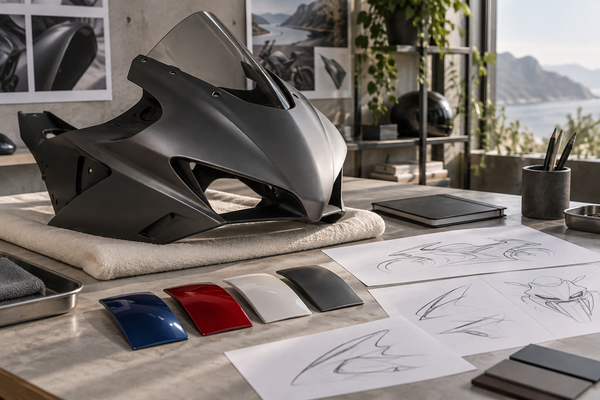
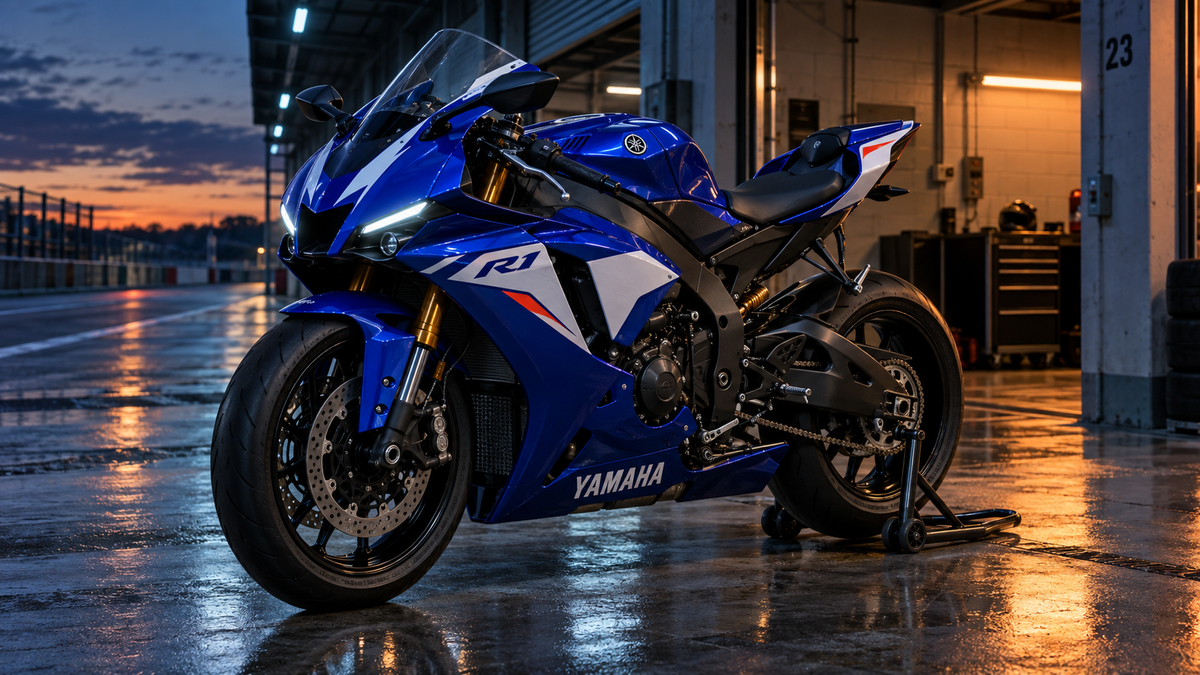
Reviewed September 15, 2026. The images are AI-generated editorial styling concepts featuring existing production-bike design cues. They are not photographs of a MotoGP event, revealed 2027 machinery or completed NiceFairings customer orders.
Why MotoGP's 2027 Reset Is Worth Watching Now
MotoGP's official winglet explainer, displayed as updated on September 1, 2026, puts the approaching changes in context. Winglets belong to an engineered aerodynamic package; their role is more substantial than the aggressive silhouette they create in a photograph.
The championship's announced 2027 technical framework includes a move from 1,000 cc to 850 cc engines. The upper front fairing becomes 50 mm narrower, its nose moves back 50 mm, and rear aerodynamics come under homologation controls. Ride-height and holeshot devices are also set to be prohibited. These changes were announced in 2024; they are approaching implementation, not a surprise rule announcement this week.
That does not mean every 2027 race bike will look alike, or that manufacturers have already shown every final detail. It also does not turn a road-going R1, S1000RR or Panigale into an 850 cc MotoGP machine. The interesting styling question is more useful: can a bike still look dramatic when the design relies on proportion and color rather than an ever-busier outline?
Our answer is yes. A deliberate paint layout can give an existing motorcycle a strong visual identity while respecting the panels it actually uses. That is an editorial design direction, not a forecast that a particular color will dominate next season.

Race-Inspired Appearance and Aerodynamic Performance Are Different Purchases
When a photograph inspires a build, separate what you like into three groups: the motorcycle's basic shape, the paint and graphics, and the functional components. The first comes from the model and generation. The second is where a custom-color project offers room to be personal. The third needs its own evidence and model-specific assessment.
A replacement fairing can look sharply styled without having a documented aerodynamic benefit. Equally, a carbon-pattern finish does not establish that a part is structural carbon fiber. Ask the supplier what the component is made from and what the product actually includes before treating an appearance description as a technical specification.
Do not infer downforce, cooling improvements or reduced lap times from a close-up of a fin. Those are performance claims that need evidence for the particular part, motorcycle and conditions. A product called “race style” may be describing its appearance. It does not by itself tell you whether the kit is suitable for your road equipment, your track-day organizer's requirements or an actual race class.
If the Panigale's winged silhouette is your inspiration, our Ducati Panigale V4 fairing and OEM aero guide explores that distinction more closely. For this project, keep the design brief focused: identify the correct supported bodywork first, then decide how it should look.
There is a practical visual benefit to that discipline. When every panel belongs to the right generation, the vents, mounting points and contours provide a consistent foundation. Paint can emphasize those lines. It cannot make an unrelated fairing shape become the right part.

Three Color Directions for a Cleaner Racing Look
Rather than copying every decal from a favorite team, choose the part of its visual language that appeals to you. It might be a dominant color, a crisp contrast at the nose or a long diagonal that connects the side fairing to the tail. Translate that idea onto your own bike's shapes.
Electric Blue, Pearl White and a Small Coral Accent
This is the direction shown in our cover concept. Blue carries the main identity, white makes the panel divisions easier to read, and a narrow coral detail adds contrast. The accent works best as a deliberate punctuation mark: one repeated edge or a small tail detail, rather than a competing third main color.
Keep the tank in the conversation. If it remains a different blue, decide whether you want a deliberate contrast or whether a matching process is available. Do not approve the fairing design as an isolated side panel and discover later that the retained tank changes the entire composition.
Racing Red with Restrained Black
Red provides a direct link to the atmosphere of Italian superbike racing without requiring a replica sponsor layout. Black can visually quiet the lower portion of the motorcycle, leaving the upper fairing and tank as the main color statement.
The key choice is how much red remains uninterrupted. A large clean area reads differently from a surface broken into many small badges. If you want photographs with a strong silhouette, review one version with fewer graphics before committing to a dense layout. Simplicity should be a design decision, not the absence of a plan.
Pearl White, Midnight Blue and an Acid-Yellow Detail
A light main color gives dark shapes room to stand out. A thin yellow accent can introduce a sharper contemporary note, especially when it follows an existing edge. Avoid making every edge fluorescent; the design needs somewhere quiet for the eye to rest.
Consider the motorcycle's existing black seat, dark frame and wheel color as part of the palette. They occupy substantial visual space even though they are outside a fairing order. A design that looks balanced on a white background can feel different once placed on the complete motorcycle.

Make the Design Work on Your Actual Motorcycle
The best reference photograph is only a starting point. A livery developed for one race machine has to be adapted when the tank shape, vent positions and tail length change. Ask for views of the complete bike, not just one dramatic angle.
From the front, check whether the main color and any central stripe still make sense around the actual headlights and intake. From the side, look at how the tank, upper fairing and lower panel meet. From the rear, decide whether the tail repeats the main idea or introduces an unrelated pattern.
Review both sides. The motorcycle is not necessarily a mirrored canvas: exhaust placement and other physical features can change how much painted surface is visible. A graphic should have an intentional stopping point rather than appearing to vanish into a vent or continue across a gap that the preview has hidden.
For a road-oriented R1 project, the R1 street-versus-track bodywork guide is a useful companion. Decide what equipment and use the kit needs to accommodate before requesting the paint. Check the exact year and market version with the supplier; a shared model name does not make every generation interchangeable.
Existing BMW owners can start from an actual BMW S1000RR 2019–2022 custom-painted fairing listing. If a darker starting point suits the plan, compare the S1000RR 2019–2022 matte-black listing. These links are examples for the stated generation, not 2027 MotoGP parts or confirmation that the illustrated color schemes are supplied by either listing.
Read the current product details and confirm the included panels, retained parts and chosen finish. The photograph that inspires the project should never replace that conversation. A tank cover shown in a concept, for example, should not silently become an assumption about the contents of an order.
Turn the Inspiration into a Useful NiceFairings Design Brief
A good custom brief tells the designer what matters most. “Make it look like a race bike” leaves too many decisions open. “Keep the blue dominant, use one white diagonal, and repeat a small coral accent at the tail” gives the project a direction that can be reviewed.
Start with NiceFairings custom fairings and provide your exact motorcycle model, year and market, current photographs, and any relevant bodywork changes. Confirm that a suitable kit is available before spending time refining a design for it.
“My motorcycle is a [model, year and market]. Please confirm the available fairing kit and included parts. I want a race-inspired blue-and-white design with a small coral accent. My tank and wheels will remain [colors]. Please show both sides, the front and the tail, and identify any parts in the preview that are not included.”
Specify the finish separately. Gloss, satin, matte, metallic and pearl describe different decisions; a color name alone is not enough. Ask how the proposed shade will be agreed, particularly when matching an existing painted tank. The dramatic lighting in our images is a styling treatment, not a dependable color reference.

Before production, settle the exact text, numbers and logo placement you want reviewed. Before dispatch, ask what finished photographs can be provided. The finished fairing photo checklist helps you request useful views while recognizing that photographs cannot prove fit or exact color.
Finally, consult current production and shipping information and discuss any event date before ordering. Leave room for inspection and appropriate fitting work. A race weekend can inspire the project; it should not pressure you into skipping the details that make the finished motorcycle satisfying to own.
Questions Before You Commit
Should I wait for 2027 before choosing a design?
Only if seeing the next generation of race machinery is important to your inspiration. The MotoGP rule change does not establish new fitment for your existing road motorcycle. Choose the correct bodywork for the bike you own, and keep the paint direction personal.
Will race-style wings make my motorcycle faster?
Appearance alone does not support that claim. Ask for evidence specific to the component and motorcycle, and obtain suitable professional advice before changing functional parts. A custom-painted fairing order should not be treated as an aerodynamic development package.
Can I request one of the illustrated colors?
Use it as a reference when discussing a supported model with NiceFairings. Ask what finish, color approval and graphic details are achievable. The images show editorial concepts, so the supplied design and included components still need explicit confirmation.
What makes a race-inspired build look finished?
A consistent palette, graphics that respect the actual panel shapes, and a clear relationship between the fairings and retained tank, wheels and seat. Start with the right kit in the NiceFairings motorcycle fairing catalog, then make those choices work together.