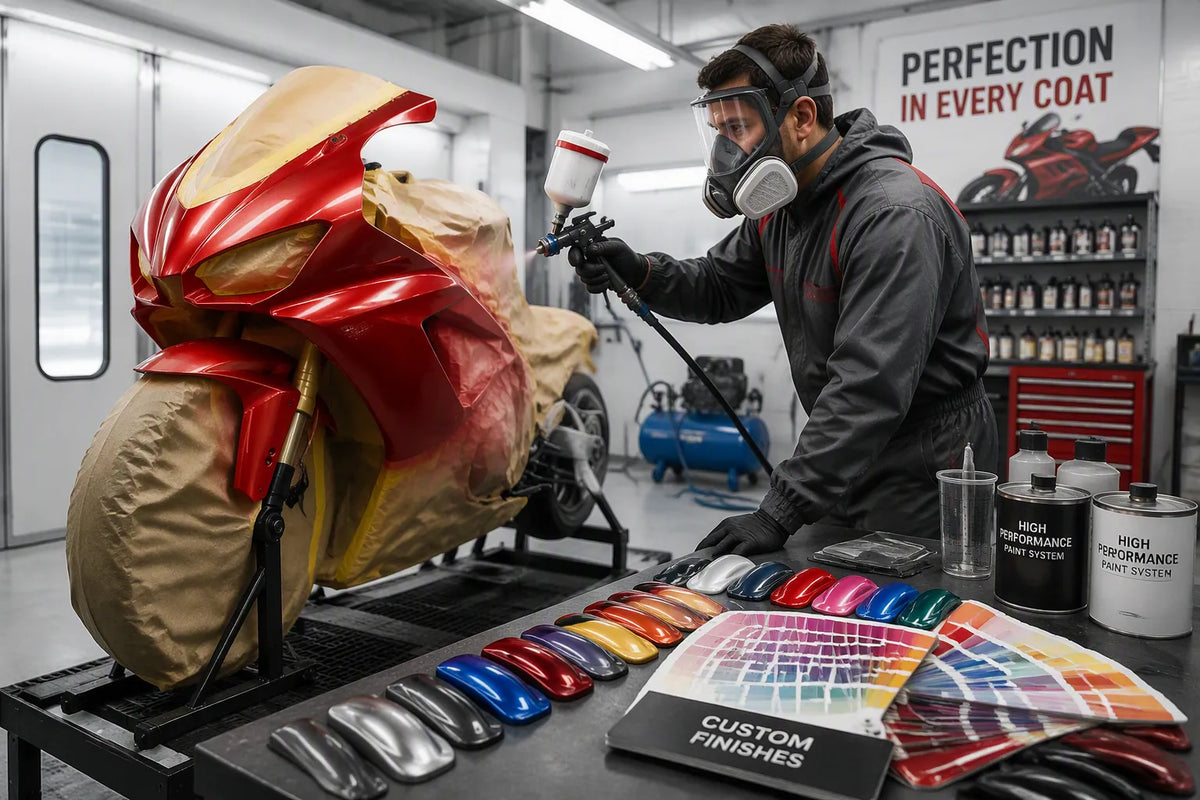
Should you go with a race-replica design, an OEM-style color, or create a completely fresh identity for your sportbike? Your fairings are the first thing people notice-they define your bike's character and set the tone every time you ride. If you want a head-turning look that truly fits your personality, exploring custom motorcycle fairing paint colors opens up a world of possibilities. While OEM-inspired shades always deliver a timeless, factory-clean vibe, the right finish-whether matte, gloss, or pearl-can elevate your machine into a rolling piece of art. A quality clear coat locks in that depth and shine, turning your fairings into a bold statement on the road or at the track. Ultimately, your decision comes down to what matters most to you: budget, maintenance ease, color match precision, or future resale value. We'll help you weigh each factor so you can choose with confidence. From subtle elegance to aggressive flair, every finish brings its own personality-let's break down your options and find the perfect look for your ride.
Key Takeaways
Race-replica fairings copy the exact paint jobs of famous race bikes, but you must avoid trademarked logos without permission.
OEM-inspired colors match your bike's original factory look, and you can add small personal touches to make it unique.
Always check your bike's paint code and model year before you order, so the color matches perfectly.
Gloss finishes are easy to fix and take care of, but matte finishes need special care and cannot be polished.
Pearl paint shifts color as the light changes, but it costs more and needs a skilled painter to apply.
Completely custom fairings give you many design choices, so you can make a look that is really your own.
Before you order, check your bike's exact model, what parts fit, and what comes in the kit.
Pick a finish that fits how you care for your bike and your plans to sell it later, so it stays looking good for a long time.
Race-Replica Paint Schemes

Defining the Race-Replica Look
Race-replica designs copy the exact paint jobs you see on MotoGP and WorldSBK race tracks. These paint schemes make your street bike look just like the bikes ridden by famous racers such as Francesco Bagnaia or ?lvaro Bautista. You get the same bold color sections, sponsor logos, and number plates that show each factory team's style.
The details go far beyond just matching colors. True race replica designs include special tank graphics, seat details, and even copied autographs. Some makers produce small batches that copy every visual part of the real race bike. For example, Ducati made the Panigale V4 Bagnaia 2023 World Champion Replica with only 263 bikes built, featuring his signature on the tank under a protective clear coat.
Replica Model |
Rider |
Livery Inspiration |
Production Limit |
|---|---|---|---|
Panigale V4 Bagnaia 2023 World Champion Replica |
Francesco Bagnaia |
Ducati Yellow (used at Misano GP) |
263 units |
Panigale V4 Bautista 2023 World Champion Replica |
?lvaro Bautista |
Ducati Yellow (used at Misano and Jerez) |
219 units |
Panigale V4 Mart?n 2023 Racing Replica |
Jorge Mart?n |
Official Prima Pramac team colors |
189 units |
Panigale V4 Bezzecchi 2023 Racing Replica |
Marco Bezzecchi |
Yellow/black Mooney VR46 team livery |
72 units |
Panigale V2 Bulega 2023 World Champion Replica |
Nicol? Bulega |
Red/black Aruba.it Racing WorldSSP livery |
111 units |
These limited bikes also come with race parts like carbon fiber winglets, billet aluminum steering plates with laser engraving, and special dashboards with unique startup animations. When you pick race fairings for your own bike, you get that same feel without needing a factory connection.
Authenticity and Brand Loyalty
Riding a race-replica bike shows strong brand loyalty. You are telling everyone which rider and team you back. That bond matters at track days, bike nights, and group rides. Other fans will spot the livery right away and start talking with you about your favorite racing moments.
The authenticity factor works both ways though. A true replica demands accuracy. Every stripe, logo, and color section must match the original. Aftermarket suppliers like NiceFairings focus on recreating these designs with care. You can order a custom fairing set that mirrors your chosen racer's bike, complete with correct graphics and sponsor decals.
Logo Permissions and Legal Issues
Here is where you need to be careful. Race bikes carry many trademarks-team logos, sponsor brands, and maker marks. Using those logos on your fairings without permission can cause legal problems. Most suppliers will not copy trademarked graphics without proper licensing agreements.
Work with a trusted company that knows these rules. When you ask for race replica designs through NiceFairings' custom fairings page, their team helps you understand which parts they can legally copy. They might use generic sponsor-style graphics or change certain logos while keeping the overall look close. This way, you avoid legal trouble while still getting the visual style you want.
Your best step is to ask questions before ordering. Confirm which logos the supplier can include and which ones they must leave out. A professional shop will give you clear answers and suggest options that keep the design's spirit without breaking any laws.
OEM-Inspired Motorcycle Fairing Paint Colors
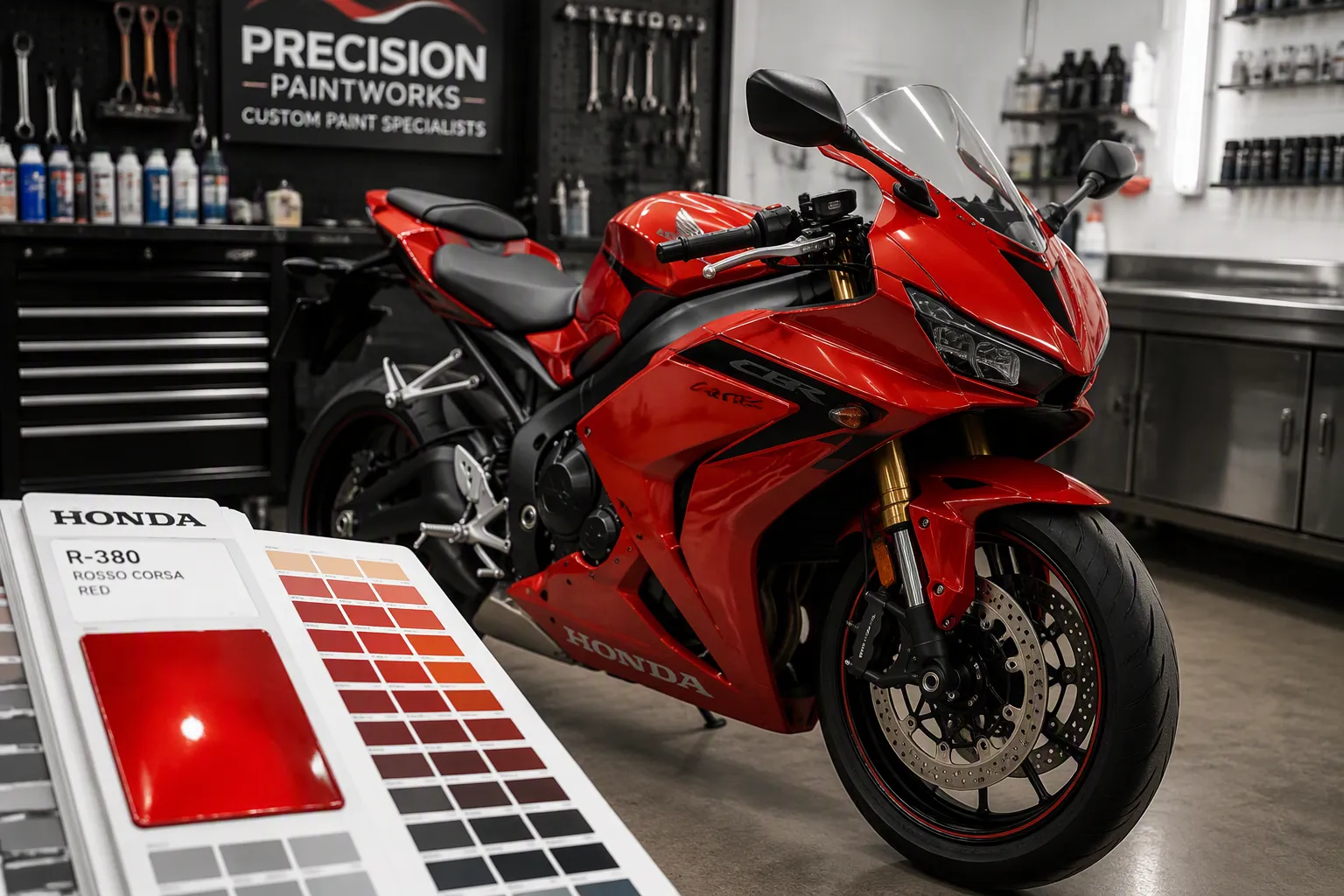
Maybe you like your bike's factory look but want something more personal. OEM-inspired colors give you that exact balance. You keep the bike's look that people know, and you add small details that make it yours. Think of it as a factory look with your own signature added.
Factory Looks with Personal Touches
OEM-inspired fairings copy the original color schemes from makers like Kawasaki, Yamaha, Honda, Suzuki, or BMW. You get the same bright reds, deep blues, or sharp greens that came from the factory. The difference? You can change small details. Maybe you swap a silver accent for black, or add a small stripe that wasn't there before. These choices keep your bike familiar but still your own.
Suppliers like NiceFairings offer brand-specific collections for Kawasaki, Yamaha, Honda, Suzuki, and BMW fairings. Each collection has many color options that match factory looks. You can look through these motorcycle fairings and find the color that you like. The nice thing about this is versatility-you get the clean, professional look of a stock bike without paying dealership prices for new bodywork.
Paint Matching and Year Fitment
Getting the color right is very important. A shade that is just a little off shows up in some light, and it can ruin the whole look. That is why paint codes are so helpful.
Matching Factory Paint Codes
Every maker gives a specific paint code to each color they use. That code tells a paint shop exactly how to mix the color. When you order OEM-inspired fairings, you should check your bike's paint code before ordering. This step helps you avoid costly mistakes.
Here is a real example of why codes matter. A shop once had to match a pearl red fender for a 1994 Honda CB1000 Super Four. The first paint shipment from England came as dark purple-totally wrong. A second shipment was still off by a shade. Even a Chromavision color matching machine could not find the right tone. Finally, the shop used a paint catalog to find a matching color, getting a perfect side-by-side match. The lesson? Codes usually work, but sometimes you need extra effort to get things right.
ColorRite says it gives a "spot-on-match" for motorcycles and powersports vehicles. It offers "the absolute, highest quality OEM paint available." Dealers and fans have suggested it since 1988. But no specific accuracy numbers or success rates are given.
Model-Year Variations
Here is a tricky part. The same model can have different colors in different years. A 2020 CBR600RR might have a red that is a little different from the 2022 version. Even in the same year, some makers release special editions with unique paint designs. Always check your exact model year when ordering replacement fairings. Look at your VIN or the sticker on your frame to confirm the year and color code. This small step saves you from getting fairings that look close but not quite right.
Resale Value Considerations
Think about the future before you choose a paint scheme. Will your choice help or hurt when you sell the bike? The answer depends on what you pick.
Fairing Type |
Resale Value Impact |
|---|---|
OEM (Original) |
Keeps or raises the bike's resale value. |
Custom (Aftermarket) |
Can lower resale value, especially if quality is bad or design is too extreme. |
A professional, high-quality custom paint job can really boost resale value, especially on famous models like a Harley-Davidson Dyna or Triumph Thruxton. But paint is permanent, and unique designs might matter for future resale. OEM-inspired colors are a good middle ground. They look factory-clean, so most buyers won't even know the fairings are not stock. That familiar look helps you appeal to more people when you sell.
Your best approach? Pick a color that fits your bike's character and your own taste. If you plan to keep the bike for years, focus on what makes you happy. If resale matters, stay closer to factory options. Either way, OEM-inspired motorcycle fairing paint colors give you a safe, stylish middle ground.
Matte vs. Gloss Fairing Finishes
When you pick between matte and gloss, you are looking at different motorcycle paint finishes. Each choice gives your bike its own look. The best pick depends on how you ride, how much care you want, and if you want a custom style.
Visual Impact and Maintenance
Matte finishes give a modern, flat look. They soak up light instead of bouncing it back. This creates a calm, bold look that stands out. Gloss finishes do the opposite. They bounce light and make colors look deep and rich. A gloss coat gives your bike that fresh-from-the-showroom look that many riders love.
But the main difference is how you care for them. Gloss clear coats are easy to handle. You can wet sand small scratches, polish them away, and put on wax to bring back the shine. Waxing often makes the deep metallic look of a gloss finish even better. Matte clear coats are much harder to care for. You cannot wet sand or polish them. Doing that turns the flat surface into a shiny spot and ruins the finish. If you scratch a matte panel, you usually need to paint the whole part again.
Here's how the two finishes compare:
Maintenance Task |
Gloss Clear Coat |
Matte Clear Coat |
|---|---|---|
Wet sanding final coat |
Allowed |
No - turns matte into gloss |
Polishing final coat |
Allowed |
No - removes the matte texture |
Scratch repair method |
Wet sand and polish |
Cannot be repaired; requires repaint |
Waxing |
Recommended |
Never - ruins the finish |
Stain resistance |
Shows dust and fingerprints easily |
Oil and fuel stains easily if not wiped |
You can use ceramic coatings on both finishes. Gloss panels take a normal 9H ceramic coating for UV and scratch protection. Matte panels need a special matte coating to keep their flat look.
Visibility Considerations
The finish you pick changes how your bike looks in different light. Matte surfaces cut down glare from direct sunlight. That means less light bounces off your fairings when you ride on a bright day. Some riders find this less distracting, especially on the track.
Gloss finishes bounce more light. That can make your bike easier for other drivers to see in some conditions. The shine stands out. But it also makes more glare, which can be annoying on sunny days.
No finish is safer than the other. How visible you are depends on many things - color, light, where you sit, and the area around you. Your choice of paint finish is about what you like, not safety. If you ride mostly on cloudy days or in the city, gloss might give you that extra pop. If you spend time on sunny highways or tracks, matte might feel better.
Think about where you ride most. Your bike's finish should match your style and your real needs. Whether you pick matte or gloss, you are making a statement about your ride.
Pearl and Color-Shifting Fairing Options
Unique Properties of Pearl Paint
Pearl paints have a depth that solid colors can't match. When light hits your motorcycle fairings, it bends through layered pigments. This creates a color-shifting effect. The look changes as you view it from different angles. Your bike gets a dynamic appearance that changes as you ride. For sportbike owners who want truly unique color blends, pearl finishes are a top choice.
The science behind this effect involves interference pigments. These are tiny flakes coated with titanium dioxide. Light splits and bends differently through each layer. The result is a range of colors that shift with your viewing angle. A pearl red surface can look deep crimson from one angle, then bright orange from another. This depth makes the paint feel alive. It catches the eye and holds attention. You get a finish that stands out without being too flashy.
Cost and Application Complexity
Applying pearl paint is harder than a standard paint job. It needs a three-stage process. First, you spray a solid white basecoat. Next, you add the pearl layer as a separate coat. Finally, you seal everything with a clear coat. Keeping spray passes even is very important. Uneven application causes blotchy reflections. You must build the effect slowly in light layers. This lets the reflective particles settle evenly. The clear coat adds gloss and depth while protecting the color from UV and wear. Doing it right takes skill and patience.
The cost shows this extra work. A basic solid color repaint might cost $200 to $400. For premium finishes like pearl or color-shifting, the price goes toward $500 and can go over $1,000. This cost covers the extra materials and labor. Fixing a pearl finish is also harder. Matching the color shift exactly needs the same pigments and application method. If you scratch a pearl panel, the whole part may need repainting. So think about long-term care before you commit. A custom pearl paint job offers real beauty, but it needs more care and money than a standard gloss finish.
Custom Motorcycle Fairing Paint Colors
When factory options feel too limiting, fully custom motorcycle fairing paint colors open a world where your imagination sets the limits. Aftermarket suppliers offer thousands of design choices-far beyond what any manufacturer catalog could hold. You can blend colors, experiment with layouts, or create something nobody else rides. This route gives you complete control over your bike's appearance.
Unlimited Design Possibilities
The sheer range of options can feel overwhelming at first. You might start with a base color you love, then layer in accents, gradients, or geometric patterns. Some riders request honeycomb textures that add grip and visual interest while keeping durability intact. Others combine polished aluminum sections with carbon fiber panels for a hybrid look that balances strength with striking contrast. These textured finishes and material blends represent growing trends in bespoke builds, giving your motorcycle a distinctive edge.
Your choices extend beyond color alone. You decide where graphics sit, how large they appear, and which finishes complement each other. Maybe you want a gloss black base with matte red stripes running along the tank. Perhaps a pearl white front fairing transitions into a deep blue tail section. The combinations are nearly endless, and each decision shapes how your bike reads from across a parking lot or at speed.
Briefing a Custom Design
A clear brief makes the difference between fairings you love and fairings you tolerate. Start by gathering reference images. Screenshots, photos, or even sketches help communicate your vision. Collect color samples from paint swatches or other objects you admire. The more concrete your references, the better your supplier can translate them into a finished product.
Write down exactly where each color and graphic should appear. Note the placement of stripes, the angle of transitions, and any specific details you want included. When you work with a company like NiceFairings through their custom fairings page, you can share these details directly with their design team. They guide you through the process, helping refine your ideas into a buildable design. Ask questions about what works well together and what might need adjustment for the best visual result.
Logo and Graphics Integration
Adding logos or custom graphics requires attention to permissions. Trademarked emblems-whether motorcycle brand marks or sponsor logos-need proper authorization before reproduction. A reputable supplier will not print unlicensed graphics. Instead, they help you find alternatives that capture the spirit of your idea without crossing legal lines.
You can still achieve bold graphic statements. Custom typography, original emblems, or abstract shapes carry personality without trademark concerns. Work with your supplier to develop graphics that fit your fairing's contours and proportions. They know how curves affect how a design appears from different angles. Their expertise ensures your custom motorcycle paint jobs look intentional and polished, not like decals slapped on as an afterthought.
The payoff comes when you roll out of the garage. Your bike wears personalized designs that reflect your taste, your riding style, and your story. No other rider has the same unique paint schemes. That exclusivity transforms every ride into a statement about who you are.
Buyer's Guide: Choosing the Right Fairing
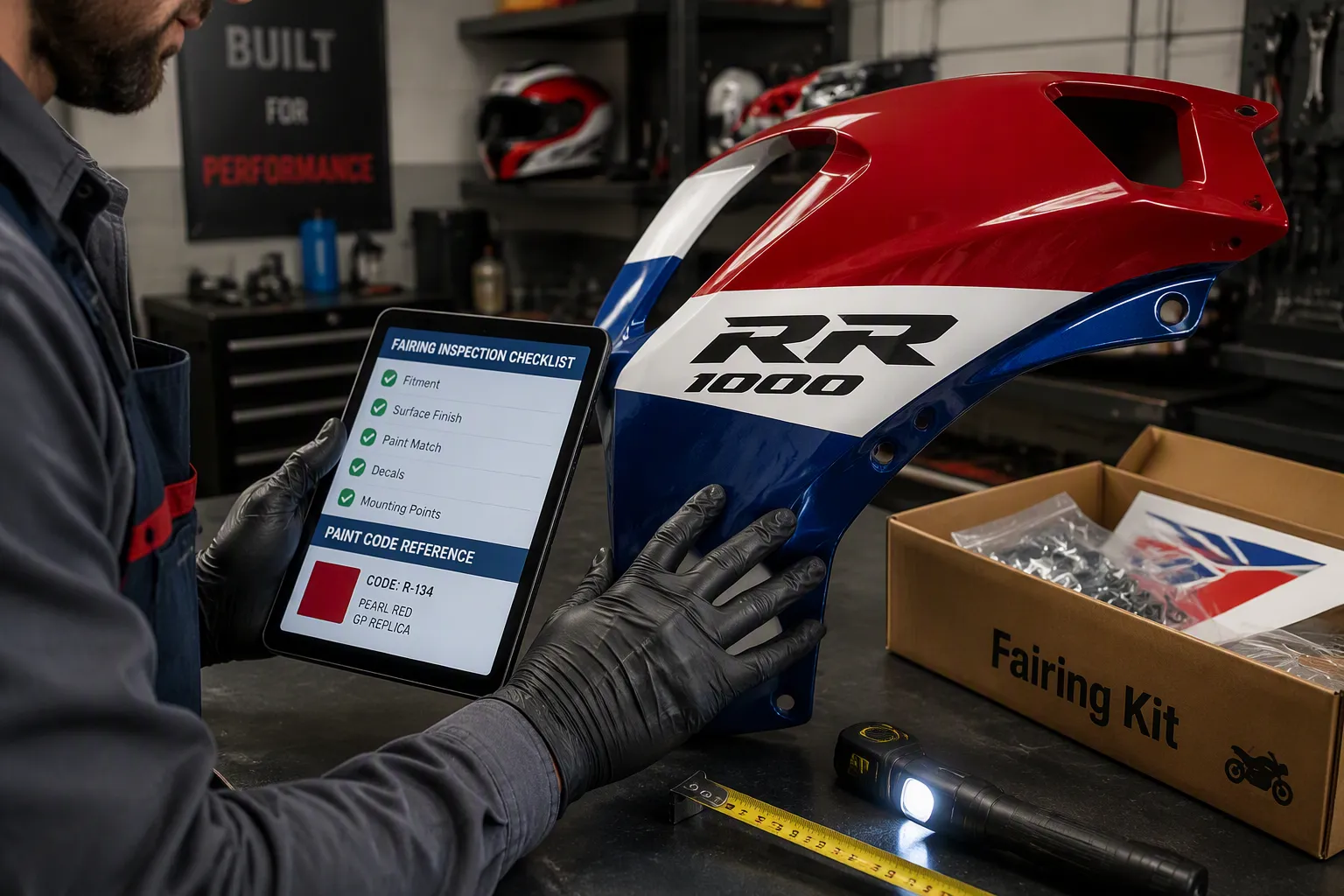
You've looked at race-replica designs, OEM-style colors, matte versus gloss finishes, and pearl choices. Now comes the real part: ordering your kit without problems. A good pre-order checklist stops costly errors. Let's go through what matters before you click that buy button.
Pre-Order Checklist
Start with the basics. You need your bike's exact year, make, model, and sub-model. A 2021 CBR600RR is not the same as a 2023 version for mounting points. Check the seller's listed fitment range against your bike's details. Then review what the kit includes: upper fairing, side panels, lower panels, tail section, tank cover, fender, windshield, heat shield, bolts, and decals. Missing parts change the real value of your purchase.
Material matters too. ABS plastic works well for street riding. Fiberglass is lighter but needs more care. Carbon fiber sits at the top end. Confirm whether your kit arrives pre-painted, raw, in primer, or as a custom paint job. Each option changes your timeline and budget. Also note the shipping origin and estimated delivery time. Finally, read the return policy carefully. Restocking fees and custom-order terms vary widely between suppliers.
One more check: does your bike have prior crash damage or non-OEM brackets? If so, contact the seller before ordering. They need to know about modifications that could affect how the new fairings align.
Checking Fitment
Fitment checks prevent disappointment. Confirm your exact model and year range matches the kit description. Check whether mounting holes come pre-drilled. Inspect your existing brackets before blaming the new kit for alignment issues. When your fairings arrive, dry-fit the panels before final tightening. Expect small adjustments on some aftermarket installations-that's normal. Heavy force during installation signals a real fitment problem, not a standard condition.
Confirming Paint Codes
Paint matching needs precision. Follow these steps to get it right:
Find the physical paint code label on your motorcycle, usually under the seat or near the rear frame close to the VIN label.
Note the VIN from your motorcycle's VIN label.
Contact the manufacturer or an authorized dealership, providing the VIN, to get the official paint code for that specific year and model.
Cross-check the retrieved paint code with the code found on your motorcycle's label to confirm a match.
This process removes guesswork. You get the exact shade your bike left the factory with, whether you're ordering OEM-inspired colors or planning a custom design.
Ordering Process and Lead Times
Knowing timelines helps you plan. Most custom painted fairing kits need about 7-12 business days for production after you confirm bike fitment and design details. International shipping adds another 10-20 business days after dispatch. Your total estimated lead time lands between 17-32 business days. Plan your riding season accordingly.
Several factors can delay your order. Test-fitting unpainted kits before painting adds 1-2 hours of shop labor at $90-$175 per hour. Skipping this step risks wasted paint work worth $150-$400 if the fit fails. Model year mismatches trigger restocking fees of 15-25% plus extra labor costs of $100-$200 for tab modification. International shipping brings freight charges of $50-$120 and potential customs duties collected at delivery. Local paint shop lead times can stretch for weeks during peak season.
Maintenance and Care by Finish
Your chosen finish sets your care routine. Gloss clear coats allow wet sanding, polishing, and waxing. You can fix minor scratches yourself. Matte finishes need more caution. You cannot wet sand or polish them without ruining the flat texture. Scratches on matte panels usually require repainting the entire part.
Pearl finishes sit between the two. They need gentle washing and careful drying to keep their color-shifting depth. Avoid abrasive cleaners that could dull the reflective pigments. Ceramic coatings work on both gloss and matte surfaces, but matte panels need a special coating made for their texture.
Your maintenance commitment should factor into your choice. If you enjoy detailing your bike on weekends, gloss rewards your effort with deep shine. If you prefer low-maintenance rides, matte hides dust better but punishes mistakes. Pearl offers stunning visuals for riders willing to invest extra care.
Before ordering, review the NiceFairings guide on choosing the right motorcycle fairing kit. It covers fitment, design briefing, and paint matching in detail. A reputable supplier like NiceFairings walks you through each step, from confirming your bike's specifications to approving your final design. Their team helps you brief custom paint options clearly, ensuring your vision translates into a finished product you'll love.
Take your time with the checklist. Verify every detail before ordering. The right preparation means your new fairings arrive ready to install, fit perfectly, and look exactly as you imagined. Your bike deserves that level of care.
Your choice comes down to style, budget, maintenance, and resale goals. Here's a simple framework:
Choose race-replica for track-inspired looks.
Pick OEM-inspired for factory originality with a twist.
Select matte or gloss finishes based on your appearance preference.
Go with pearl paint for dynamic depth.
Opt for fully custom motorcycle fairing paint colors for maximum personal expression.
Always work with a reputable supplier like NiceFairings and check fairing fitment before ordering. This preparation saves you time and money. Your bike deserves a look that matches your vision. Start designing your custom motorcycle fairings today.
FAQ
How do I match your bike's factory paint?
Find the paint code sticker on your bike, usually under the seat or near the frame. Hand that code to your supplier. They mix the exact color to match your original finish.
How long does a custom paint job take?
Most custom fairing kits need 7-12 business days for production. Shipping adds another 10-20 days. Plan your riding season around this timeline to avoid delays.
Can I use race-replica logos on my fairings?
Only if you have permission from the trademark owner. Most suppliers avoid unlicensed logos. They offer generic alternatives that keep the race-replica look without legal trouble.
Which finish is easier to maintain?
Gloss finishes let you wet sand and polish out scratches. Matte finishes cannot be repaired if scratched. If you want low upkeep, gloss is your friend.
Will custom motorcycle fairings hurt resale value?
It depends on the design. Professional, subtle work appeals to buyers. Extreme or very personal designs might limit your market. OEM-inspired colors are a safe middle ground.
What's the difference between pearl and solid paint?
Pearl paint uses layered pigments that shift color in different light. Solid paint stays one color. Pearl needs a three-stage application and costs more to apply.

