Choosing the Right Material for Your Ride
Compare ABS and fiberglass fairings for street or track use, focusing on fit, repair, and cost.
Features |
ABS Plastic |
Fiberglass |
|---|---|---|
-- |
-- |
-- |
Impact Resistance |
Can flex under some minor impacts; behavior varies by formulation and thickness |
May crack under impact; behavior varies by resin, fiber, layup, and thickness |
Repairability |
Requires material-specific plastic repair methods |
Often repaired with compatible resin and cloth; difficulty depends on damage |
Fitment |
Fitment and drilling depend on the exact kit and manufacturer |
May require drilling, trimming, and test-fitting depending on the kit |
Weight |
Weight varies by design, thickness, reinforcements, and included panels |
Weight varies by layup, resin content, reinforcements, and panel design |
Cost |
Price varies by kit completeness, finish, manufacturer, and shipping |
Price varies by layup quality, finish, hardware, and preparation needs |
Paint Preparation |
Preparation varies; inspect, test-fit, clean, and use compatible coatings |
Preparation varies by surface quality, resin system, and finish requirements |
Best Use Case |
Commonly offered in street-oriented kits with light and mirror provisions |
Commonly offered in race-oriented shells; specifications vary |
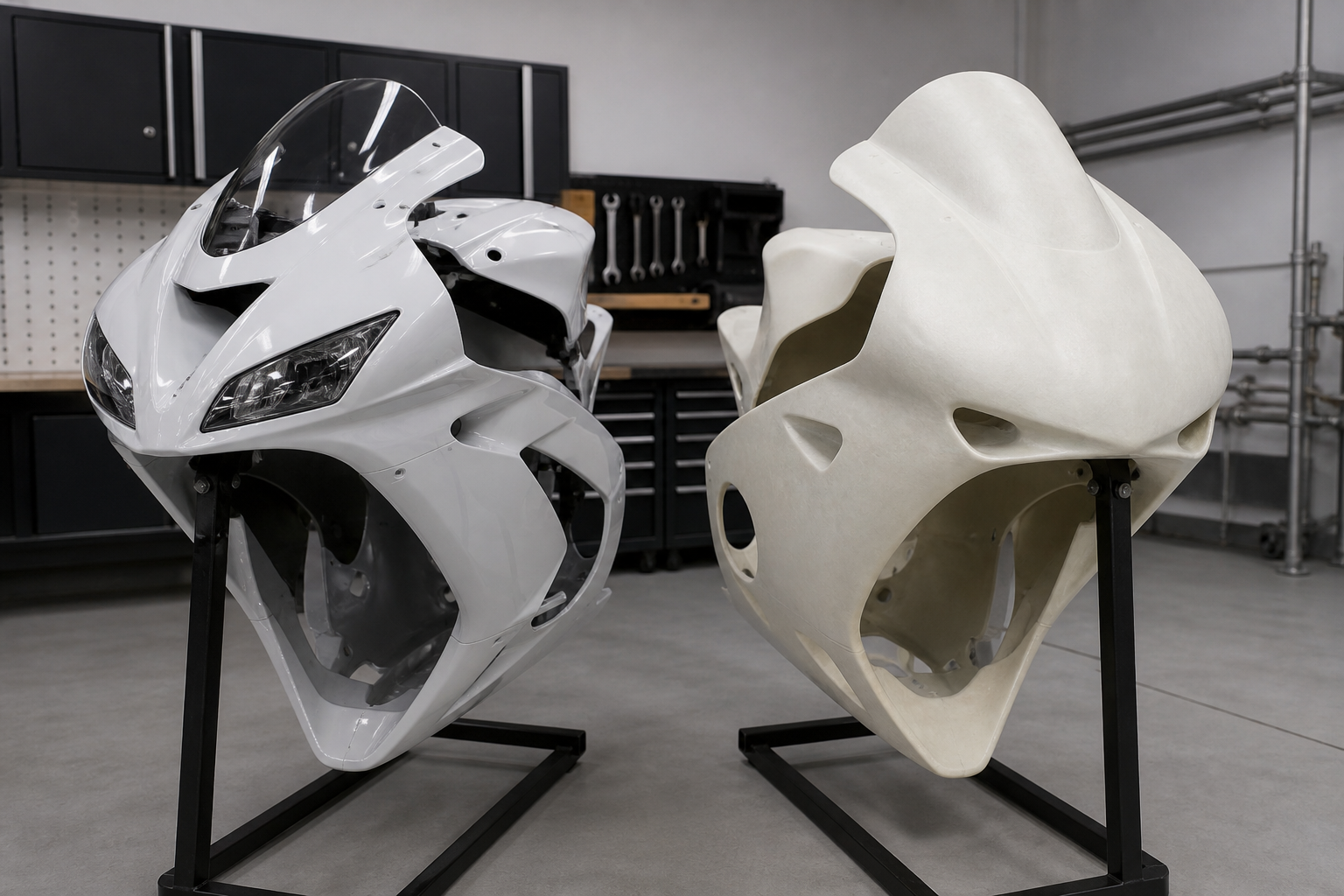
When considering ABS vs fiberglass fairings, your choice depends on where you ride. For street riding, pick ABS—it bends and soaks up small bumps, which works well for daily commutes. For track use, many fiberglass race panels can be repaired with compatible resin and cloth, but repairability depends on the damage and layup. Prices differ, but they change by maker and kit quality. This post covers fit, upkeep, and performance to help you decide in the ABS vs fiberglass fairings debate. You need real facts, not old stories. Let's compare these materials head-to-head, so you can choose based on your bike, riding style, and budget. The right fairing matches what matters most to you.
Key Takeaways
Choose ABS fairings for street riding because they bend when hit and fit stock parts easily.
Choose fiberglass fairings for the track because they weigh less and are easy to fix after a crash.
ABS kits bolt on with no extra work, but fiberglass needs drilling, sanding, and painting.
Fiberglass repairs are cheaper and quicker than ABS repairs, which often need plastic welding.
Pick what fits how you ride and what you can spend, not just what the material is known for.
What Are ABS and Fiberglass Fairings?
Before you pick between these two materials, you need to know what each one really is. The differences start when they are made, and they change how your fairings work, fit, and last.
Defining ABS Plastic
ABS stands for acrylonitrile butadiene styrene. Makers push this thermoplastic into molds with high pressure. This makes a clear, repeatable shape every time. You get panels that are even in thickness and smooth right from the mold.
The plastic has a special molecular build. The butadiene part gives it flexibility. This lets the material take small hits without cracking. When a tiny stone hits your fairing or you tap a parking curb, ABS bends and snaps back. This makes it forgiving for daily street rides.
Injection molding also means ABS kits have accurate mounting points. The holes match your bike's factory brackets. You get a true bolt-on part that fits like the original. The molded surface takes paint well, and makers can create a shiny finish right from the mold.
Defining Fiberglass
Fiberglass uses a different method. Workers lay thin glass fibers and soak them with resin. They build the material in a mold, layer by layer. This lamination makes a composite that is stiff and strong for its weight.
The stiffness of fiberglass makes it great for track use. Race bodywork must hold its shape at high speeds and fight wind forces. The material does not flex much under load. This stiffness helps with stability, but it also makes the material more brittle. A hard hit can crack or shatter fiberglass instead of bending.
Fiberglass panels often come unfinished. You need to trim extra material, drill mounting holes, and sand the surface before painting. Quality varies a lot between makers. Some use thicker layers and better resin, while others cut corners. You must check the specific kit you plan to buy.
Both materials have their strengths, but the ABS vs fiberglass fairings choice comes down to your riding setting and what matters most.
Why ABS is the Street Choice
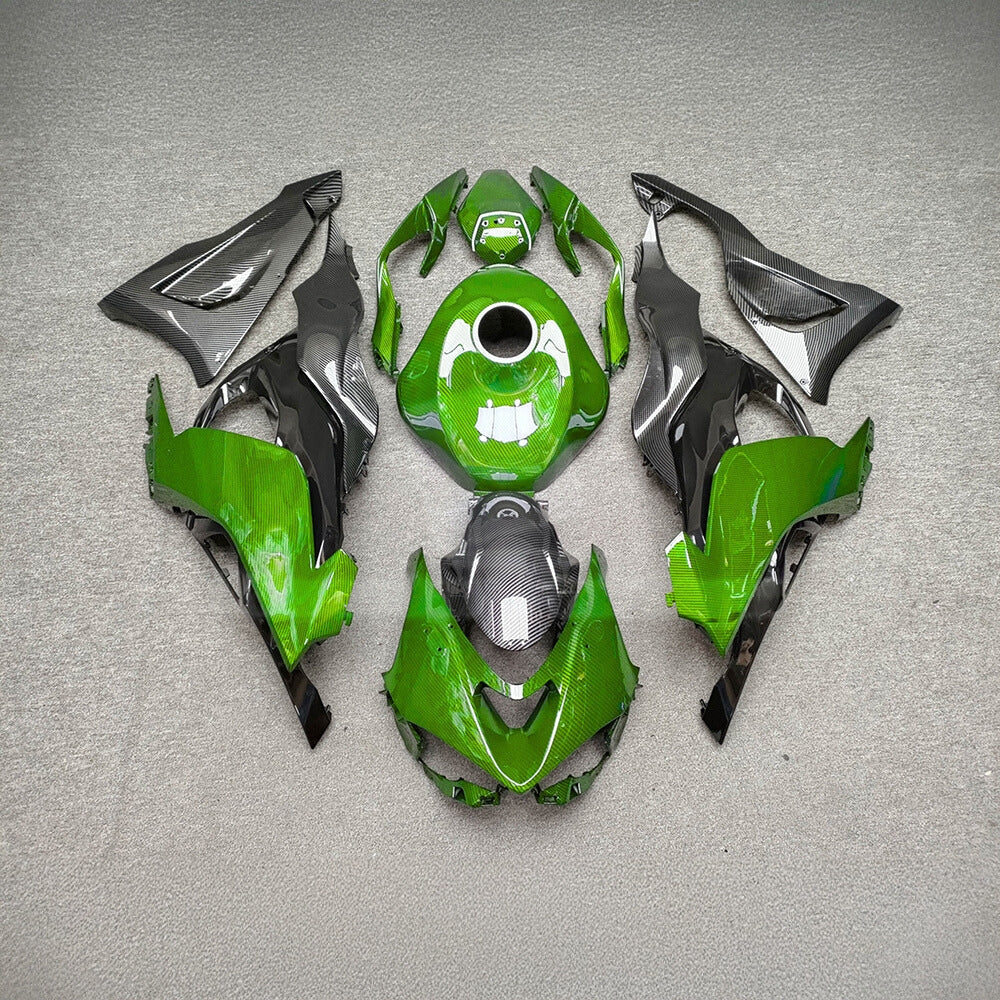
See this injection-molded ABS Kawasaki ZX-6R fairing set
When you ride on public roads, your fairings face a different world than the track. Potholes, gravel, parking lot bumps, and vibration from long commutes all test your bodywork every day. ABS is common in street-oriented replacement kits, but real-world durability depends on panel design, thickness, paint, mounting, and use. The material's flexibility and its ability to work with factory electronics make it the practical pick for daily use.
Fitment for Street Electronics
Your stock motorcycle has lights, mirrors, and turn signals that must work legally on the road. ABS fairing kits come molded with the exact holes and brackets for these parts. You bolt them on without cutting, drilling, or making new mounts. The panels accept your factory wiring harness, indicator stalks, and mirror bases directly.
This bolt-on design saves you hours of work. A fiberglass race kit often arrives as a blank shell. You must measure, mark, and drill every hole for your electronics. You might need to create custom brackets for your license plate light or move your turn signals. That work takes time and skill. With ABS, you skip that whole step.
Most ABS kits also include the needed hardware—screws, grommets, and mounting clips. You get everything you need for a direct swap. The fit matches your bike's original bodywork because the molds copy factory sizes. This accuracy matters when you need to line up your headlight housing or seat cowl perfectly.
Flexibility and Impact Resistance
ABS plastic bends under pressure instead of cracking. This property comes from its molecular structure, which has a rubber-like part. When a small stone hits your fairing at highway speed, the material soaks up the energy and goes back to its original shape. A minor tip-over in a parking lot might leave a scuff rather than a crack.
Daily commuting exposes your bike to constant vibration. Engine pulses, road texture, and wind buffeting all travel through the frame. ABS handles this stress without getting stress cracks. The material flexes a little with the bike's movement, then springs back. Fiberglass, by contrast, stays rigid and can get tiny cracks from long vibration at mounting points.
For street durability, ABS beats fiberglass in minor impacts. A shopping cart bump, a dropped helmet, or a low-speed slide all test your fairings. ABS absorbs these knocks with little damage. Fiberglass would likely crack or shatter under the same force. This toughness means fewer repairs and lower long-term costs for street riders.
The ABS vs fiberglass fairings decision becomes clear when you think about your daily environment. You need bodywork that handles the unexpected. If you need stock lights and mirrors, choose a kit explicitly designed for those components. You need material that survives vibration and minor impacts without breaking. ABS delivers on all these points, making it the smart choice for street-focused riders who want reliability and easy installation.
Why Fiberglass is the Track Choice

When you move your riding to the track, your priorities change. Street durability takes a back seat. Crash repair speed and low weight become the main concerns. Fiberglass bodywork fits these needs well. Most race organizations accept fiberglass as the standard material for competition fairings. The material's properties match the demands of track riding.
Race Bodywork and Repairability
Track riders crash. It happens often. When you slide your bike down the asphalt, your fairings take the worst damage. Fiberglass makes repairs simple. You can patch a crack with resin and fiberglass cloth. A basic repair kit costs about twenty dollars. Repair time varies with damage, curing, reinforcement, surface preparation, and paint. A successful repair depends on compatible materials, correct preparation, reinforcement, and workmanship. This matters for track riders. You want to get back on the bike fast. You do not want to buy a whole new fairing set after every crash.
Fiberglass repair works like this. You clean the damaged area. You cut a piece of fiberglass cloth larger than the crack. You mix resin with hardener. You soak the cloth and lay it over the damage. You let it cure. Then you sand the area smooth. You apply filler if needed. You sand again. You paint the area. Total repair time varies with damage, curing, preparation, and finish work. The repair holds up well.
Compare this to ABS plastic. ABS cracks need plastic welding. You melt special filler rods into the crack. The weld cools and bonds the material. This process works but leaves a visible mark. You cannot hide the weld line easily. ABS adhesives also work but they do not bond as strongly as a proper weld. The final appearance of a fiberglass repair depends on preparation, filler, sanding, primer, and paint. You sand the patch smooth. You add some filler. You repaint the area. The result looks clean and professional.
Fiberglass kits also come as race bodywork. These panels skip the holes for lights, turn signals, and mirrors. You get a smooth shell. You drill only what you need. This design reduces weight. It removes street parts that could break in a crash. Many track riders remove the entire street fairing set. They replace it with a dedicated fiberglass race kit.
Quality varies between manufacturers. Some fiberglass kits use thick layers and quality resin. Others use thin material that cracks easily. You must check the kit you buy. Look for even thickness. Check for no air bubbles. Look for proper reinforcement at mounting points. A good fiberglass kit lasts through multiple crashes with easy repairs.
Weight and Racing Rules
Weight matters on the track. Every pound affects your acceleration, braking, and cornering speed. Material alone does not determine total kit weight; compare the actual complete kits. The difference depends on the layup. A thin race shell can save two to three pounds compared to a stock ABS fairing set. That weight savings sits at the front of your bike. It helps steering feel and turn-in response. You notice the difference when you flick the bike from side to side through a chicane.
Racing organizations have rules. You must check your specific series. Some require stock bodywork shapes. Others allow aftermarket race fairings. Many track day events accept any fairing as long as it fits your bike. Street legality matters too. Fiberglass fairings often lack the mounting points for lights and signals. You cannot ride them legally on public roads. If you plan to ride to the track, you need a separate street set.
The ABS vs fiberglass fairings debate changes on the track. You trade impact resistance for repairability. You trade bolt-on convenience for weight savings. The choice depends on your racing class and your tolerance for preparation work. Track riders who crash often prefer fiberglass. Weekend track day riders might stick with ABS for simplicity.
Think about your situation. Do you race competitively? Do you crash often? Are you willing to drill and trim your fairings? Fiberglass suits riders who prioritize low weight and easy crash repair. The material demands more setup time. A race-oriented kit may simplify certain repairs, but weight and repairability vary by construction. Check your racing rules before you buy. Confirm the bodywork fits your bike model and year. A good match between your needs and the material saves you money and frustration.
Fitment and Installation
Bolt-On ABS Kits
ABS fairing kits arrive ready to install. The manufacturer molds each panel using injection tools. These tools create precise shapes that match your bike's factory mounting points. The holes for screws come pre-drilled. You get all the hardware you need in the box—screws and grommets. You simply remove your old fairings and bolt the new ones in place.
This setup saves you hours of labor. You do not need to measure or mark anything. The panels accept your stock lights, turn signals, and mirrors without modification. The fit depends on the kit maker and your model year. Some brands use thicker plastic and tighter tolerances. Others might require slight adjustments. But for most street riders, the process takes an afternoon. You end up with bodywork that looks and fits like the original part.
Custom Work for Fiberglass
Fiberglass kits demand more from you. The panels come unfinished. You must start with surface preparation. You clean the part with degreaser. Then you sand the surface with 400-grit sandpaper, paying extra attention to corners and curves. This step removes release agent and roughens the surface.
Next comes priming and painting. You apply a coat of adhesive primer. Use body filler on any imperfections, then sand again. Apply three to four light coats of paint. Keep the can six to ten inches from the surface. Wait five to ten minutes between each coat. Let the paint dry for two to three hours. Then apply clear coat and let it dry for one hour. Wet sand with 1500 to 2000 grit sandpaper. Finally, polish and buff with a power polisher.
You also need to drill mounting holes. The fiberglass shell has no pre-drilled points. You must measure the fit on your bike. You mark where each screw goes. You drill the holes yourself. You check the manufacturer's bolt sizes. You apply Loctite before you install the fasteners. This whole process takes many hours. The exact fit varies by the kit maker and your model year. Some fiberglass kits line up well. Others need you to fabricate new mounting brackets. The quality of the layup, the resin, and the reinforcement all affect how much work you need to do.
Cost Analysis: ABS vs Fiberglass Fairings
Your budget plays a major role in the ABS vs fiberglass fairings decision. Prices vary widely based on material quality, finish level, and what the kit includes. You cannot assume one material always costs less. You must compare what you get for your money.
Initial Price vs. Installed Cost
The sticker price tells only part of the story. ABS kit pricing varies by model, year, panel count, finish, seller, and shipping. Fiberglass kit pricing varies by construction, preparation needs, included hardware, finish, seller, and shipping. These numbers give you a starting point, not a final answer.
The lower end of each range usually means unfinished or thinner material. A higher price does not guarantee molding quality, layup, fitment, or complete hardware; verify the listing and seller support. You also need to consider what you can install yourself. An ABS kit bolts on with basic hand tools. You skip labor costs entirely. A fiberglass kit demands drilling, trimming, and fitting work. If you lack the skills or tools, you pay a shop for those hours. That labor adds to the total cost quickly.
Your final installed cost depends on your situation. A rider who installs their own ABS kit spends only the purchase price. Professional fitting, preparation, and paint can materially change total cost, so compare itemized installed-cost quotes. Compare the complete picture, not just the price tag.
The Cost of Paint and Prep
Paint preparation changes your total budget significantly. ABS panels come smooth from the injection mold. You can scuff them lightly and apply paint directly. The surface needs minimal filler or sanding. This saves you time and reduces the amount of primer and paint you buy.
Fiberglass requires extensive prep before any paint touches it. You must sand the entire surface to remove release agents. You fill pinholes and imperfections with body filler. You sand again with finer grit. You apply multiple coats of primer. Each step costs money for materials and hours of your time. A professional painter charges more for fiberglass because the prep work takes longer.
The final cost difference depends on your choices. A DIY paint job on ABS costs little beyond the paint itself. A professional finish on fiberglass adds hundreds of dollars in labor. Factor these costs into your decision. The cheaper upfront option might cost more in the end.
Repairability and Maintenance
No material stays perfect forever. You will need to fix your fairings at some point. The repair process differs greatly between ABS and fiberglass. Your choice of material affects how easy and how invisible those repairs will be.
Patching and Gluing ABS
ABS plastic can crack from a hard impact. You have two main repair options. The first option is plastic welding. This is a heat-based fusion method. You heat the crack edges with a specialized tool. You melt a compatible filler rod into the gap. The bond forms a multilayered connection. Bond quality depends on resin compatibility, surface preparation, reinforcement, and curing. The process requires controlled heat and ABS-specific knowledge. You need the right tools and steady hands.
The second option is specialized adhesives. You apply the glue to the crack. You clamp the parts together. This method is easier. But the bond is not as strong as a weld.
The success of your repair depends on your skill level. In skilled hands, the weld can be finished to be invisible or nearly so. You can restore a fairing that seems beyond repair. But if you lack experience, the repair line stays visible. You might see the crack after painting. This is a trade-off with ABS. The material is tough and flexible. But fixing it well takes practice.
The Art of Fiberglass Repair
Fiberglass is more fragile than ABS. It can crack or shatter on impact. A hard hit can leave you with a split panel. But here is the good news. Fiberglass is much easier to repair than ABS. You can fix cracks and deep scratches with simple tools.
The repair process is straightforward. You clean the damaged area. You cut a piece of fiberglass cloth larger than the crack. You mix resin with hardener. You soak the cloth and lay it over the damage. You let it cure. Then you sand the area smooth. You apply filler if needed. You sand again. You paint the area.
This process does not require special tools. A basic repair kit costs about twenty dollars. Repair time depends on damage, material, curing, preparation, and finish work. Repair strength depends on compatible materials, reinforcement, surface preparation, and workmanship. This is why fiberglass is a favorite for track riders. They crash often. They want to get back on the bike fast. They do not want to buy a whole new fairing set after every crash. Fiberglass lets them patch and ride again.
Paint and UV Concerns
Surface Preparation
ABS panels come out of the mold smooth and even. You can scuff them lightly with fine sandpaper and paint right away. The molded finish needs little filler or primer. This saves you hours of work and cuts material costs. You spend your time painting, not fixing flaws.
Fiberglass needs a different approach. The raw surface has release agents, pinholes, and rough texture from the lamination process. You must prep it fully before any paint goes on. The process follows a set order:
Start with 80-120 grit sandpaper to remove flaws and smooth repaired spots.
Move to finer grits, working up to 400-600 grit for a smooth base.
Clean the surface well to remove fine fiberglass dust, which causes finish flaws.
Apply a primer made for fiberglass or plastic to help paint last.
Mask areas that should stay paint-free to protect edges and fine parts before priming.
This prep adds real time to your project. A fiberglass fairing might need hours of sanding before you open your primer can. The layup quality affects how much work you need. Surface preparation needs vary by the part's actual layup, molding, and finish. Thin panels with air bubbles need more care.
Long-Term Weathering
Both materials break down from UV rays over time. The sun's ultraviolet light damages the chemical bonds in ABS plastic and fiberglass resin. You see the effects on painted surfaces first. Faded colors, chalky patches, and dull spots show up where the clear coat fails.
The damage gets worse if you skip proper sealing. A good clear coat protects the paint and the material below it. Without it, UV rays hit the surface directly. ABS can turn brittle and chalky. Fiberglass resin can yellow and lose strength. The damage speeds up on bikes parked outside daily.
Your care routine matters. Parking in the shade, using a quality cover, and applying UV protectant spray all help your fairings last. The material choice matters less than how you store and care for your bike. A well-kept ABS set lasts as long as a neglected fiberglass set, and the reverse is true too. The key is steady protection against the elements.
Weight: A Variable, Not a Winner
Weight often comes up in the ABS vs fiberglass fairings debate as a key factor. The truth is more complex. Compare measured complete-kit weights rather than assuming one material is always lighter. But the exact difference depends on the layup thickness, resin quality, and reinforcement at mounting points. A thin race shell might save you two to three pounds compared to a stock ABS set. A thick, heavily reinforced fiberglass piece might weigh about the same. You cannot assume one material always wins on weight.
When Weight Matters
On the track, every pound affects your lap time. The weight sits at the front of your bike, near the steering axis. Less weight there improves turn-in response. It makes flicking the bike through chicanes feel easier. You notice the difference during quick direction changes. Racing organizations also care about minimum weight limits. For track setup, use measured kit weight and follow the organizer's technical rules.
For street riding, the weight difference rarely matters. You carry groceries, a passenger, or a backpack. Your bike weighs several hundred pounds with you on it. Two or three pounds of fairing weight disappears into that total. You will not feel the difference during a commute or a weekend canyon ride. For street use, weigh durability, fitment, finish, serviceability, and actual kit weight together.
The Durability Trade-Off
You face a clear trade-off when you choose between these materials. Fiberglass saves weight but sacrifices impact resistance. A minor tip-over that leaves an ABS fairing with a scuff might crack a fiberglass panel. ABS bends and absorbs energy. Fiberglass stays rigid and transfers that energy into cracks or shatters.
Your priority determines the right choice. Some track riders choose fiberglass race shells for their design and repair workflow, but specifications vary. Street riders who want bodywork that survives daily knocks choose ABS despite the extra pounds. Neither choice is objectively better. The best material matches your riding environment and your tolerance for repair work.
Ask yourself one question before you buy: do you want the lightest possible bike, or the most forgiving bodywork? Your answer points you toward the right material.
Manufacturer quality also shifts the equation. A poorly made fiberglass kit with thin layup might weigh less but crack on first impact. A well-made ABS kit with proper thickness might weigh more but last for years. Check the specific product, not just the material name, before you commit your money.
The Final Comparison: ABS vs Fiberglass Fairings
Key Differences at a Glance
This table gives you a quick side-by-side view of the main differences. Remember that quality varies by manufacturer. Thickness, layup, and included hardware all affect real-world performance.
Characteristic |
ABS Plastic |
Fiberglass |
|---|---|---|
Cost |
Price varies by kit completeness, finish, manufacturer, and shipping. Kits often include hardware and paint-ready finish. |
Price varies by layup quality, finish, hardware, and preparation needs. Unfinished panels need extra prep before painting. |
Weight |
Varies by thickness. Heavier than thin race shells but lighter than thick layups. |
Varies by layup quality. Thin race shells can be very light. |
Impact Resistance |
High impact resistance. Dents rather than shatters under minor impacts. |
Good toughness. Can crack on hard impacts. |
Repairability |
Difficult to repair. Often requires plastic welding or replacement. |
Easy to repair with resin and fiberglass cloth. Patch restores most strength. |
Fitment |
Bolt-on design. Pre-drilled holes accept stock lights, mirrors, and signals. |
Requires drilling, trimming, and surface prep. May need custom brackets. |
Best Use Case |
Street riding, daily commuting, minimal modification needed. |
Track use, racing, custom builds, frequent crash repair. |
A Buyer's Checklist
Before you buy, ask yourself these questions. Your answers guide you toward the right material.
What is my primary use case? If you ride daily on public roads, ABS suits your needs. It accepts stock electronics and requires no custom work. If you race or hit the track often, fiberglass allows easy repairs after crashes. This is the core choice in the ABS vs fiberglass fairings debate.
Am I prepared for custom fitment work? ABS kits bolt on with basic hand tools. You skip drilling and trimming. Fiberglass kits demand more time. You need to measure, mark, drill, sand, and paint. Are you ready for that labor?
What is my budget for the total installed cost? The purchase price is only part of the picture. Add paint, primer, and tools. If you pay a shop for paint and prep, fiberglass costs more. ABS kits often come painted and ready to install.
Do I expect to crash or drop the bike? If you ride aggressively on track, fiberglass repairs are simpler and cheaper. For commuting, compare the exact ABS kit's thickness, mounting design, finish, and seller fitment support.
Does my racing organization have rules? Check your series rules before buying. Some require stock bodywork shapes. Others accept aftermarket race fairings. Confirm fitment for your model year.
For custom projects and repair needs, fiberglass is easy to cut and modify. It offers a good balance between cost and performance. For daily riding and budget needs, ABS offers good impact resistance for minor drops and road debris. Availability and total cost vary by model, year, panel count, finish, seller, and shipping.
For custom ABS kits that fit your bike, explore options at NiceFairings. You can also read this guide on choosing the right fairing kit for more details.
Your choice depends on where you ride. For street use, choose a kit explicitly listed for your stock lights, mirrors, and exact model year. They bend under light hits and resist cracks from vibration. For track days, compare the actual race-kit weight, construction, mounting provisions, and repair instructions. Fiberglass repair time varies with damage, compatible resin, reinforcement, curing, preparation, and finish work.
Be honest about your skill level. ABS kits bolt on with simple tools. Fiberglass needs drilling, sanding, and painting know-how. Your budget also matters. ABS usually costs less at first, but paying someone to paint fiberglass adds extra cost.
The best material fits how you ride most. Check your bike's model and year before you buy. Look at custom kits at NiceFairings to find choices that match your bike and riding style.
Fairing Material and Fitment Resources
FAQ
Can I install ABS fairings without modifying my bike?
Most ABS kits from good sellers come with pre-drilled holes and the hardware you need for your stock electronics. Quality varies by brand and model year. Check the product description for your specific bike. You may still need to make small adjustments.
Which material is better for a beginner rider?
ABS may suit riders who want a street-oriented replacement kit because it bends under minor impacts and bolts on easily. Fiberglass requires drilling, sanding, and painting skills. Your choice depends on how comfortable you are with prep work. Be honest about your experience level.
How do I know if a fiberglass kit will fit my bike?
Quality varies widely between manufacturers. Check the thickness, layup, and included hardware in the product description. Read reviews from riders with your exact motorcycle model and year. Ask the seller about fitment guarantees before buying.
Can I use fiberglass fairings on public roads?
Many race-only fiberglass kits may omit provisions for lights, mirrors, or turn signals; check the exact kit. Street legality depends on your local laws and the specific kit design. Check your region's requirements before riding on public roads. Some kits offer street-legal options.