Searching for “2006–2010 GSX-R600/750 fairings” is a sensible start, but the result is not a single proven application. It spans two engine sizes, five model years, regional variants and motorcycles that may have been repaired or converted since they left Suzuki. Most importantly, Suzuki's own model history documents a substantial 2008 styling change. A kit title covering the entire range therefore deserves a careful question: which exact motorcycle, front-end arrangement and set of retained parts is it intended to fit?
This is an ordering guide, not a promise that every 2006–2007 part differs from every 2008–2010 part. Some individual parts might share a reference; others may not. Only the appropriate model-specific parts information and an exact product application can settle a particular component. The purpose here is to prevent a buyer from approving an expensive painted set on the strength of a year-range headline, a blue-and-white photograph or a previous owner's guess.
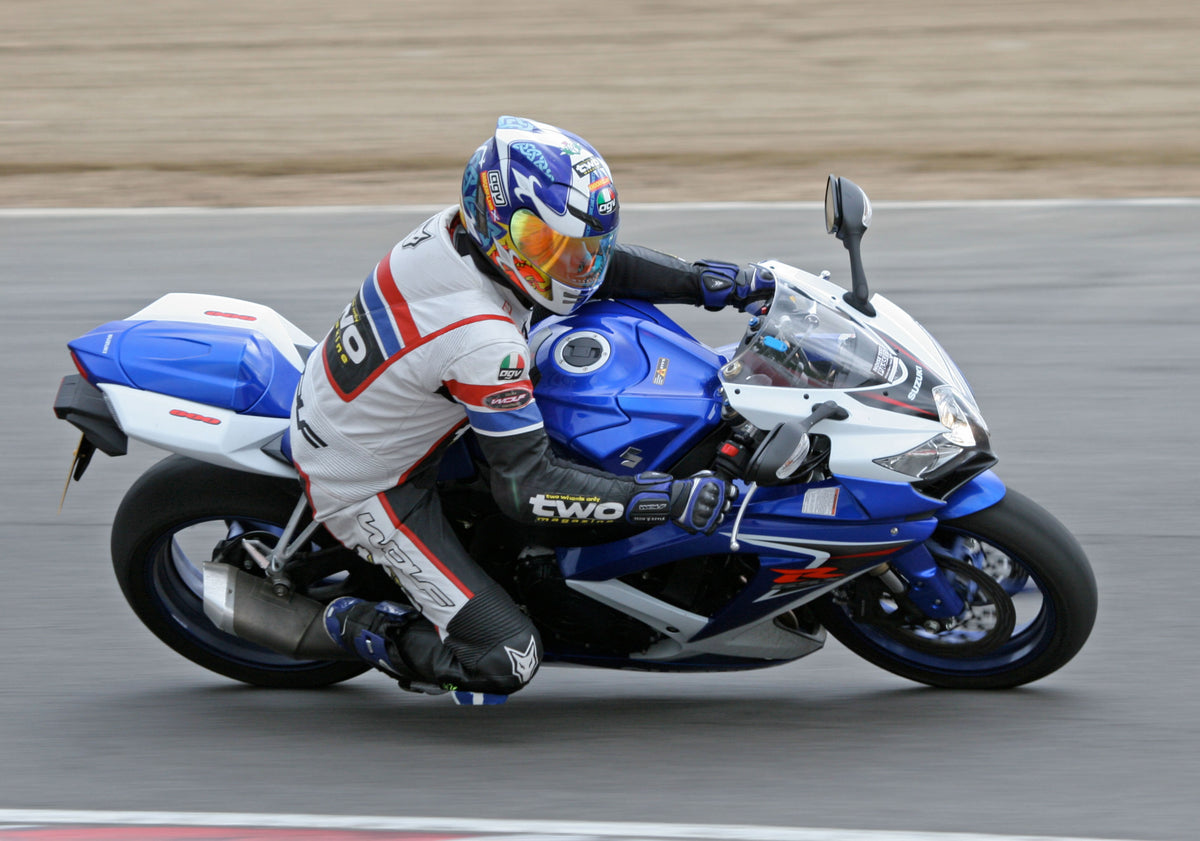
The cover photograph shows a Suzuki GSX-R600 being ridden at a 2008 track event. The photograph date is known, but the motorcycle's model year is not. It illustrates how a complete, attractive bike can still leave the ordering question unanswered; it is not a NiceFairings product image or a fitment demonstration.
Why the 2008 boundary deserves attention
Suzuki's GSX-R600 model archive records both the 2006 and 2008 iterations. The Japanese historical entry specifically describes the 2008 GSX-R600's move from the preceding vertical two-lamp arrangement to a horizontal three-lamp layout, alongside a major styling revision. Suzuki's GSX-R750 retrospective also records a 2008 headlight-cluster and bodywork revision. These are manufacturer-level reasons to investigate the front end before ordering.
What those records do not establish is a universal compatibility table for every upper, side, lower, tail, bracket, lamp, duct and fastener across two displacements and every market. An archival styling statement is not an exploded parts diagram. Equally, a listing that says “2006–2010” is not proof that its shell accepts the lights and supports actually fitted to your motorcycle. Treat the history as an early warning and the bike-specific parts reference as the next step.
You may see shorthand such as K6, K7, K8, K9 or L0 in adverts. Those labels can help organize a conversation, but they are not a substitute for the complete model designation, model year and market. If a seller uses the shorthand without naming the actual application and included pieces, ask for clarification before choosing a design. Resist translating “similar shape” into “direct bolt-on.”
Identify the motorcycle you have, not just the bodywork it wears
Start with the vehicle documentation and the identifying information on the bike. Record the exact GSX-R600 or GSX-R750 designation, model year and country or market specification. If your paperwork and the visible bodywork seem to disagree, stop at that discrepancy. It may reflect a previous repair, a conversion, an import, a registration issue or a mistaken photograph—not proof of a particular conversion. A Suzuki dealer or qualified specialist can use the appropriate model information to help resolve identity.
Then make an honest visual record. In daylight, photograph the entire bike from both sides, front and rear. Add a straight-on view of the nose with both lamps visible, front-quarter views showing the cowl-to-side-panel seams, and close-ups of mirrors, indicators, windscreen edges and the upper intake area. Take a separate photo of each damaged region. Avoid filters, dark garage lighting and angles that conceal the very interface you are asking a supplier to judge.
If the bike has a race upper, an aftermarket lamp, a replaced front stay or a repaired headlight carrier, list each modification. Do not assume the paperwork year automatically determines the shell currently installed. Conversely, do not let a swapped nose redefine the underlying motorcycle. The order has to reconcile both facts: the original model and the actual hardware that will remain on it.
Do not post a full VIN publicly for a simple fairing enquiry. Provide the exact year, model, market and any necessary identification through an appropriate private support channel. If you are unsure which market version you own, say so rather than choosing the closest-looking catalog entry.
Map the front end before you ask whether a nose fits
The headlight opening is a useful screening clue, not a complete fit test. A proposed upper needs to meet the actual lamp unit, windscreen, mirror bases, inner pieces, intake arrangement and supporting stay. A photograph of a painted outer shell rarely reveals the mounting features on its reverse side or whether any of those adjacent parts are supplied. A seller may reasonably sell the painted outer pieces while expecting the customer to reuse undamaged OEM components; that expectation must be stated for the specific listing.
For a bike with its original front assembly, gather photographs of the cowl and lamp from several angles and note any broken mounts. For a bike with an unknown repair history, identify the lamp and stay themselves before trying to identify the outer panel from appearance alone. A previous owner could have retained a later nose and a mix of older internal pieces. No blog can infer the compatibility of that mixed assembly from a single side-view image.
Pay particular attention to what a crash may have moved. An upper fairing can look uneven because a stay or lamp support is displaced; another panel can look acceptable because its flexible edge is already held in tension. Do not use the newly delivered painted piece as a tool to straighten a bracket. If a support, headlight, steering component or electrical mount was damaged, have the relevant professional evaluate it before cosmetic replacement. This guide does not supply a repair method or a tightening sequence.
Create a parts inventory with four clear statuses
Write one line for each component you intend to replace, retain, source separately or investigate. At minimum, include the upper cowl, left and right side panels, lower pieces, front fender, tail pieces, inner trims, windscreen, headlamp, turn signals, mirrors, stays and brackets, heat protection, rubber mounts and fasteners. Put “unknown” where you cannot yet identify a component. That is more useful than ticking “complete kit” and discovering later that a crucial inner piece was never part of the order.
Compare this record with a written supplied-parts list for the precise product URL. A product photo can show a tank, screen, lamp or installed bike without those items being included in the box. The opposite can also happen: a small item may be supplied but not obvious in the hero image. Ask for the part list and, where available, photographs of the actual kit laid out or of the relevant inside surfaces. A photograph can support a question, but it cannot certify hole spacing or mount condition on your own bike.
Use the table as an order gate. It describes questions to resolve, not a compatibility chart.
| Order gate | Evidence from your motorcycle | Written answer to obtain |
|---|---|---|
| Identity | Exact 600/750, year and market; note any disagreement with current bodywork | The exact model application of the proposed listing |
| Front face | Straight-on lamp and nose, screen, mirror bases, intake/inners | Which lamps, stay and inner components the upper expects |
| Damage | Close-ups of surviving mounts and repaired or missing tabs | Which listed pieces are supplied; what remains an inspection issue |
| Side and lower | Both side seams, lower mounts, non-stock exhaust or sliders | Whether the specific accessory configuration is supported or unverified |
| Tail and finish | Tail support, seat/undertail, tank and retained paint in daylight | Included tail pieces and an agreed paint/graphic brief |
If any row is unanswered, that may be a reason to obtain more evidence, choose a smaller repair or postpone a made-to-order paint decision. It is not a reason to force a broad year-range item into a narrower application.
Separate a bodywork purchase from an aging-bike repair
On an older GSX-R, damaged paint and damaged support hardware can coexist. Check for missing rubber mounts, clips, collars, inner trims and heat shields, as well as brackets that have been repaired or are visibly displaced. Keep each removed fastener grouped by its original location, and photograph the reverse side of a panel before discarding it. If a tab has been bonded back on, the new shell will not tell you whether that repair is structurally appropriate. A specialist should assess a load-bearing or safety-related repair.
A rattle is another reason to diagnose before shopping. It might come from a loose screen edge, rubber support, inner panel or exhaust-adjacent contact; it might also be unrelated to fairings. Record whether it changes with road bumps, braking, steering or engine load, and locate it safely with a technician if necessary. Do not buy new painted plastic on the assumption that it will cure an unidentified sound. Likewise, do not use a generic foam pad or drilled hole as a substitute for identifying the missing or misplaced original support.
If the bike was crashed, check mechanical safety independently of the cosmetics. The front assembly, controls, lights, wheel, fork and brakes deserve appropriate inspection where impacted. A fairing can hide a fault, and a tidy seam does not certify roadworthiness. This is especially relevant when a seller's previous photographs predate the damage.
Decide whether you need one panel or a whole set
A full painted set is not automatically the better purchase. It may make sense when several exterior panels are damaged, old finishes no longer coordinate, or the design goal is a complete change. But it also creates more interfaces to verify: front to side, side to lower, tail to seat and remaining tank paint to new graphics. If just one panel is damaged and the original finish is still usable, a correctly identified single replacement or a professional local refinish may be a narrower project. Ask whether a matching part is actually offered before assuming that a set can be split.
Keep the installed accessories in the decision. Frame sliders can interrupt a side panel, an aftermarket exhaust can change heat and clearance around a lower, and race hardware may have replaced the road-bike front stay or tail support. “Pre-drilled” does not mean pre-cut for your particular slider. “Track style” paint does not mean race-bodywork compliance. Provide clear photos and a written accessory list to the supplier; if no exact configuration is confirmed, treat the answer as unresolved rather than silently modifying the kit after it arrives.
The NiceFairings GSX-R600/750 collection is a starting point for browsing and enquiry. At this check, it does not show a populated selection of older 2006–2010 kits. Please use NiceFairings contact to ask whether a specific year/model project is available; do not interpret the collection page as current inventory or a cross-year fitment guarantee. If no verified application is offered, sourcing the correct OEM or other specialist parts may be the more responsible route.
Keep fitment approval separate from paint approval
Once the application and bill of materials are clear, develop the visual brief. Photograph the retained tank, wheels and any original panels in neutral daylight. Identify the design reference, desired base color, graphic placement and finish. If you want original-style graphics, ask what can actually be reproduced and what rights you hold for custom logos. A matching screen rendering is not evidence of a matching physical color under sunlight, and a color proof does not validate a mounting application.
The NiceFairings custom-fairings page describes the design enquiry route. For this older GSX-R, send the identification and parts packet before approving artwork. Ask for two distinct written confirmations: first, the specific model/year/market application and included parts; second, the color and graphics brief. Keep both alongside the product URL and any supplier reply. Check current production and shipping information and FAQ rather than relying on an old article for lead time, returns or included hardware.
If you are trying to match one new panel to decades-old paint, plan for some uncertainty. Sun exposure, prior repainting and camera white balance can all make a code or photo imperfect as a color reference. Request the supplier's realistic options, or consider a coordinated full-set design if visual consistency is more important than retaining every original painted panel. Neither choice changes the need to verify the physical application.
A useful message to send before you place an order
You can make the first enquiry concise and still complete: “My motorcycle is a GSX-R[600/750], documented model year [year], market [country/variant]. The front lamp, stay, screen and mirrors are [original/modified/unknown]. I have attached daylight front, quarter, side and rear photos plus close-ups of damage and retained mounts. I am considering [exact product or design URL]. Can you confirm the intended application and provide the included-parts list? Which OEM components must be transferred, and which points remain unverified without physical inspection?”
Add your accessory list and, only after the application question is answered, the paint brief. If a seller cannot confirm the requested older fitment or has no suitable kit, the honest outcome is to pause or use a different parts route. Do not accept a confident “all 2006–2010 are the same” answer without a specific part and configuration explanation.
The decision before checkout
Keep the original parts and hardware until any replacement has been compared and checked. If the headlight arrangement, bike identity, support condition or supplied-parts list is still uncertain, defer the painted order. The best order is not the broadest year-range description; it is a documented match between the motorcycle you own, the hardware that will remain, an exact supplied-parts list and a separate design approval.
Photo credit and scope
Cover: Brian Snelson via Wikimedia Commons, CC BY 2.0. Photographed at a 2008 track event; the motorcycle's model year was not verified. Original photograph used without editorial alteration. It is not a photograph of a NiceFairings product or a compatibility test.