
A 2018 and a 2019 Honda CBR500R carry the same model name, but the model name alone is not a safe fairing order. Honda describes a substantial 2019 styling revision: reshaped and narrower upper and side fairings, extended lower fairings, a lower fairing position and a revised cockpit and seat area. NiceFairings separately lists 2016–2018 and 2019–2021 CBR500R kits. If you are repairing a bike near that boundary, confirm its model year and current bodywork, then ask which exact panels and retained parts the proposed kit expects.
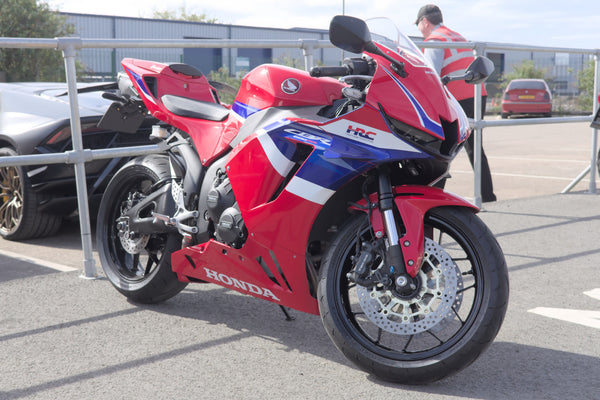
This is a purchasing guide, not an installation manual or a claim that every 2018 part is incompatible with every 2019 part. Honda's launch information is not a parts-interchange chart. The AI cover depicts a generic sportbike, not an exact CBR500R identification image or fitment test. The two in-article photographs come from NiceFairings listings; neither is a measured comparison.
The 2019 revision changed the question you need to ask
Honda's 2019 CBR500R announcement gives unusually useful detail for a bodywork buyer. The 2019 fairing has more wedge-like lines and extended lower sections. Honda says the upper and side fairings were narrowed, the fairing was set lower and the rider's seat area was revised. The clip-on handlebars also moved below a redesigned top yoke, changing the cockpit context around the screen and upper cowl. These are manufacturer descriptions of a redesign, not dimensions for an aftermarket panel.
There is a tempting but weak shortcut: identify a 2019 from “LED headlights.” Honda says the CBR500R already adopted LED lighting with the 2016 update. The 2019 release highlights newly added LED indicators, but headlight technology alone does not distinguish a 2018 from a 2019. A replacement lamp makes a photo-only guess less reliable. The earlier 2016 Honda CBR500R release confirms this distinction.
For a buyer, the meaningful answer is therefore narrower than “all the plastics changed” and stronger than “they look different.” Honda confirms multiple visible bodywork and rider-interface changes. That is enough reason to avoid ordering across the year boundary without a parts-level answer. It does not tell us that a particular fastener, inner trim, lamp, screen or isolated side piece can or cannot be transferred. The exact motorcycle, relevant Honda parts information and the seller's kit scope must answer those questions.
First establish the bike, not the photograph
Find the actual model year and market using reliable vehicle documents, the manufacturer's identification information or an authorized Honda dealer. A registration year can lag the model year. A seller's listing title, color scheme, anniversary sticker or recollection of when the motorcycle was purchased should not overrule the vehicle record. If information conflicts, resolve it before choosing a painted kit. Keep the full VIN for the dealer or your records; redact identifying information before posting photographs publicly.
Next establish what bodywork is currently installed. A used CBR500R might have a replaced nose, aftermarket windscreen, non-original indicators, repaired stay or panels from an earlier repair. The goal is not to assume something is wrong because it is modified. It is to decide whether you are replacing a damaged part like-for-like, restoring a factory configuration, or asking for a mixed-generation appearance. Those are different projects. The used CBR500R inspection guide addresses non-invasive condition and history questions; this article concentrates on the 2018-to-2019 ordering boundary.
Photograph the intact bike before any disassembly. Show the complete front, both full sides and a three-quarter view of the nose meeting the side cowl. Add the screen-to-cowl edge, mirror bases, indicator locations, the visible lower-fairing profile and the junction beside the tank and seat. A close-up without a wider locating image can make a part impossible to identify. If collision damage or a distorted support is suspected, have a qualified mechanic assess it; a new painted shell cannot establish that the structure beneath is sound.
Read the two NiceFairings groups as offers, not interchange rulings
The live CBR500R fairing collection contains separate listing groups. One example, Design 21 for 2016–2018, is identified on its page as NF-HONDA-CBR500R-1618-G21. The page says to confirm the motorcycle's year and configuration, test-fit without forcing panels and ask before irreversible changes. That is a seller's intended application range and process, not Honda's warranty of interchangeability.

The 2019–2021 A1 Edition listing uses design reference NF-HONDA-CBR500R-1921-A1 and describes its own year range. The photographs can help you discuss its red-white-blue graphic and visible panel shapes. They do not prove that the pictured set contains everything needed to replace a 2018 front end or that a single 2019 panel bolts to a 2018 support. Ask the store to identify the exact application and included pieces for your order in writing.

NiceFairings also lists other CBR500R year groups, including 2022–2023. Do not extend a 2019–2021 listing's application because a photo file name or graphic looks similar. Equally, do not take a collection tile as a complete assembly list. The exact product page and written confirmation are the relevant seller evidence. Prices, options and delivery details can change; check the live listing when you place an order.
Build a component map before asking “will it fit?”
“I need 2019 fairings” may mean a cracked left side cowl, a damaged entire nose, or a full color change. A supplier cannot answer those as one undivided question. Mark every part as damaged, retained, proposed replacement or unresolved. Useful lines include upper cowl, headlamp unit, windscreen, mirrors, indicators, side cowls, lower cowls, inner trim, tank-adjacent pieces and tail panels. This is a question list, not a promise that a kit includes them all.
If only one painted piece is damaged, identify the correct left or right component for the exact year and market using appropriate Honda parts information or dealer assistance. Ask NiceFairings whether that individual aftermarket piece is actually available in the needed design. A photograph of a complete kit does not establish single-panel stock. If the damage crosses several seams, compare a complete kit with an itemized repair—but do not assume the set includes lamp assemblies, screens, supports, heat pieces or hardware just because those components appear near painted panels on the bike.
A newer look is a conversion question
A customer hoping to give a 2018 bike a 2019 appearance is asking about a proposed conversion, not ordinary replacement. Honda's 2019 redesign makes that a plausible design wish, but the press release is not conversion instructions. A qualified shop would have to scope adjoining parts, supports, lighting, screen, control clearance and road-use requirements. Neither listing photo shows a bolt-on conversion package. If the shop cannot confirm a mixed-year setup, retain the matching generation or obtain a separately engineered plan.
The four views that let a supplier answer a real order
Start with one unedited, well-lit full-bike photograph from each side, one direct front and one three-quarter front. Keep the whole motorcycle in the frame and show the wheel, nose and tail together. Then add close-ups of the damaged panel's front and, where already safely accessible, its reverse. Photograph each broken tab or questionable mount with an adjacent wider shot. Do not remove a sound panel just for a sales inquiry without following the proper service information.
For this boundary, also photograph the headlamp surround, screen, mirrors, indicators, side-to-lower seam and tank-to-seat transition. Describe any prior repair or changed accessory. These may limit what a seller can confirm remotely. A color close-up shows paint, not a reliable model-year identity.
Send a short cover note: “My documents identify a 2018 CBR500R originally sold in [market]. The current bodywork is believed stock except for [change]. The damaged part is [position]. I am considering [exact product URL]. Please confirm whether your listing applies and what remains on the bike.” Replace every bracket with a verified fact or say “unknown.” Attach only the views that answer the question, and protect private document details. The fairing photo-and-label workflow offers a way to keep those files usable rather than sending an unexplained camera roll.
Five written answers worth getting before checkout
Ask the NiceFairings team to confirm: (1) Does the exact listing cover this model year, original market, variant and current bodywork configuration? (2) Which painted pieces are supplied and which OEM pieces must be retained or purchased separately? (3) If only one component is needed, can that specific left/right part and finish be ordered? (4) Do the screen, lamps, indicators, inner trims, brackets and fasteners shown or implied by the picture come with the kit, or are they outside the order? (5) What pre-fit and discrepancy-reporting steps are expected before drilling, trimming, painting or final tightening?
The supplier may need a rear-face photo or a dealer's part identification before answering. “We cannot verify this from the supplied photos” is useful information. Do not replace it with an optimistic reading of the product title. Preserve the reply with the URL, design code, model year, selected option and parts list. The fairing kit contents checklist explains why a flat lay is not a packing manifest.
An original Honda part number and a NiceFairings design reference answer different questions. The former helps identify the factory component on a specified motorcycle; the latter identifies a seller's paint and product offer. Matching a color name, or even seeing the same general part description, is not proof of an identical physical component. Keep those reference systems separate when comparing quotes.
Three buyer decisions at the boundary
Documented 2018 bike, one scuffed side panel: Begin with the 2016–2018 catalog group and the correct component identification. If the panel is available individually, ask for its finish and adjacent-part expectations. The 2019 group is not a style upgrade you can assume will replace that one piece. If the old paint has aged, decide whether a partial color match is acceptable before paying for a one-panel solution.
Documented 2019 bike, front and lower damage: Begin with the 2019–2021 group, then inventory the actual lamp, screen, upper support, side/lower pieces and any damaged attachments. Honda's redesigned lower fairing and lowered upper region make “just buy the nearest-looking nose” an especially weak instruction. A technician should address supports or safety concerns before a painted shell is approved as a repair.
2018 paperwork, 2019-looking bike: Pause. The bike may have been modified, misdescribed or photographed in a misleading way. Neither the paint nor our cover illustration can resolve that. Compare reliable identification with the real parts and prior records; seek dealer or qualified workshop input where necessary. This is not a customer case or evidence that a particular conversion has succeeded. A written parts scope should come before a decorative design approval.
Inspect the delivered parts without forcing a conclusion
On arrival, count the actual supplied pieces against the written order and photograph both sides of each before fitting. Preserve packaging and correspondence while questions are open. With model-specific service information, a qualified installer can bring the panels loosely into place and check the first point of conflict. Do not pull a cowl into line with the last bolt, cut a lamp opening or drill an unexplained hole to make an uncertain application seem correct. Our pre-fit conflict guide explains why recording the first mismatch is more useful than hiding it.
Before road use after bodywork work, verify secure attachment, steering movement without contact, functioning lighting and appropriate checks under the exact motorcycle's service information and local rules. If a lamp, indicator or panel remains loose or an obstruction persists, stop and resolve the condition; a short test ride is not a diagnostic substitute. The old CBR500R installation article is broad and includes generic claims about supplied hardware and installation time. Do not apply those promises to this particular order. Use the current listing, written parts scope and proper model-specific instructions instead.
Approve the design after the application is settled
When the seller and buyer agree on the correct application and supplied pieces, a custom scheme becomes an enjoyable decision rather than a distraction from a fitment question. The narrower 2019 side cowl and revised upper shape can change where a stripe should end, even if you want a familiar Honda-inspired color palette. Request front, left, right and three-quarter views of the correct panel template. Mark parts that will remain on the bike, especially the tank, seat area and screen. The CBR500R graphic-proof guide covers seam, view and color approval after this earlier generation decision is resolved.
The practical sequence is: verify the motorcycle; document the bodywork presently on it; identify the actual damaged components; obtain a written answer for one exact NiceFairings product; then approve the graphic. Honda's release establishes that 2019 brought meaningful design changes. It does not establish a universal compatibility table, and a handsome fairing photo cannot fill that gap.
Sources and limits
- Honda's 2019 CBR500R launch information: 2019 fairing, cockpit and styling changes. It does not provide an aftermarket interchange chart.
- Honda's 2016 CBR500R release: earlier adoption of LED headlights; do not call LEDs alone a 2019 identifier.
- NiceFairings CBR500R collection and the two linked product pages: current seller applications and store-owned product images, checked October 14, 2026. Listings and options can change.