A 2017–2019 Yamaha TMAX530 can look like one continuous sculpted shell in a street photo. It is not one replaceable piece. A scrape beside the rider's leg, a cracked front cowl and a scuffed rear side each lead to different questions about panels, retained trim, equipment and paint. If the owner orders a “complete fairing kit” by year alone, the attractive picture may answer the color question while leaving the repair question open.
Here is the practical answer: identify the exact TMAX generation and variant, map the damage by location and function, then ask the seller for a written list of the painted pieces in the chosen design. Check what remains on the scooter—screen hardware, lighting, inner trim, storage-related pieces and fasteners—before treating a flat-lay photo as a packing list. This is a bodywork-ordering guide, not a removal or mechanical-repair manual.
Why this TMAX deserves its own checklist
Yamaha described the 2017 European TMAX as a redesign with a new body frame and styling, offered in standard, SX and DX forms. The company's 2017 launch release also distinguishes the DX's electronically adjustable screen and comfort equipment. That is enough to establish a meaningful 2017 model context; it is not evidence that every exterior part swaps across all variants or years. A 2015 TMAX 530 photograph cannot authenticate a 2018 cowl. Likewise, Yamaha's 2020 TMAX560 material describes new exterior panels; a 2020 panel should not be ordered for a 2017–2019 TMAX530 on the basis of a similar name.
NiceFairings' current TMAX530 SJ14 2017–2019 collection lists painted aftermarket bodywork for that named range. The range is a starting filter, not a substitute for checking the scooter's model identification, market, original or altered configuration, and the exact selected product. If a registration date and model year disagree, resolve that with the vehicle documents or a Yamaha dealer before ordering. Do not guess from the color: repainting and panel replacement are common enough that finish alone cannot identify a year.
Unlike a conventional fully faired sportbike, the TMAX brings a large rider step-through/leg-shield area, inner cockpit surfaces and under-seat storage into the visual composition. Those functional areas make a front, side or rear scuff different from an R6 side-cowl scrape. A photo showing only a glossy outer panel will not tell you whether the damaged piece is supplied, whether the nearby unpainted trim is separate, or whether equipment under it also needs assessment.
Make a four-zone damage map
Begin with the scooter parked safely, powered off and cool. Take one entire left view, one entire right view, a front three-quarter view and a rear view before zooming in. Name each mark by its location rather than assigning an uncertain catalog name. A useful four-zone map is front face, leg/foot area, rear side, and inner or hidden equipment. On the annotated copy of each photograph, draw a circle around the damage; keep the unmarked originals so a seller can see the context without an arrow hiding a mounting edge.
The front face includes the exterior around the headlamps, screen and mirrors. Ask whether the damaged item is a painted outer cover, a separate inner piece, the screen itself, a headlamp, or a support behind them. The 2017 Yamaha TMAX factsheet shows the model's new LED front-cowl design. It does not make an aftermarket painted shell a replacement for an LED unit or screen mechanism. If the screen binds, a light is displaced or a bracket appears bent, diagnose the hardware before ordering paint.
The leg and foot area is where a rider repeatedly enters, exits and shifts position. Look at the outer color panel, adjacent black or textured trim, floor-contact surface and seam between them. A shoe scuff on a footboard is not automatically a side-cowl defect. Conversely, a cracked painted panel near that seam may hide a stressed mount. Capture the top edge, lower edge and underside where accessible, without pulling panels merely to make a photo. The most useful supplier question is “Is this circled exterior piece part of the photographed set?” rather than “Do you sell all TMAX plastics?”
The rear side includes the bodywork by the seat, grab area and exhaust-side silhouette. A low-speed tip-over may mark a painted cover while also affecting a passenger footrest, exhaust, lamp or bracket. A new cover will not straighten a bent metal support or relocate a non-stock muffler. State what is original and what is modified. If a top case, backrest or side accessory is fitted, include it in the wide photos and ask its manufacturer about its own mounting compatibility. A painted TMAX panel is not an accessory anchor merely because a rack sits near it.
The inner or hidden zone means the cockpit panels, storage-side surfaces, ducts and the retainers behind visible covers. These are not automatically included with exterior paintwork. If an inner trim piece is missing, take a clear photo of the gap and any readable mark, then consult the exact parts information. Ask for an itemized answer for the chosen set rather than assuming that everything visible beneath an outer cover comes with it.
Do not let “standard, SX or DX” become a guess
The 2017 TMAX family included a base version, a sport-oriented SX and a comfort-oriented DX in Yamaha's European material. The DX's electrically adjustable windscreen is a particularly visible example of why trim-level equipment matters. A photographed painted front shell does not demonstrate that the screen drive, mounting stack or controls are supplied or compatible. Yamaha's 2017 DX factsheet is a model description, not an aftermarket interchange chart.
Tell the seller whether the scooter is standard, SX, DX or an uncertain/import-market specification. Note whether the windscreen and mechanism are original, whether a sport screen or bracket has been added, and whether the lighting or mirrors have been altered. Do not infer compatibility from a trim badge or a seller's hero image alone. If the exact product listing does not address the variant-sensitive interface, ask for written confirmation before paying for a custom paint job.
This is equally important at the rear. Yamaha's 2018 SX Sport Edition announcement describes special accessories including a sport screen, Akrapovič exhaust and license-plate holder for that edition. That is a reminder to record actual equipment, not a claim that all SX scooters share those accessories. A modified rear can change what needs to be retained or checked, even when the painted outer shell appears similar.
Read the product image as evidence with limits
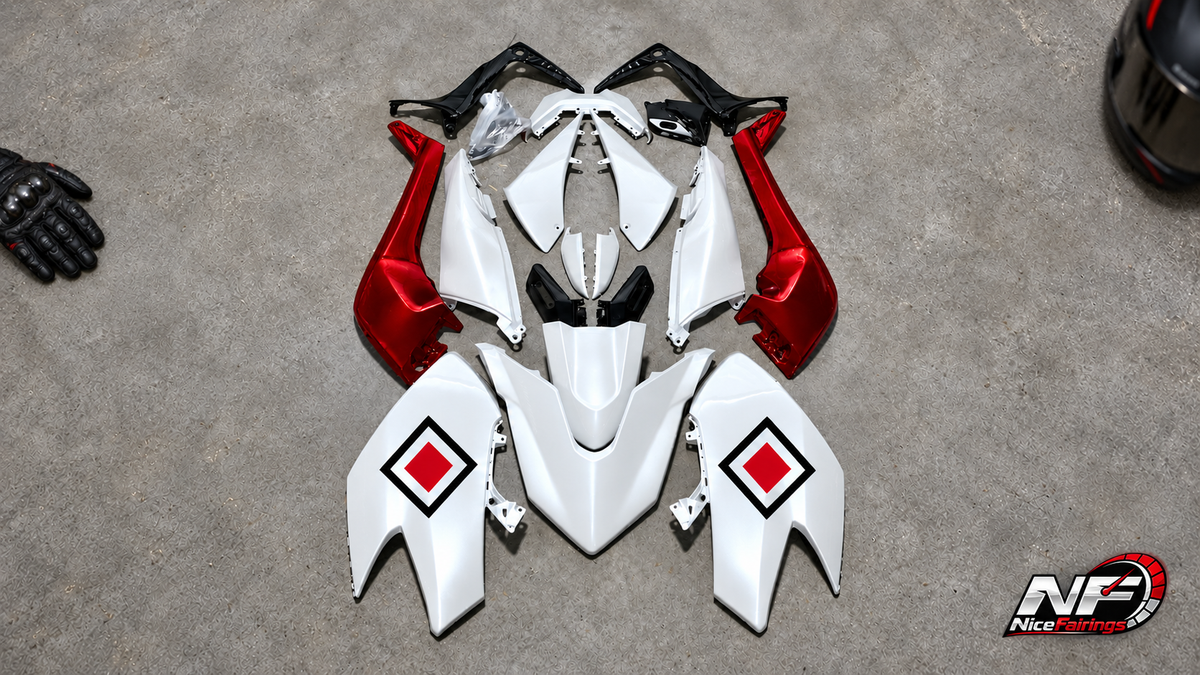
Consider the current white TMAX530 painted set. Its product page identifies the range as SJ14 2017–2019 and the design as NF-TMAX530-SJ14-1719-P049. The photographs show the photographed finish and an arrangement of exterior pieces. They do not by themselves establish every shipped item, prove that your scooter has all required original retainers, or test a DX screen mechanism on your particular machine. The listing asks buyers to confirm the selected design and recommends loose test-fitting before final installation.

Actual NiceFairings P049 listing image, shown here for exterior panel identification. It is not an installed-bike photograph or a verified packing list for a future order. The wide editorial cover adapts this image with a glove, helmet edge and NiceFairings logo; those added elements are not kit contents. This unextended original is the product reference.
Before ordering, send the listing link and ask NiceFairings to mark which photographed pieces are included in the exact option you selected. If you need one side rather than a full set, ask whether that piece can be supplied separately and whether its finish can reasonably match the existing aged paint. The custom fairings inquiry page is for an agreed design request, not proof that an image on your phone will reproduce an old factory color exactly. For a single replacement panel, the color-difference guide helps distinguish lighting, screen appearance and real finish mismatch.
Three repair decisions, three different orders
One scratched outer side piece, sound adjacent parts. First establish whether it is a removable painted exterior piece or a scuffed black/textured trim. Identify the exact side and photograph both faces if it is already removed safely. A local refinish or single-panel replacement may preserve the rest of the scooter. A full kit can be sensible if the rider wants a coordinated new finish, but it is not automatically necessary. Ask about side-specific availability and color expectations rather than paying for every exterior piece because the word “kit” is prominent.
Front impact with cracked cowl and uncertain screen operation. This is not merely a paint-order question. Keep the scooter out of service until the lights, screen, mounts and steering-related clearances have been checked using the model's service information by a competent person. Document where the cowl has separated from a light or inner support. If the screen on a DX no longer moves normally, do not assume a new painted shell corrects the mechanism. Once the mechanical condition is understood, a painted front replacement can be scoped accurately. The supplier-photo guide is useful for sending unaltered views of the front and back of the affected piece.
Several sun-faded or mismatched exterior panels, no structural damage. This is primarily a visual-coordination project. Photograph the scooter in neutral daylight from both sides, decide whether the aim is close to stock or intentionally different, and specify what remains unpainted. The white/red P049 design and the purple/gold P065 design are distinct photographed options, not an assurance that inner trim, screen or seat will be recolored. Compare the entire scooter, including wheels and seat, before approving a dramatic exterior palette. A design that works as flat panels on a gray floor can look different assembled around black equipment.
These examples illustrate a decision rule. If damage is isolated, investigate the isolated part and its supports. If damage is distributed across several painted exteriors, compare a coordinated set. If controls, lights, screen or a mount are affected, resolve function first. A general kit-versus-single-part rule cannot substitute for the TMAX's actual panel map.
A concise evidence packet for the seller and installer
Put the following into one inquiry rather than sending disconnected close-ups over several messages: exact model year and country/market; model/variant identification from the scooter or documents; left and right complete views; front and rear complete views; marked close-ups of each damaged panel and its adjacent seam; a note on original versus aftermarket screen, exhaust, mirrors and luggage hardware; and the link or design reference of the product being considered. If a part has already been removed, include a reverse-side view of tabs and any readable numbers. Share vehicle identifiers privately only when needed, not in a public comment.
Ask four written questions: “Which painted pieces in this selected option are actually included?” “Are the circled damaged pieces among them?” “What equipment must I retain or obtain separately?” and “Does my described variant or modification require a separate fit check?” If a seller cannot establish the answer from the available photos, an honest request for more evidence is better than a promise. NiceFairings' contact page is the appropriate place to send this order-specific packet.
When the order arrives, preserve the packaging and compare each supplied piece with the agreed list before changing the scooter. Photograph the faces, edges and tabs in good light. The delivery inspection checklist covers the general process. A professional installer should first resolve damaged supports and retained hardware, then loosely test-fit according to model-specific service information. Do not force holes into alignment or drill a painted part to compensate for an unidentified mismatch. If significant alteration seems required, stop and contact the seller with photos before making irreversible changes.
Finally, review the finished paint photographs for the agreed visible design, but keep appearance approval separate from physical fit. The finished-photo checklist helps you compare graphics, color boundaries and visible finish. It cannot certify a working screen, lamp alignment or installation on a scooter the photographer has not seen. That separation is the central point of this guide: the right TMAX order begins with the exact damaged zone and equipment, not with the most attractive unassembled set.
Sources and image notes: Yamaha's 2017 TMAX launch, standard factsheet, DX factsheet, 2018 SX Sport Edition announcement and 2020 TMAX560 factsheet support only the model/equipment facts attributed to them. Product images and range wording are from the current NiceFairings listings. The cover is an AI-assisted editorial adaptation of the actual P049 product flat-lay with motorcycle gear at the margins and the authentic NiceFairings logo; it is not an additional product view, packing-list record or fitment evidence. The unaltered source image appears in the body.