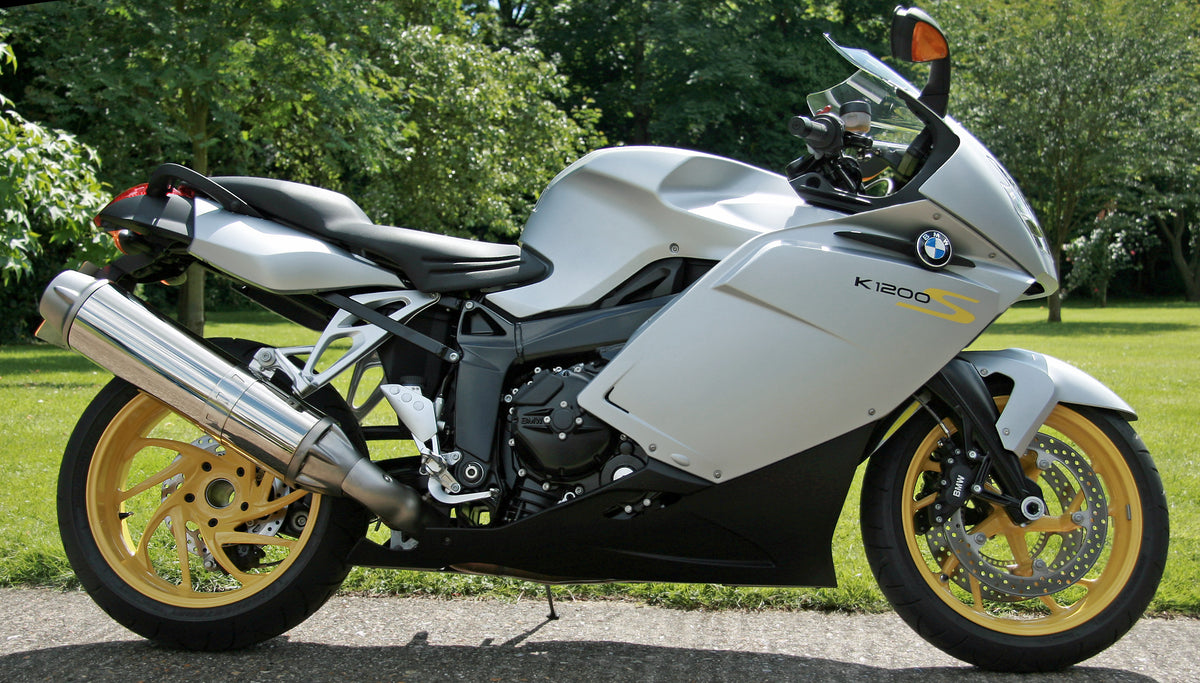
A silver K1200S beside a later K1300S can tempt a rider to shop by silhouette. Both carry BMW's long, low sport-touring shape. But a replacement fairing order is not a vote on which photograph looks closest. BMW introduced the K1300S in 2008 as the significantly updated successor to the K1200S and described changes to its upper fairing, headlamp surround and air-intake treatment. Those are precisely the interfaces a painted shell must meet. The sensible conclusion is verify the motorcycle and the proposed assembly before paying—not the stronger, unsupported claim that every part between the two models is incompatible.
This guide is for a rider replacing damaged bodywork or considering a different finish, especially when a listing's year range overlaps the successor's arrival. It is not an interchange chart or an installation manual. If a seller cannot identify the intended K-series model and what the kit actually contains, a design thumbnail cannot settle the purchase.
A successor, not merely a new decal
BMW's 2008 K1300S media information calls the new motorcycle a successor to the K1200S. In its styling description, BMW notes a slimmer upper fairing, a black “Split Face” around the headlight, reshaped air-intake details and changed inner upper-fairing design. BMW's 2010 K1300S description still identifies that Split Face as part of the later bike's appearance.
That published design history establishes a meaningful model boundary. It does not supply the measurements of every tab, fastener, stay or lower panel. A changed exterior is reason to investigate fitment, not a license to invent an exhaustive incompatibility list. Conversely, the shared family resemblance is not proof that a K1200S shell can be installed on a K1300S with its existing headlamp, screen and supports. Treat an alleged conversion as a separate mechanical project requiring a parts-level plan from qualified sources.

The ambiguity is particularly easy to miss when a sales page says “2005–2010 K1200S.” That phrase is a seller's application claim, not evidence that BMW's model identity and production history stayed unchanged through every year in the range. The NiceFairings K1200S collection is a place to find the current offer; the written product scope and a direct reply about your motorcycle must still be checked before ordering.
Photograph the interfaces, not just the paint
The cover shows a real BMW K1200S from the side. It is useful because the whole machine, its visible K1200S marking, front screen and long side fairing can be seen together. It is not a photo of a NiceFairings product or a dimensional fitment reference. Use the same honest standard for your own motorcycle: one complete left view, one complete right view, a straight-on front view and a front three-quarter view. Keep the screen, lamp, mirrors, fairing edges and mounting surroundings inside the frame.
Then make close photographs of the joint between screen and upper cowl, the headlight surround, both air-intake openings, mirror mounting areas and the seam where the large side panels meet the nose. If a panel has already been removed, photograph its back, tabs and any part markings; include an overall image showing which side it came from. A tight image of a painted “K” graphic without the neighboring hardware proves very little.
Before sending photographs, write down whether the bodywork is known to be original, previously replaced, repainted or modified. A registration date may differ from the motorcycle's model year. A previous owner may have replaced the nose or screen after a fall. The visible color can be newer than the bike, and a used-bike advertisement may have identified the model loosely. When documents conflict, obtain the exact model designation through the motorcycle's records or an authorized BMW parts source using the VIN privately. Do not post a complete VIN publicly.
Make the seller answer three different questions
“Will it fit?” bundles several questions into one and invites an answer based only on a title. Ask them separately:
- Vehicle: Is the offer for my documented BMW model, year, market and variant—not merely a bike with a similar fairing profile?
- Installed assembly: Does the kit expect the headlamp, screen, inner upper pieces, supports, mirrors and side-panel interfaces currently on my motorcycle? Which originals must I retain?
- Supplied contents: Exactly which painted shells, inner pieces, small covers, heat-protection items and hardware are included in the selected option?
An answer to the first question does not answer the other two. A gallery can show several angles or color choices without constituting a packing manifest. The independent kit-contents checklist helps turn attractive photos into a written scope. If the seller mentions a “full kit,” ask for named panels rather than assuming the windscreen, brackets or every black trim part is inside the box.
For NiceFairings specifically, send your photos and exact intended product or collection link through the contact page. Ask the team to state whether the proposed offer is for a K1200S, whether your documented model and current assembly match its intended application, and what would remain on the motorcycle. Keep the reply with the order. If a listing's wording, brand disclaimer or year range seems inconsistent, point to the exact line and request clarification rather than silently choosing the interpretation that suits the paint design.
What to do when the motorcycle has been repaired
A replacement fairing can sit crooked because the structure under it moved. Check the surrounding assembly before blaming either old or new plastic. Look for a damaged lamp carrier, bent front stay, cracked mounting ear, missing spacer, non-standard screen or disturbed mirror mount. A side panel might be the most visible casualty while its fastening point is the real problem. If the bike was involved in a frontal impact, a qualified repairer should assess the underlying parts before a cosmetic order.
There is a useful difference between a cosmetic replacement and a conversion. On a documented K1200S with its expected headlamp and supports, you are investigating a K1200S replacement offer. On a K1300S, you are not automatically shopping the K1200S offer merely because both motorcycles have broad side fairings. On an altered bike with mixed pieces, first map the installed assembly; do not assume either catalog's stock description perfectly captures it. A seller may reasonably decline to guarantee a mixed build from photographs alone.
After delivery, compare the actual panels with the written contents while everything is still unmodified. Lay pieces out, photograph them, preserve packing materials and loosely offer them to the bike according to the exact motorcycle's service instructions. Fasteners should not be used as clamps to pull distant holes together. If an interface is inexplicably misaligned, stop before drilling, grinding or cutting. Send wide and close photographs to the seller and ask for a diagnosis. The pre-fit checklist is useful here, but it cannot validate a cross-model conversion.
A practical decision before choosing color
Suppose your paperwork identifies a K1200S, the installed nose and screen appear consistent with that bike, and no accident damage is evident. Begin with the K1200S offer, request its itemized contents and check the exact option. If just one side panel is damaged, ask whether a single matching piece is available and what color difference might remain against aged original paint. A full kit is not automatically the more economical or more authentic repair.
Suppose instead the documents identify a K1300S. BMW's successor description is enough reason to stop treating a K1200S listing as a shortcut. Ask for a K1300S-specific offer or a documented conversion scope. At the time of this review, we did not verify a K1300S product in the NiceFairings active catalog; do not infer one from a K1200S collection heading. The honest answer may be to source the correct model-specific parts elsewhere rather than force an attractive design into the wrong application.
The third case is the bike with uncertain identity or repaired front bodywork. Delay the paint decision. Obtain a private VIN-based model check, photograph both sides and the front, note modifications and have suspect supports inspected. There is no shame in saying “fitment unresolved.” That short phrase can prevent an expensive painted mistake.
Once the application is established, design becomes enjoyable. Choose a finish that suits the actual panel layout, not a borrowed K1300S rendering. Ask for front, left and right previews if graphics need to cross seams. Review photographs of the completed painted pieces before shipping, while remembering that a paint photograph confirms appearance, not physical fit. For timing and shipment questions, use the current production and shipping guidance rather than assuming a fixed date from an older post.
The question worth preserving with the order
A strong K-series order record is modest: documented model identity; whole-bike and interface photographs; the exact offer and selected design; an itemized panel list; named original pieces to retain; and the seller's response to any unusual modifications. BMW's styling history explains why the K1200S/K1300S boundary deserves attention. It cannot certify your particular aftermarket parts. The records and the bike in front of you must do that work together.
Sources and image credit. BMW Group's 2008 K1300S press dossier and 2010 K1300S description support the successor and visible upper-fairing statements; neither is an aftermarket interchange chart. Cover: “BMW K1200S right side” by David Dawson, CC BY 2.0, original photograph, no content edits. Inline: “BMW K1300S” by Stephen Burns, CC BY 2.0, original photograph, no content edits. Neither motorcycle photo is a NiceFairings kit or an endorsement.