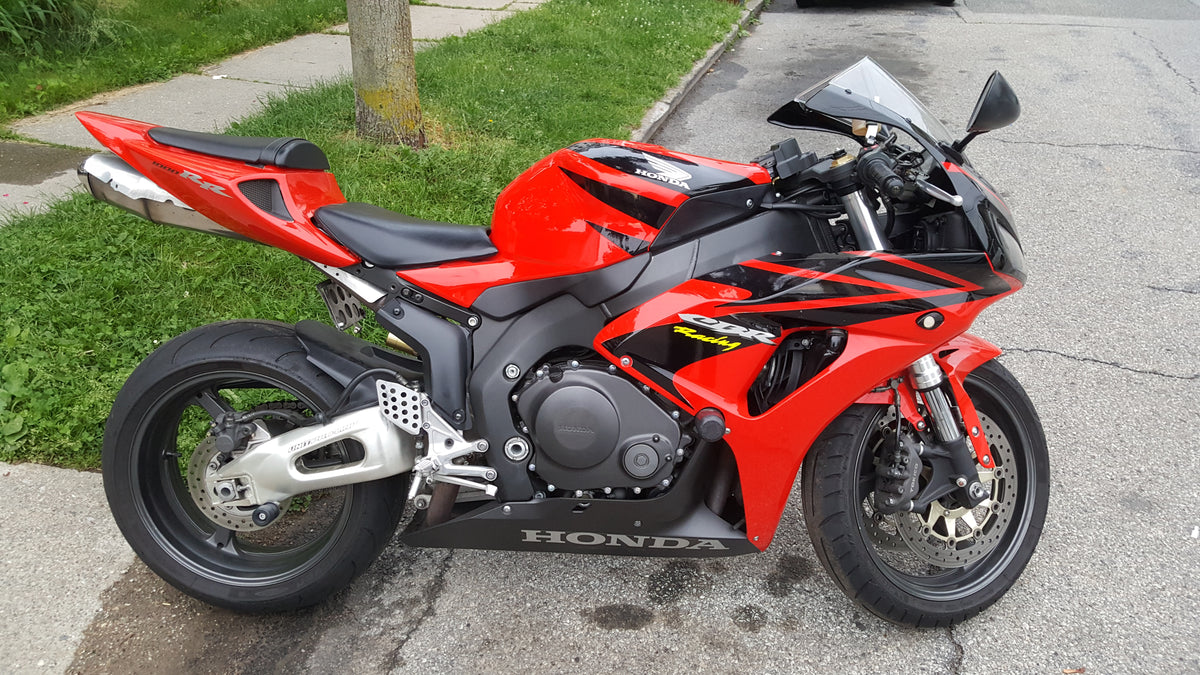
The first four years of the CBR1000RR can be confusing at a glance. Both the 2004–2005 and 2006–2007 Fireblade have an underseat exhaust and a recognizably similar Honda silhouette. A familiar paint scheme makes the distinction harder, especially on a used bike with replacement bodywork. Yet Honda described the 2006 model as a nose-to-tail styling revision, with a smaller cowl surface and larger lower-cowl outlets. The safe buying decision is to identify the motorcycle's actual model year and existing equipment, then choose the product range for that year group. Neither a similar tail nor an online photograph proves that panels swap between the two groups.
This guide addresses a narrow problem: deciding which painted-bodywork listing to investigate and what evidence to send before ordering. It is not a conversion manual, an OEM interchange chart or a guarantee that any particular piece will fit a modified motorcycle. The existing older Honda CBR condition audit covers worn tabs and hardware across several models; this article instead concentrates on Honda's 2006 Fireblade styling boundary and the consequences for a real purchase.
What Honda actually changed in 2006
Honda's 2004 CBR1000RR launch release describes a new Fireblade with a center-up exhaust mounted inside the rear cowl. That exhaust layout is not a reliable way to separate a 2005 from a 2006. In its February 2006 model-change release, Honda explicitly says the later machine inherited the basic styling but was revised from nose to tail. The company reports roughly 13% less cowl surface area and larger outlets in the lower cowls. Its CBR history independently labels the 2006 fairing design as new.
Those statements establish a design change; they do not provide a complete aftermarket parts interchange table. It would be overreach to claim from those releases alone that every bracket, stay, screen, headlamp or fastener changed, or that no individual part can ever be shared. The practical conclusion is narrower and more useful: do not buy a 2004–2005 bodywork set for a 2006–2007 motorcycle, or the reverse, merely because both look like early center-up-exhaust Fireblades. If a seller proposes a cross-year conversion, ask for the exact matched component list and installation evidence rather than relying on a visual resemblance.
Honda's later 2008 European model announcement calls that year's Fireblade a full model change. It is a separate boundary again. This article deliberately stops at 2007; it does not flatten 2004 through 2008 into one “early CBR1000RR” kit family.
Use photos to ask better questions, not to certify a year
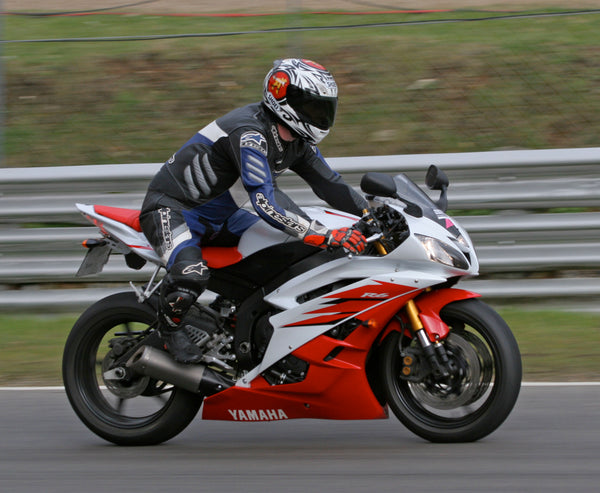
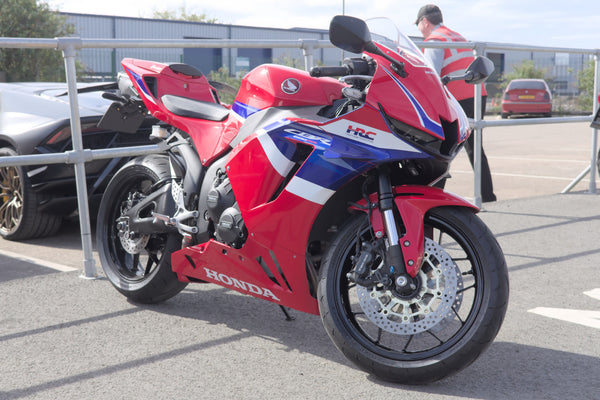
The unaltered photograph below is described by its photographer as a 2005 CBR1000RR. It shows the broad side view, nose, lower panel, tank-to-fairing line and center-up tail. Compare it with the real 2006 motorcycle in the cover: the two remain recognizably related, but the cowl contours and lower openings differ. They are two individual motorcycles, not a controlled factory parts comparison. Accessories, finish, camera angle and prior repairs can change what is visible.
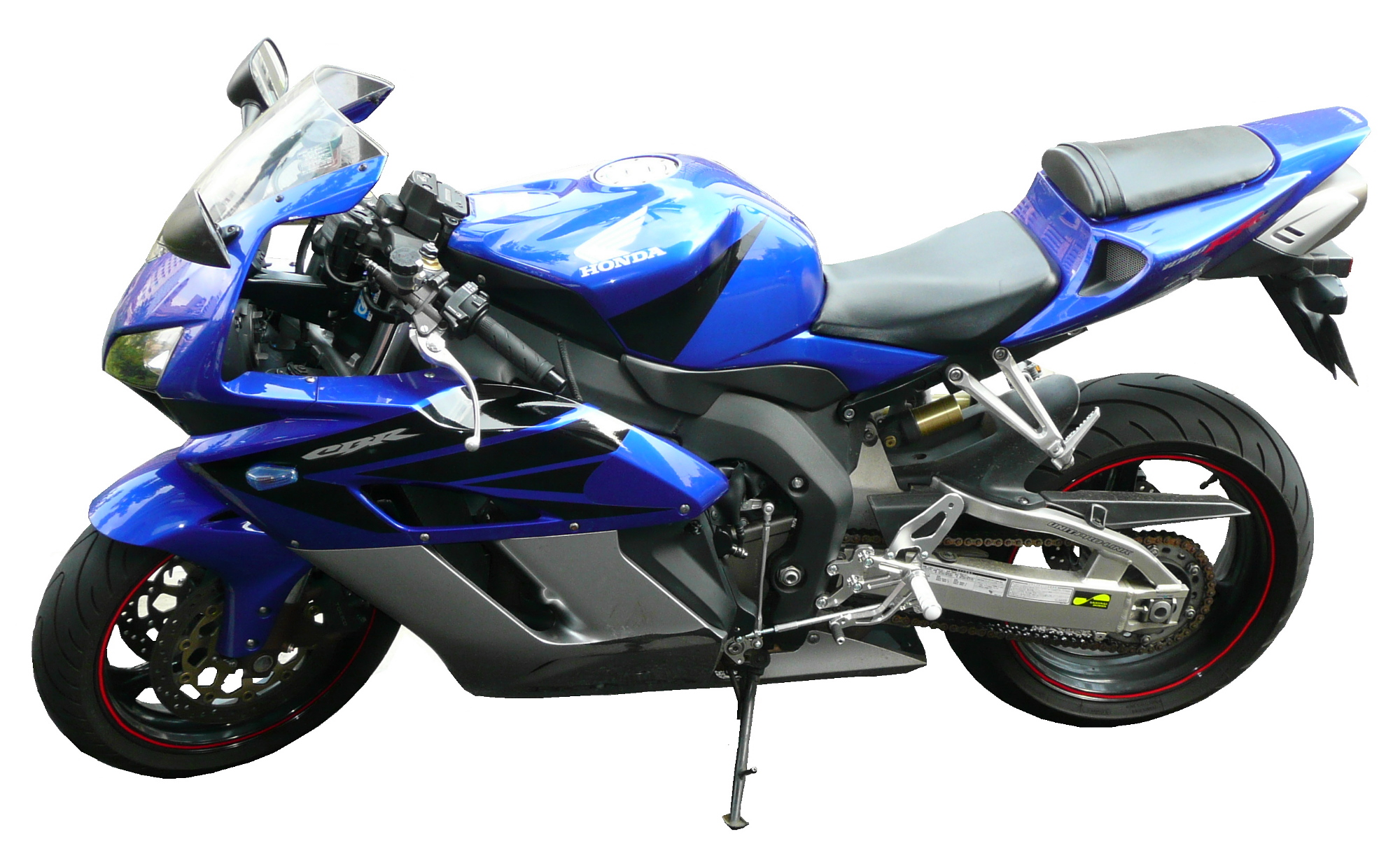
2005 CBR1000RR photograph by PekePON, CC BY-SA 3.0, used unmodified. The cover is a separate 2006 CBR1000RR street photograph by Awalcant, CC BY-SA 4.0, also used unmodified. Neither bike is a NiceFairings installation or proof of an aftermarket kit's fit.
Take your own matching set of photographs before shopping: entire left and right sides, a straight-on front, front three-quarters, rear and a closer view of both lower-cowl outlets. Include the screen, mirrors, headlight area, panel joins and the underside of the tail. A photograph cropped to a sponsor decal or painted side panel is poor identification evidence. If the bike has aftermarket fairings, one impressive graphic can make the wrong year group appear familiar.
Photographs answer “What is visibly on this motorcycle?” The registration or title, manufacturer's identification and the exact market-specific parts information answer “Which motorcycle is it?” A registration year is not always the manufacturer's model year. If the paperwork and the bodywork disagree, pause and resolve that mismatch with the appropriate dealer or model documentation. Do not use a photograph to override an uncertain identity or a painted decal to infer an OEM part number.
Read the two NiceFairings ranges as separate shopping paths
NiceFairings currently separates CBR1000RR 2004–2005 fairings from CBR1000RR 2006–2007 fairings. That separation matches the buying question raised by Honda's redesign. It does not establish that every visible original part on your motorcycle is included in a selected aftermarket set. Collection membership filters products; the selected product page and a written order confirmation must establish the purchased scope.
For example, the blue 2004–2005 painted set is listed for that early range. The 2006–2007 custom-painted set belongs to the later range. Save the exact link you are considering. A search result that says simply “CBR1000RR Fireblade fairings” is not specific enough for a purchase.
The gallery on the NiceFairings 2004–2005 listing is a design and panel-layout reference, not a promise of a complete original motorcycle, a guaranteed packing list or a cross-year fitment demonstration. Product photos can include multiple detached pieces that look like one continuous shell when installed.
When comparing a shop gallery with your own bike, create a small two-column record instead of relying on memory. On the left, write the feature visible on your motorcycle: front-cowl outline, lower opening, tail silhouette or the seam of the specific damaged panel. On the right, mark what the selected listing actually shows: a clear corresponding view, an obscured view, or no view. “No view” is not a failed product; it is a question to send to the seller. If one side of the bike has been repaired, prioritize the unmodified side and the vehicle documents. A photo can narrow the enquiry, while a reverse-side image of an already removed part can expose a tab or molded identifier that the glossy front hides. Do not remove a sound panel solely to satisfy a blog checklist.
The later 2006–2007 product listing should be reviewed independently, including its own gallery and options. Do not put two images side by side and infer that visually similar pieces have matching tabs. Different camera scales, positions and shadows hide the rear surface where mounting interfaces live. For one damaged component, ask NiceFairings whether that named piece is available alone; if the answer is a full set, know what you are buying and why.
An order question is more specific than “Will it fit?”
Imagine a 2005 bike with a scratched left lower cowl. A sensible first inquiry says: “My documents identify a 2005 CBR1000RR in this market. Here are a full left view, the lower-cowl damage, the adjacent front and rear seams, and a reverse-side view if the panel is already off. Is the circled painted piece in this particular 2004–2005 listing, and can it be supplied separately?” That question gives the seller an actual panel and an actual product. It also makes the condition of the surrounding bodywork visible.
Now imagine a 2006 motorcycle whose nose has been replaced after an accident. The current front might look more like a 2005 photograph than the documents suggest. The priority is not choosing whichever paint picture resembles the replacement. Record the motorcycle identification, photograph the existing headlamp and upper-cowl area, and ask a competent person to identify any conversion or altered stay before ordering. A new painted nose cannot be assumed to reverse unknown prior work. If lighting, supports or controls were disturbed, resolve those functional issues first.
A third case is a 2007 bike being given a coordinated new appearance. Here the owner may prefer a complete 2006–2007 painted set even if no part is broken. The order still needs a list of what stays on the bike: fuel tank, screen, lamps, mirrors, black inner panels, heat protection, seat, hardware and any modified exhaust-related parts. A dramatic new graphic can look coherent in a flat-lay yet clash with the existing tank or wheel color. Use the custom fairings inquiry for a design discussion, while keeping the fitment year group and paint brief as separate decisions.
These cases have different outputs. The first needs a correctly identified single-piece inquiry and a finish expectation. The second needs vehicle identity and prior repair evidence before any cosmetic order. The third needs a written included-versus-retained inventory and approved color direction. Treating all three as “buy a CBR1000RR kit” would be simpler prose but worse advice.
The panel boundary matters after a tip-over, too
An early Fireblade that went down may carry damage in a support, lamp mount, screen attachment, side-panel tab or heat-related area that a front photograph cannot show. Do not interpret an uneven seam as proof that an aftermarket panel is poorly molded; nor assume the old panel was correct because its fasteners were tightened. Start with the first observable conflict and ask a qualified technician to assess safety-critical parts. The older-CBR hardware and heat audit offers a general inspection framework, but it does not override the Honda service information for this exact bike.
On these motorcycles, the center-up exhaust is conspicuous. It is a useful reminder that tail and undertray questions are not purely cosmetic. A cracked painted tail panel and a hot, modified or unsupported exhaust are different problems. Photograph the original or non-stock exhaust arrangement and any visible shielding before discussing replacement. Never treat paint, a decal or an unverified reflective sheet as a substitute for the model's required heat hardware. Equally, avoid claiming from a product flat-lay that a particular heat shield is or is not shipped unless the seller confirms it for that option.
If the old fairings have been mixed across years or repaired repeatedly, make a short inventory as pieces come off: name or location, side, visible part number if present, condition of tabs and retainers, and where each fastener came from. The photo-and-label replacement workflow is useful for this recordkeeping. It is not a universal mounting sequence. Photograph both the visible paint and the hidden face of a removed part; a pretty exterior is not evidence that the rear tabs are intact.
What to confirm before approving paint and installation
Send NiceFairings one organized packet through the contact page: the exact year and market, how those were confirmed, both full-bike sides, front and rear, close-ups of the damaged area, any non-stock bodywork or exhaust, and the selected product link. Ask for written answers to four questions: Which pieces are in this selected option? Does it include the circled piece or is that separate? Which original items must be retained or transferred? Is there anything in the described modification that requires further compatibility checking?
When a custom design is involved, keep the specification testable. Name the model-year group first; then list color, finish, graphics and any required boundaries at seams. A 2006-style graphic request on a 2005 motorcycle is a graphic inspiration, not an instruction to send 2006-shaped plastic. If the intended paint crosses several panels, request a reviewable layout rather than an assurance based on one small phone image. Compare colors against retained tank and tail areas in neutral daylight, with the limits of screen color understood.
Before installation, inventory the delivered panels against the agreed list and inspect faces, edges and tabs without forcing a trial fit. A delivery inspection checklist can structure that step. If a piece appears to require drilling, bending a stay or dragging a mounting hole into place, stop and document the first mismatch. Do not turn a model-identity error or a bent support into a permanent alteration to finished paint. Use the correct Honda service information and a qualified installer for the actual mounting work.
The point of the 2006 boundary is not that a facelift makes one Fireblade “better” or that every part changed. Honda's own documents show a meaningful cowl redesign while the shared name and center-up exhaust can lull a shopper into treating the four years as one visual family. Match the motorcycle identity to the specific store range, then confirm the actual ordered pieces and the existing machine's condition. That sequence is slower than clicking the most attractive picture—and far more likely to produce the bodywork project you intended.
Sources and photograph notes: Honda 2004 launch, Honda 2006 model-change release, Honda CBR history and Honda 2008 European announcement support the model-history claims, not any specific aftermarket interchange. Cover: Awalcant's real 2006 motorcycle photograph, CC BY-SA 4.0, unmodified. Inline 2005 photograph: PekePON, CC BY-SA 3.0, unmodified. Neither pictured motorcycle is claimed as a NiceFairings customer build.