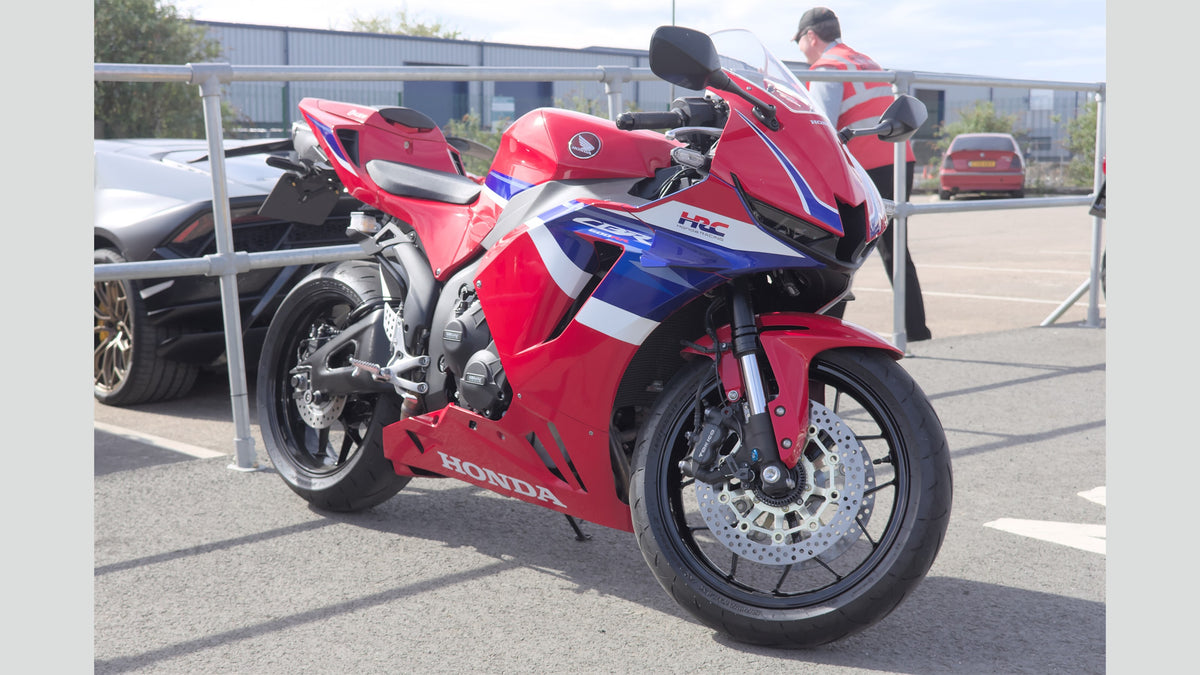
The question “Is the newer CBR600RR finally coming to the United States?” is circulating again. Speculation is not the same thing as a Honda U.S. launch announcement. As of October 21, 2026, Honda's U.S. model pages still show the 2026 CBR600RR; we found no official U.S. 2027 CBR600RR model page, price, release date or bodywork parts listing. If you own a current CBR, the useful decision is not to imitate a rumor with a kit that may not fit. It is to identify your motorcycle precisely, decide whether its existing fairings need repair or replacement, and keep the future-model decision separate.
This article distinguishes confirmed manufacturer information from an unconfirmed U.S. arrival. It is also not a claim that a new fairing changes an older bike's brakes, electronics or crash history. A visual refresh can be worthwhile on its own terms, but it deserves a model-year-specific order and an honest expectation.
What Honda has confirmed—and what it has not
Honda introduced a substantially updated CBR600RR in Japan for the 2020 model cycle. Its Japanese release describes electronics and aerodynamic development. Honda then announced the CBR600RR's return to Europe for the 2024 model year, including a six-axis IMU and several rider aids. Those are real, market-specific developments. They do not establish that the same package is available to U.S. buyers now or that a future American variant will be identical.
Honda's U.S. 2026 CBR600RR page remains the appropriate primary source for what American Honda currently lists. It names 2026 CBR600RR and CBR600RR ABS variants and their specifications. A 2026 U.S. specification sheet is more useful for present ownership than a social post comparing graphics from two markets. Motorcycle publications have reported filings that may point to an updated 2027 U.S. bike, but no article should turn that inference into a guaranteed release date, price or exact equipment list.
Online images and specification lists sometimes describe a future 2027 CBR600RR as if every market will receive the same motorcycle. A model-year label on a non-U.S. website or an artist's rendering cannot establish American availability, final U.S. equipment or parts compatibility. Look for a dated Honda U.S. model announcement and specification before treating any version as a local showroom choice.
Do not compare two markets as if they were two trim levels
The Japanese and European updated motorcycles and the U.S.-listed 2026 motorcycle are not interchangeable line items in a shopping cart. Regulations, lamps, emissions equipment, labels and sometimes specifications differ by market. Even within one market, ABS and non-ABS variants may have different part records. That is why a table that says “old U.S. bike: none; new global bike: five modes” can mislead: it combines different years and markets, then invites the reader to assume a particular 2027 U.S. configuration.
If you want the newer electronics, wait for the actual American Honda announcement and compare the final U.S. specifications, insurance costs, dealer availability and your present motorcycle's condition. A graphics kit does not add an IMU, cornering ABS, riding modes or a new instrument display. Nor does a more modern-looking nose prove that older mounting points accept newer bodywork. The manufacturer parts catalog and the actual machine, not a photograph of a winglet, decide that question.
If you enjoy your current CBR600RR but dislike faded or scratched plastics, a fairing refresh is a different project with a different budget. It can change paint and replace damaged exterior pieces within a verified scope. It should not be sold to yourself as a low-cost substitute for an unannounced motorcycle. Write down what you are trying to improve: surface condition, a coordinated color, a missing panel, or a genuinely new performance feature. The first three may be bodywork decisions. The fourth is not.
There is also a distinction between waiting for information and waiting for a motorcycle. A registration filing, if accurately reported, may indicate regulatory progress; it does not tell you when a dealer can deliver a bike, how many units a region will receive, or which colors and accessories will be sold. Honda's American model page, downloadable U.S. specification and dealer ordering information would be stronger evidence for a buyer. Until those exist for a 2027 CBR600RR, a comparison of actual purchase costs is necessarily incomplete. Keeping that gap visible is more useful than filling it with estimated dates or imported prices.
For a rider with a damaged current motorcycle, postponing an unrelated safety repair while waiting for model news is a poor trade. A mechanically questionable bike needs assessment now. A cosmetic repaint that you might not keep through a trade can wait. Those are two different kinds of urgency, and the rumor should not collapse them into one.
Identify your existing bike before selecting painted parts
Start with the VIN and registration, then confirm the market and model year in the correct Honda documentation. Inspect the nose and headlight assembly, side-panel seams, lower fairing, tail and underseat exhaust arrangement as applicable. Record any previous replacement, race conversion, frame slider, mirror change or non-original stay. A product title covering a broad year span is a seller's application claim, not a visual confirmation that your particular bike is unmodified.
NiceFairings groups CBR600RR fairings by product offer. The U.S.-style 2013–2026 collection is a more specific browsing route for a documented current American model; it is not a claim that those panels also fit the updated overseas bike. Browse by exact year and compare the pictured shapes, then request written confirmation of the selected variant and included pieces. If an item is missing from your bike—an inner panel, rubber, lamp support, bracket or fastener—ask whether it is supplied or must be sourced separately. Do not assume a full painted kit includes every component removed during installation. A cosmetic cover in a photo is not a fuel tank, and a race-inspired wing detail is not manufacturer-certified aerodynamics.

NiceFairings listing photograph for this 2013–2026 black bodywork offer. The image shows the offered design, not a fit check on the reader's motorcycle or a conversion to the overseas model. Confirm exact kit contents and the motorcycle's configuration before ordering.
Our 2007–2008 tail article is intentionally narrow: it discusses the underseat-exhaust-era tail, not an interchange rule for newer U.S. or European machines. General year-by-year guides can help organize questions, but use Honda's market-specific parts information and the selected seller's current offer to check the actual motorcycle. Do not copy an old cross-market interchange claim into a new order.
Turn your photos into an order question the seller can answer
Instead of sending a single side-view glamour shot, send the seller a compact record. First, give the year and market shown by the bike's documents and the exact product URL or design number you are considering. Second, supply a full left-side and right-side photograph, a front view of the headlight and screen, and a rear view showing the seat and tail. Third, include close-ups of any missing or changed attachment point and disclose non-original exhaust, light, mirror, slider or track-bodywork work. If you do not know whether a previous owner changed a stay, say so rather than guessing.
Then ask a bounded question: “Does this specific kit correspond to this documented model/year and the assemblies shown in these photos? Which pictured pieces are supplied, and which original parts must I retain?” A seller can answer that more responsibly than “Will a new CBR look work on my old bike?” Request a written response before paint approval. If an accessory or repair makes the configuration uncertain, a local installer may need to identify the actual bracket or lamp support first. That extra step protects both the order and the motorcycle from a forced-fit shortcut.
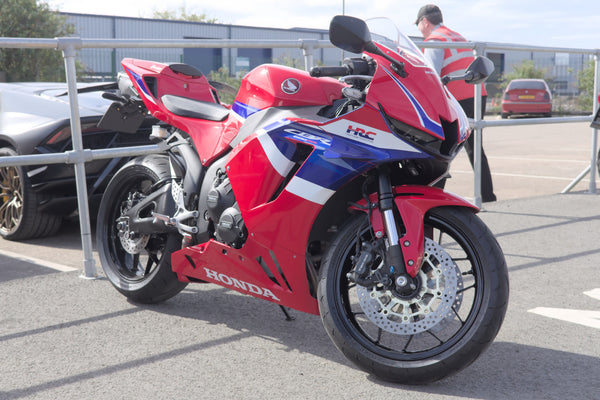
Photographs of a finished painted kit answer a different question: whether you like the design and can identify the visible panel set. They do not show what is behind your motorcycle's nose or whether your fasteners survived a past repair. In particular, never use an overseas 2024 CBR600RR photograph—including this article's cover—as a fitment template for a U.S.-market 2026 motorcycle. It is there to illustrate why the newer styling attracts attention, not to establish a bolt-on conversion.
Decide how much work a refresh actually requires
If one panel is scratched and mechanically sound, compare local refinishing, an original replacement and a matching painted aftermarket piece. A complete coordinated kit makes more sense when several visible panels are damaged or when a deliberate color change is the goal. Neither choice repairs a bent mount, cracked lamp, leaking case or questionable frame. Have a qualified shop assess those separately if there was a fall.
For a larger color change, make a plan for every retained surface: fuel tank, wheels, seat, fender, inner trim and screen. A bright red or tricolor set may look consistent in a flat lay and different beside a weathered original tank in daylight. Ask for the selected design number, gloss or matte intent, and what the seller's approval photographs can actually show. They can show visible paint and panel count. They cannot prove physical fit on a motorcycle with unknown prior repairs.
Leave time for a dry fit and the correct model-year service procedure. Do not turn one rider's “five-hour install” anecdote into a universal labor promise. Do not drill, file or heat a new painted panel simply because a forum post says a hole was tight. If a part conflicts with a mount, document the overall assembly and close-up interface, then contact the supplier or installer before irreversible alteration. The fairing pre-fit checklist is a starting point for that staged assessment.
One practical way to control cost is to separate the quote into lines: which painted parts are being replaced, which original parts can be reused, what independent mechanical or electrical work is required, and what remains unknown until a panel comes off. A shop may need to inspect a bent stay, lighting support or fastener before it can price installation. That is not a reason to assume a new kit is defective or that the shop is overcharging; it is an uncertainty to resolve before promising yourself a total. If there was a fall, photograph the underlying area before new plastic hides it. Keep the inspection and repair record even if the final finish looks factory-clean.
Color is another place where a clear decision beats a slogan. Decide whether the fuel tank will stay its present color, be refinished separately, or be visually covered by a cosmetic shell if one is offered for the exact kit. Check the full motorcycle in daylight, not just a close-up of a glossy side panel. The same red on two differently aged surfaces may read differently; a deliberate contrasting tank may be more coherent than an attempted but imperfect match. None of these choices changes the motorcycle's mechanical identity, and none should be described as an official Honda 2027 appearance.
A decision tree that survives the eventual announcement
If your CBR is mechanically sound and its existing fairings are acceptable, you can simply keep riding and wait for official U.S. information. There is no urgency created by a reported filing. If the present panels are damaged, repair what needs repair now; future news does not make a loose or unsafe component less important. If you want a different design, choose one for the machine you actually own and value it as a cosmetic project. If you want the newer electronics, defer that purchase comparison until Honda publishes the American version and dealers can quote the actual motorcycle.
Before spending, write two budgets. The current-bike budget includes inspection, maintenance, bodywork scope, installation and any lost use. The potential replacement-bike budget waits for confirmed price, tax, insurance, equipment and trade-in or resale figures. Do not tell yourself a new fairing will necessarily increase resale value enough to fund the newer bike. A buyer may prefer the original panels or ask why they were replaced. Keep the originals and the documentation if resale is possible.
The one assumption to avoid is that the global updated nose can be bolted onto the current U.S. bike. Honda's different market versions and generations have distinct parts systems; physical interchange must be proven for exact part numbers and interfaces. No such conversion is established by the sources used here. If the attraction is the look rather than the electronics, commission a coherent paint design for your verified CBR600RR year range instead of claiming to replicate an unavailable factory model.
If an official U.S. announcement arrives later, revisit this decision with a new sheet of paper. Record the actual U.S. model code, available trims, Honda's own specification and parts information, dealer timing and the total price to change bikes. Compare that against the cost of keeping your present CBR roadworthy for the period you will actually own it. Do not equate a European display bike with an American delivery promise, and do not place a fairing order based on a render of a model that has not been listed for your market. This update path means the article can be corrected when the facts change without pretending we knew them early.
The newest CBR600RR news may eventually become a genuine American showroom choice. Until Honda says so, it is a reason to follow official announcements, not to let a rumor define today's fairing order. Your present motorcycle can be maintained and refreshed honestly; it cannot be transformed into a different market's electronics package with painted plastic.
As of October 21, 2026, Honda U.S. lists the 2026 CBR600RR; a 2027 U.S. version, price and final specification are not confirmed in the manufacturer sources cited here. Cover photograph: Aethonatic, CC0, with plain side margins added for the blog card. The photographed motorcycle is an overseas model, not a NiceFairings installation.