
Scuffed fairings can make a familiar motorcycle feel different every time you look at it. Your eye goes straight to the scraped paint instead of following the shape of the bike. Replacement painted fairings offer a chance to change that first impression: fresh surfaces, coordinated colors and an exterior that feels considered again. This motorcycle fairing makeover is about that visible transformation.
After a crash, have the motorcycle and any damaged parts assessed by a qualified motorcycle technician. New exterior fairings do not establish roadworthiness. Once the necessary assessment and repair work have been addressed, you can plan the cosmetic result.
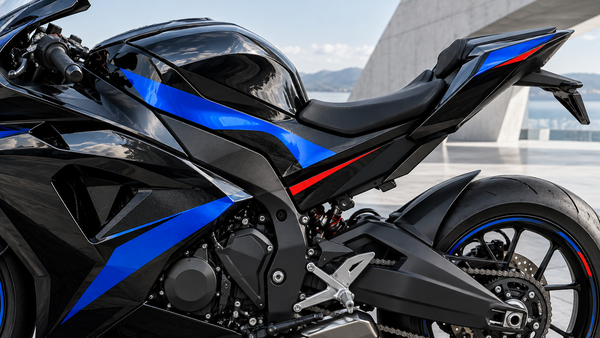
Now imagine this: a generic charcoal sportbike with scratched sides. You swap the outer shells for a blue and silver design. The black tank, seat, and wheels stay. This is an illustrative example, not a real customer result. It’s about design, color, pride. Not a repair manual.
Key Takeaways
Damaged fairings take over your bike's look. Swap them with new painted shells for a clean appearance.
Build the new palette around parts that have been assessed as suitable to retain; black tank, seat and wheels anchor this illustrated concept.
Discuss a custom-painted ABS fairing design with NiceFairings and confirm the available colors, layout and order scope.
Use comparable views to appreciate the cosmetic change without presenting it as a mechanical repair result.
Why Damaged Bodywork Dominates the Look
The Panels Eyes Go To First
Your fairings wrap around the front of the bike like a frame around a picture. Their broad surfaces are prominent when you walk around the motorcycle. The upper cowl, the side panels, the nose — these pieces catch light and reflect it back. When they're clean and smooth, your bike looks sharp and put-together. When they're scuffed, that same surface grabs attention for a different reason.

Think about how you look at any motorcycle. Your gaze lands on the largest painted surfaces first. The tank and the fairings own that space. A scratched side panel interrupts the flow of color across the bike. Your eye snags on it. You notice the damage before you notice anything else — the exhaust, the bars, the tires. The scuff becomes the story.
Why a Scuff Reads Loud
A scuff stands out because it breaks contrast. Scraped areas can reflect light differently from the surrounding glossy finish. The result? A dull, chalky patch against a glossy finish. Even a small mark can look huge on a dark charcoal panel.
Color makes it worse. Pale scratches can stand out strongly against deep charcoal paint. The damage reads as a bright, messy streak. Depending on lighting and the extent of the marks, that contrast can remain noticeable from a distance. The rest of the bike fades into the background. That single rough patch pulls your whole bike down, even when everything else looks fine.
Choosing a New Visual Identity
Color Blocking With Retained Parts
Here's where the fun begins. You get to decide what your bike looks like next. The scuffed charcoal panels come off. New painted shells go on. In this illustrated scenario, you do not start from zero. The tank, seat and wheels are retained. Those black parts anchor the design.

Think of your bike as three visual zones. The tank sits at the top, right in front of you. The seat runs behind it. The wheels sit low at both ends. All three are black in this scenario. They create a dark frame around the middle. Your new fairings fill that frame. They become the color statement.
Color blocking works because your eye loves contrast. A bright blue nose against a black tank pops. Silver side panels against black wheels look clean and fast. The retained parts don't fight the new color. They support it. They give the fresh paint a place to shine.
Keeping suitable existing components gives the design a useful starting point. In this concept, the black pieces already relate to one another. The new fairings do not need to compete with them; blue and silver can sit within that darker outline. For your own bike, include the retained colors in the design discussion rather than judging a panel on its own.
A Motorcycle Fairing Makeover in Blue and Silver
Picture the transformation. Your generic charcoal sportbike sits in the garage. The side panels wear white scratches. The nose has a dull gray patch. Now imagine those same panels in deep blue. The upper cowl catches light. The side fairings sweep back in metallic silver. The black tank sits between them like a keystone.
This motorcycle fairing makeover changes everything your eye sees first. Blue and silver work together because they share a cool tone. Blue adds depth. Silver adds brightness. Together they create movement across the bike. The silver panels reflect light and make the bike look longer. The blue nose draws your gaze forward. The black tank and seat ground the design.
You can split the colors in different ways. Maybe the nose and tail are blue. The side panels are silver. Maybe blue runs along the top and silver fills the lower sections. Either way, the goal stays the same. You want the colors to flow from front to back without interruption. No scuffs break the line now. No gray patches stop your eye.
The wheels stay black. The seat stays black. Those dark elements frame the blue and silver like a matte around a photo. The result feels deliberate. It feels fresh. Your bike no longer looks like it took a hit. It looks like it rolled out of a design studio.
What Painted Replacement Fairings Contribute
Made-to-Order Painted ABS Fairings
NiceFairings offers made-to-order painted ABS exterior fairings. You discuss the motorcycle details and the desired design before production. For this concept, the request would describe blue as the main color, silver as the accent and black as the retained surrounding color. Confirm which layout and finish can be supplied for the exact model and year.

This approach gives your motorcycle fairing makeover a clear direction. You aren't hunting for used panels in the right color. You aren't settling for whatever shade happens to be available. You describe the blue and silver layout you want. The painter builds that design onto fresh ABS shells.
The appeal here is the appearance of newly painted exterior shells: a consistent design across the supplied pieces rather than scraped areas interrupting the color. The material name alone does not establish fit, crash protection or durability. Review the actual specification and finish offered for your order.
The made-to-order process also lets you match your retained parts. You keep the black tank, seat, and wheels. You ask for blue and silver panels that work with those dark elements. The result feels planned, not pieced together.
What to Confirm Before Ordering
Before production starts, confirm three things with NiceFairings. First, give the exact model and year of your bike. Fairings fit specific generations, and small changes between years matter. Second, describe the design you want. Tell them which panels get blue and which get silver. Third, ask which pieces come in the set. You need to know exactly what you're getting.
Ask for finished photos when available. A photo of painted panels on a bench shows the color and finish. But detached photos are not proof of installed fit or exact color. Lighting changes how paint looks. A blue panel under shop lights may read differently in daylight. Use photos as a guide, not a guarantee.
Do not assume the fuel tank, lights, wheels, or hardware are included. Those parts usually stay on your bike. The fairing kit covers the exterior shells. If you need mounting bolts or clips, ask about them separately. Clear expectations now save confusion later.
You can start your design conversation at NiceFairings custom fairings. If you have questions about your specific bike or the ordering process, reach out at contact NiceFairings. The team can walk you through model confirmation and design details before anything goes into production.
This step matters because your motorcycle fairing makeover depends on getting the right panels in the right colors. A quick conversation upfront keeps the project on track. You describe the look. They build it. Your bike gets its fresh identity.
An Honest Before-and-After Reveal
Matching Camera Angles and Captions
Every image here is an AI drawing for this blog. None of them show a real customer result or a confirmed bike model. They help you picture the change, not promise a certain result.

The cover places the scuffed charcoal concept beside a blue-and-silver version from a similar front three-quarter viewpoint. The separate finished-look image explores the same design direction. These are AI illustrations, so small visual differences should not be interpreted as evidence of a particular repair. For real before-and-after photographs, keep the camera height, distance and lighting comparable so the bodywork change is easier to judge.
The image descriptions identify the artwork as illustrative. The charcoal version represents scuffed outer bodywork; the blue-and-silver version represents a fresh fairing design around a black tank, seat and wheels. Detail illustrations explain specific ideas rather than documenting stages of a real customer project.
Reading the Transformation Honestly
Look at the before image first. See how the scuffs on the side panels grab your attention. The charcoal paint looks dull where the scratches catch light. Now look at the after image. The blue nose and silver sides flow together. The black tank and wheels frame the new colors. Your eye moves smoothly across the bike instead of getting stuck on damage.
Read the reveal as a design comparison. The blue-and-silver surfaces replace the visual interruption of the gray scuffs, while the retained dark components keep the motorcycle recognizable. It is a different first impression built around the same overall concept.
The reveal is about design and pride. You see a bike that looks complete and well‑planned again. That feeling matters. It is the reason you started this project. The before‑and‑after simply shows what fresh color and matching panels can do for how your bike looks at a glance.
Picture yourself walking up to your bike now. The scuffs are gone. Blue and silver panels catch the light. The black tank, seat, and wheels tie it all together. Your motorcycle fairing makeover is a cosmetic change, a design choice you made for yourself. That fresh look brings back a feeling you missed: pride in what you see.
Ready to talk colors and layout? Share your ideas with NiceFairings at NiceFairings custom fairings. Have questions first? Reach out at contact NiceFairings. Then imagine that first walk-around again. Clean lines. Fresh paint. A bike that finally looks whole and intentional once more.
FAQ
Can new fairings really change how my bike looks that much?
Yes. Your outer panels sit right where your eyes land first. Fresh painted shells replace the scuffed surfaces. Coordinated colors flow from nose to tail. The bike reads as one clean design instead of a patchwork of damage. That shift is purely visual, and it changes everything you notice at a glance.
Do I have to replace the tank, seat, and wheels too?
A cosmetic redesign does not automatically require a different tank, seat or wheel color. In this example, the black components remain and help frame the new fairings. After a crash, whether any actual component can remain depends on its condition and the professional assessment, not on the chosen paint scheme.
What should I confirm before ordering painted fairings?
Confirm your exact model and year, the design you want, and which pieces come in the set. Ask for finished photos when available, but treat detached photos as a color guide, not proof of installed fit. Never assume the tank, lights, wheels, or hardware are included.