You can plan a fresh fairing scheme around the tank color you already like. Start by treating that visible color as a fixed part of the design. Then choose whether the new panels will repeat it, contrast with it, or give it a quiet background. The result can feel deliberate without making every painted surface the same shade.
This guide is for riders planning an appearance change while keeping the existing tank-area finish. It covers color composition, not tank removal or refinishing. First establish which visible parts will actually remain on your motorcycle; depending on the model, that area may include the tank itself, a separate cover, or surrounding trim.
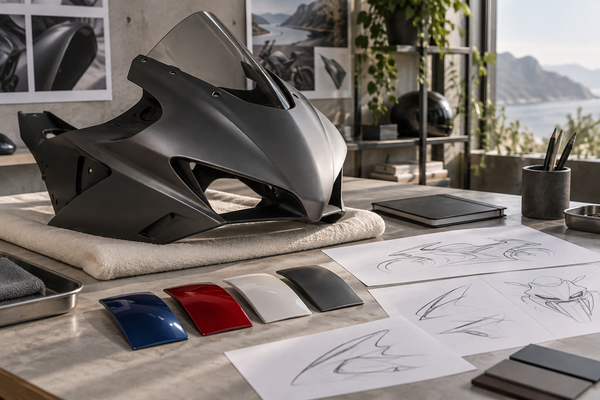
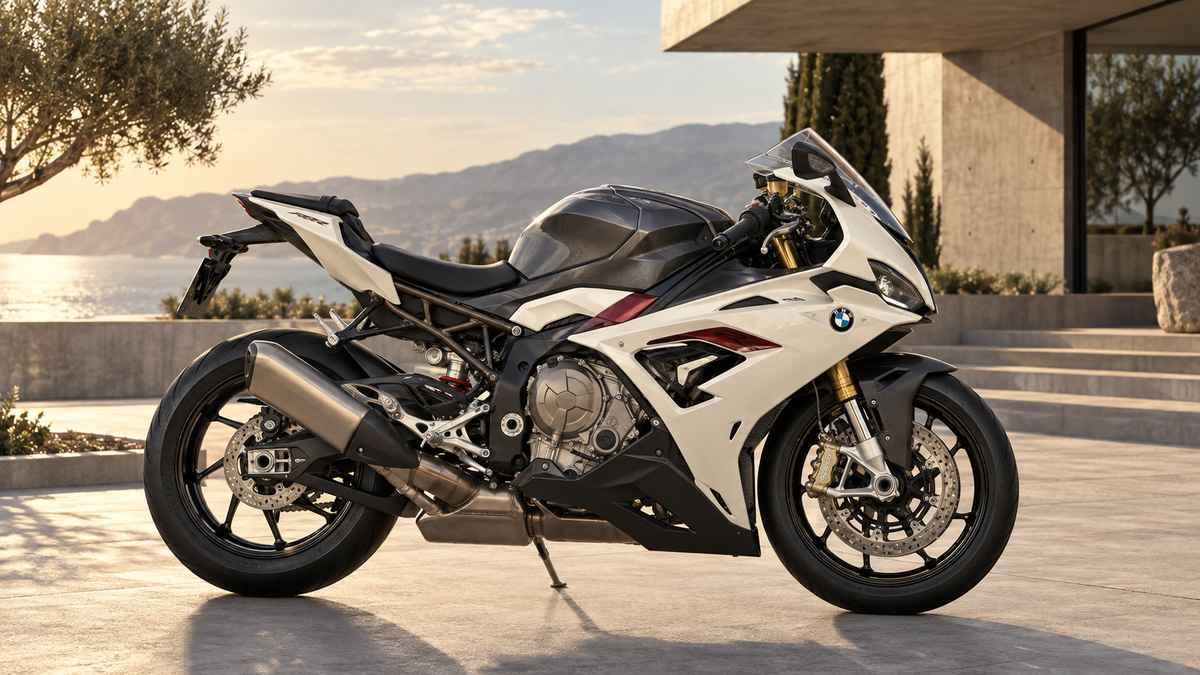
All illustrations are original AI-generated design concepts without watermarks. They explain color ideas, not exact factory colors, supplied products or confirmed model-year fitment.
Make a palette from the parts you are keeping
Before browsing another hundred paint schemes, take one clear side photograph of your own bike. List the colors of the parts that will stay: the tank area, wheels, frame, forks, seat and exposed exhaust. Even a simple black-and-red motorcycle may already contain silver metal, gold fork tubes and several different black finishes.
These are useful design ingredients. A silver frame can connect a pale side panel to a dark tank. Black wheels can give a bright body color a calmer base. Gold forks already provide a small warm accent, so an additional gold stripe should be a choice rather than an automatic extra.

Divide your notes into keep, change and confirm. Put the tank finish and wheels in the first group if they are staying. Put the new side panels in the second. Use the last group for uncertain items such as a tank-area shroud or a separately supplied seat cowl. This prevents a color plan from depending on a part that is not actually included in the order.
For the component distinction, see our tank cover versus fuel tank guide. Once you know what stays visible, you can design around its current appearance instead of assuming a new fairing kit changes the entire motorcycle.
Choose one of three ways to connect the new panels
There is no compulsory color ratio. The useful question is what job each color performs. Let one color lead, another support it, and any small accent emphasize a feature you actually want to notice.
| Approach | How it works | Example direction |
|---|---|---|
| Repeat the tank color | Bring a related color into a side graphic or tail detail | Blue tank, ivory panels, blue side accent |
| Use deliberate contrast | Choose a clearly different panel color and a clean boundary | Red tank, charcoal upper edge, ivory side panels |
| Keep the panels quiet | Use a restrained main panel color so the retained tank remains the focal point | Bright tank, dark fairings, minimal additional graphics |
Repetition helps the retained color feel connected to the new bodywork. A blue tank does not require an entirely blue kit: a blue accent on the lower side and a smaller echo at the tail can establish a visual relationship. Start with those few touches before adding blue to every available surface.
Contrast works when the difference looks intentional. Ivory next to deep red makes a clear color decision. Two reds that are almost, but not quite, alike may instead draw attention to the mismatch. If an exact match is essential, move from a design exercise to a proper color-confirmation discussion before placing the order.
A quiet background is useful when you already love a distinctive tank finish. Dark replacement panels can let that color stand out. Consider the finish as well as the name: a gloss-black tank and matte-black side panel form a texture contrast, even though both are called black.
A blue tank: repeat the color without covering everything
Imagine keeping a blue tank and black wheels while replacing the surrounding panels. One direction is a pale main fairing with a blue graphic placed below the tank line and a modest blue tail accent. The eye encounters blue more than once, while the pale bodywork gives the overall design a different character.

Keep the first version simple. Look at the sketch or mockup at thumbnail size. Does the tank seem connected to the rest of the bike? Can you still see the main panel shape? If every section demands attention, remove one accent rather than adding another stripe to tie everything together.
For a real catalog starting point, the NiceFairings Blue Silver kit listed for Yamaha YZF-R1 RN65 2020–2025 offers a layout to discuss. Its listed year range must match the application confirmed for your bike; it is not the ivory sketch above and is not a promise of a match to your existing tank.
Our comparison of two actual R1 blue-and-silver layouts shows why placement matters as much as the color name. When proposing a change, identify both the product and the exact gallery image you want to use as the starting reference.
A red or dark tank: make the boundary part of the design
The area where retained and replacement surfaces meet deserves special attention. A contrasting color can look especially convincing when it stops at a clear panel edge. Rather than asking a new panel to blend invisibly into old paint, you can use the boundary to define the design.

With a red tank, try ivory or a restrained gray as the main fairing color and use dark areas already present on the bike to frame the transition. With a dark tank, a lighter main panel can define the side silhouette while a small burgundy or blue accent adds personality. These are suggested palettes, not factory color recommendations.
Check the front and rear views too. A side layout may feel balanced while the nose introduces a large, unrelated block of color. Decide whether the nose belongs with the retained tank, with the main side panels, or with an accent. Making that decision early gives the person preparing your design a consistent direction.
If a subdued starting point appeals to you, review the matte-black fairing listing for BMW S1000RR 2019–2022. Discuss your exact motorcycle and the parts you intend to retain with NiceFairings. The linked product is a catalog reference; the architectural cover illustration is a separate color concept.
Confirm the color relationship before confirming the order
Use a photograph of the bike as it exists now, rather than an old factory image, when discussing retained paint. Previous refinishing, accessories and existing graphics may all change the starting point. Include one whole-bike side view and a closer view of the boundary beside the panels you plan to replace.
A photograph is useful for composition, but it is not a precise paint standard. The two linked product descriptions themselves note that appearance can vary with screens, lighting, photography and painting. If a close match matters, ask the team what additional reference they need and what can realistically be confirmed. Do not turn a phone screenshot into an assumed guarantee.
It also helps to use different words for different requests:
- Match: you want the new paint to be as close as agreed to a retained surface, which needs a suitable reference and confirmation.
- Coordinate: you want related colors that look good together, without requiring them to be identical.
- Contrast: you want the difference to remain visible as part of the design.
For example, “coordinate a blue side accent with my blue tank” and “match the entire upper panel to my tank” are different briefs. Choosing the right description helps keep the discussion focused on your actual expectation.
A short brief that puts the retained tank first
NiceFairings accepts custom color and graphic requests, with the design direction discussed before production. Start with the custom fairings service and provide the motorcycle details together with your references. The following example is a planning template, not a completed customer order:

My bike is a [make, model, year and market]. I want to keep the current [tank / tank-area cover] finish shown in my photos, along with the existing wheels. I am using [product link and exact image] as my starting point. Please make the main fairings [color direction], repeat [retained color] at [specific area], and keep [graphic or detail] unchanged. My goal is to [match / coordinate / contrast] with the retained surface. Please confirm the applicable parts, design reference and quote before production.
Mark which references show your actual motorcycle and which show inspiration. If you send an AI mockup, identify it as a color idea so its invented panel lines or hardware are not mistaken for your bike. A simple annotated side photograph can be more useful than a dramatic rendering that hides the important boundaries.
Before approving the final direction, check four things: the retained tank color is represented, the new nose belongs with the side design, the tail repeats only the accents you want, and the written parts list agrees with what you intend to replace. The full custom design brief guide can help with more complex graphics.
Choose the palette around the motorcycle you already own. A tank color you enjoy can be the starting point for a new look, with the new fairings giving it a different setting. Browse NiceFairings motorcycle fairing kits, save a suitable reference, and explain which visible parts are staying before requesting your custom design.
Questions riders ask
Must the replacement fairings match my tank exactly?
No. Coordinating accents or a deliberate contrasting main color are other design choices. If you do want a close match, agree on the reference and expectations before production.
Does buying a full kit mean the tank color will change?
Not necessarily. Identify the exact tank-area component and confirm the itemized contents. A fuel tank, cosmetic cover and surrounding trim are different parts.
Can I keep colored wheels as well?
Yes, make their color part of the initial design brief. Consider whether it already provides enough accent before repeating another bright color across the bodywork.
Are the pictured concepts available as shown?
They are illustrations for this guide, not photographed inventory. Send the idea with your model details to discuss a feasible design and an applicable kit.