Under-clear graphics sit beneath a clear coating, while surface stickers sit on top of the finished panel. That distinction describes placement, not a guaranteed quality level. Smoothness, edge visibility, durability and future removal depend on the actual film, adhesive, coating and workmanship. Your riding habits and plans to change the design help determine which motorcycle fairing graphics suit your purchase.
NiceFairings offers motorcycle fairings. Confirm what the actual order includes rather than assuming that every design uses the same graphic construction or that separate decal kits are available. Ask the seller for details about the specific panel, finish, graphics, care guidance and replacement options before ordering.
Key Takeaways
Graphic position and material are different questions; confirm both.
Under-clear does not guarantee an invisible edge or a particular service life.
Surface stickers are not guaranteed to remove without affecting the finish.
Your actual coating system matters for compatibility and care.
Do not use a generic removal or chemical-cleaning recipe on an unidentified finish.
Confirm the included graphics, approved care and replacement options in writing.
Use close-up photos for visible details, not as proof of hidden materials.
Decals do not repair cracked or broken panels.
Motorcycle Fairing Decals: Position vs Material
Graphic Position
Under the clear coat
Under-clear graphics sit beneath a clear layer in the finish. The coating covers the graphic, but this does not automatically mean an invisible edge, a perfectly level surface, fuel resistance or a particular service life. Those claims need evidence for the actual material combination. Ask whether the graphic is clear-coated across its whole area, whether an edge remains noticeable, and what the seller considers acceptable finish variation. A story about an unrelated motorcycle is not a durability test of the kit you are buying.
On top of the finished panel
Surface stickers are applied over the completed finish rather than buried beneath a clear layer. This can make a later design change a different kind of job from changing an under-clear graphic, but it does not guarantee clean removal or eliminate the possibility of refinishing. Film thickness, adhesive, the condition of the underlying finish and time in service all matter. Ask whether removal is supported for this particular product, who should perform it, and what limits the seller states.
Material Matters
Cast film vs calendered film
Cast and calendered describe film manufacturing categories, not a complete specification for a finished fairing graphic. Ask for the exact film product and its suitability for the shape and finish of your panel. Do not assign every cast film an eight-year life or every calendered film a three-to-five-year life. A rating for a different application is not a promise for a curved motorcycle panel. Compare the actual product documentation, its exposure assumptions and its application restrictions before treating a material name as a quality ranking.
Vinyl, urethane, and printed options
A listing may describe vinyl graphics, printed film, urethane components or a raised resin emblem. These terms do not all describe the same layer or construction. Ask what the graphic itself is made from, how the image is produced and whether a coating or laminate covers it. A raised emblem should not be treated as proof that a whole fairing graphic is scratch-proof or fully UV-stable. Confirm the specification for the actual design instead of combining benefits from unrelated sticker products.
Matching Material to Coating
Confirming the actual coating system
Coating systems differ, and a broad description such as custom-painted does not identify the exact finish on the panel. Ask the seller which coating and graphic combination is used for the order and whether they provide matching care guidance. This guide does not assume powder coating or any particular paint chemistry for NiceFairings products. The useful answer is the specification for your fairing, not an overview of unrelated finishing methods.
When a material is not compatible
Incompatible materials can cause adhesion failure, bubbling, or early peeling. A film that works under one clear coat may fail under another. Always ask for written confirmation of compatibility for your specific motorcycle fairing decals order. Confirm what your fairing order includes before you commit.
Under-Clear Graphics vs Surface Stickers
Under-Clear Graphics
Applied before final clear coat
Under-clear graphics are put on the fairing before the last clear coat goes on. The painter puts on your custom motorcycle graphics, then sprays clear coat over the whole panel. This process buries the film inside the paint system. The graphic becomes part of the panel surface instead of a layer sitting on top of it.
Appearance and edge coverage
Will the graphic edge remain visible or noticeable? Ask that question rather than assuming the answer is no. Clear coating can cover a graphic, but the final appearance depends on film thickness, coverage, finishing and the shape of the panel. Request photographs of the actual design under ordinary lighting and ask the seller to describe the finish. Coverage by clear coat alone does not establish resistance to fuel, scratching or weather, so those claims should remain product-specific.
Limits on future removal
Changing a graphic buried beneath clear coat may involve refinishing rather than peeling off a separate surface film. Before ordering, ask a qualified refinisher or the seller to explain the likely scope for that particular finish. Can the panel be retained, how will the surrounding paint be affected, and what work is included in the quote? Do not assume that changing one logo is a small cosmetic task simply because the logo itself is small.
Surface Stickers
Applied over existing finish
Surface stickers go on top of the finished panel. You apply them after the paint and clear coat cure. The film remains on the outer surface, but application and future removal still need to be compatible with the underlying finish. The film sits as a separate layer on the surface.
Visible edge and film thickness
A surface-applied graphic may have a visible film edge. Its appearance and behavior depend on the film, application and panel shape, so an edge by itself is not a defect or a quality score. Look for the finish the seller actually promises. If the graphic is already lifting or damaged, document the condition and ask for product-specific advice. Do not diagnose the adhesive or try a repair merely from a listing photo.
Can removal affect the finish?
Removing a surface sticker without damaging the finish is not guaranteed. The adhesive, age of the graphic, paint condition and previous repairs can affect the result. Before attempting a change, obtain instructions for the identified film and underlying finish or consult a qualified professional. This buyer guide does not prescribe heat settings, peeling techniques, scraping tools or solvents. A cleaner being marketed for cars, or a small test appearing satisfactory, does not by itself establish compatibility with your fairing.
No Universal Quality Claims
Why "better" depends on the system
Which position gives better quality? Neither one wins by default. The coating system decides compatibility, care, and replacement options. A film that works under one clear coat may fail under another. Your riding habits and your plans to change graphics matter too. Decals do not repair structural damage. They cover a surface, and they cannot fix a cracked or broken panel.
Questions that reveal the real build
Ask your seller direct questions. What clear coat type do you use? Is the film cast or calendered? Does the adhesive match my fairing material? What care products do you approve? How do I remove the graphic later? Request written confirmation for each design and panel. These answers reveal the real build behind your motorcycle fairing decals.

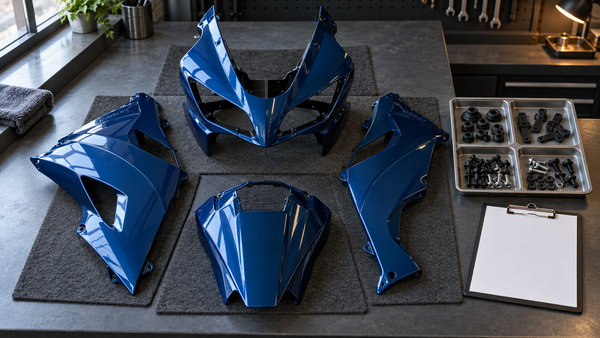
AI-generated illustration of graphic placement; not evidence of hidden coating layers or an actual product.
What Photos Cannot Prove
Photo Limits
Lighting, angles, hidden edges
A listing photo shows only one angle under one light. It cannot show how a graphic sits along a curved edge or inside a recess. Shadows hide lifted corners, and bright reflections wash out film thickness. You see the graphic from the front, but not the edge where it meets the panel. Ask for photos from many angles, including close shots of edges and seams.
Color shift and clear coat yellowing
Screens show color in different ways. The red on your phone may not match the red on the fairing. Clear coat yellowing also changes how graphics look over time. A photo from day one cannot show how a clear layer ages. You need written details about the coating, not just a picture. Ask whether the clear coat is uv-resistant and how it holds color.
Non-Destructive Confirmation
Written coating and film details
You should never scratch or peel a panel to identify layers. Instead, ask for written confirmation. Ask the seller to provide a custom fairing design brief that includes a layout showing how stripes cross the actual panel joins. Confirm in writing which decals are included with the fairing kit. Obtain the written product application either in the listing or through a seller message. Request a complete panel and hardware list before purchasing. These documents tell you what you receive without touching the product.
Dated close-ups of edges and seams
Ask for dated close-up photos of edges and seams. A date provides context, but does not prove the photo shows your particular order. These images help you check graphic alignment and film placement. For layout approval, you can review the existing seam and symmetry guide at the graphic seam and symmetry guide. That guide helps you evaluate how a design crosses panel gaps. It does not replace written material details.
Product-Specific Guidance
3M bulletin as product-specific only
The 3M Maintenance Instruction Bulletin Revision A, December 2024 (read the 3M maintenance bulletin) offers product-dependent graphic film care guidance. This bulletin applies to specific 3M films. It does not prove how NiceFairings builds its fairings or which films we use. Do not copy industrial signage cleaning methods into motorcycle maintenance. Your motorcycle needs care instructions matched to its actual film, paint, and clear combination.
Data sheet is not a build claim
A product data sheet describes one material. It does not confirm that a seller uses that material on your fairing. You need written confirmation for each design and panel. Ask the seller to state the exact film, adhesive, and clear coat used on your order. A data sheet alone cannot verify the build quality of your motorcycle fairing decals.

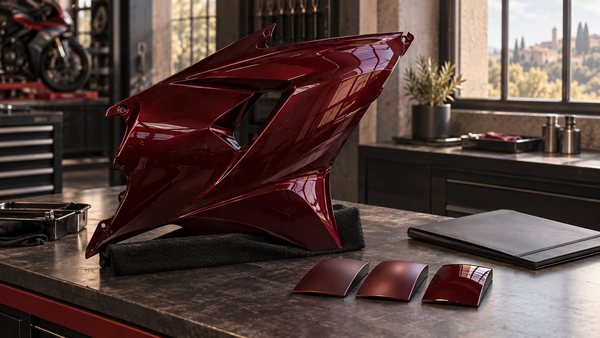
AI-generated illustration. Request photographs and written specifications for the actual order.
Care by Coating System
Your care routine depends on the actual film, paint, and clear mix on your fairing. A method that works on one bike may harm another. Ask your seller for written care instructions that match your specific build. These rules give you a starting point for motorcycle decal care.
Cleaning Under-Clear Graphics
Confirming approved wash products and tools
Start with care instructions for the actual outermost finish. Do not assume that every clear-coated graphic can be washed or treated in the same way. Ask the seller to identify an approved cleaner, suitable cloth or mitt, and any restrictions for a newly finished panel. If instructions mention a pH-neutral wash, confirm the specific product and directions rather than treating the label alone as universal approval. The objective is a care routine matched to the finish you purchased.
Avoiding abrasive polishes
Do not polish an unfamiliar finish to test whether a graphic is buried beneath clear coat. Polishing can change the appearance of the outer layer, and matte or textured finishes need particular attention. Ask whether polishing is permitted at all and whether it should be handled by a professional. If the seller cannot identify the finish or provide suitable instructions, pause cosmetic correction instead of choosing a generic mild polish.
Cleaning Surface Stickers
Gentle washing, edge care
For a surface graphic, request instructions that cover both the film and the finish beneath it. The 3M bulletin linked above illustrates why care guidance depends on the graphic construction; it is not proof that a NiceFairings panel uses those products. Do not combine cleaning, adhesive-removal and polishing advice from different materials into one routine. Ask which products and methods are approved for this build and what to do if dirt collects near an edge.
What to avoid near lifted edges
If an edge is lifting, record its location and contact the seller before applying cleaners, adhesives or heat. Avoid picking at the edge to inspect the layers. Describe when the change appeared and any products already used, so the seller or a qualified installer has useful context. An edge problem should be assessed for the actual material rather than attributed automatically to wax, weather or the rider.
Protection and Waxing
Confirming protection-product compatibility
A wax, sealant or coating approved for one painted surface is not automatically suitable for every graphic or fairing finish. Confirm whether an additional protection product is permitted and whether the instructions differ for gloss, matte or textured areas. Do not treat a forum recommendation or a product category as compatibility approval. This guide does not endorse a universal list of waxes or sealants for NiceFairings graphics.
Products to keep off vinyl edges
Ask whether the approved protection routine has restrictions around graphic edges, seams or textured areas. If no additional product is recommended, there is no need to add one merely because a general detailing article suggests it. Keep the product name and the seller’s instructions with the order record. This makes it easier to explain the panel’s maintenance history if a finish question arises later.
A consistent, documented care routine is more useful than a promised number of years. Follow the instructions for the identified build and check changes in appearance during ordinary cleaning. If lifting, discoloration or damage appears, record it and seek appropriate advice. Good care cannot turn an incompatible material combination into a guaranteed long-life graphic.

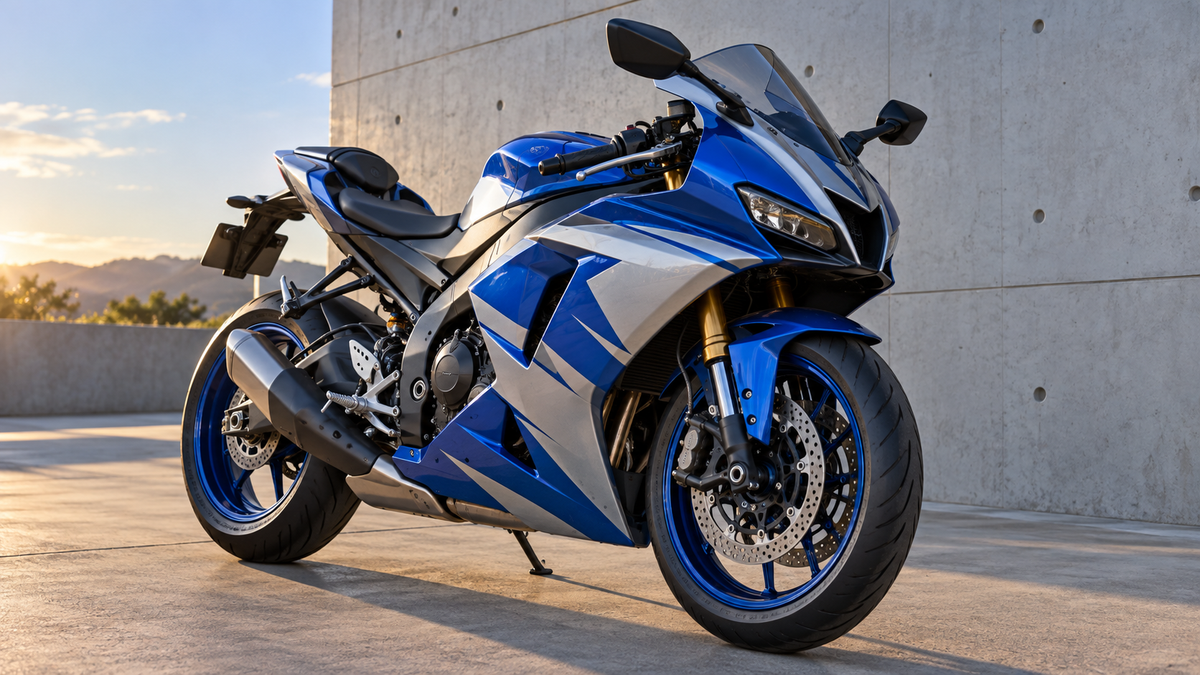
AI-generated illustration of care planning; products shown are not cleaning recommendations.
Graphic Changes and One-Panel Replacement
Replacing Under-Clear Graphics
Removal usually means refinishing
An under-clear graphic is not a separate exposed film that can simply be peeled from the top surface. A design change may require a professional refinishing assessment. Ask which layers would be affected, whether the panel can be reused and how the replacement finish would be matched. The answer depends on the actual construction, so do not assume every panel needs the same work or can be restored by the same process.
Cost, downtime, color-match questions
Ask your seller about how to remove the graphics before you order. How long does refinishing take? Can they match the original custom motorcycle paint? What about the custom motorcycle paint batch? These questions matter when you plan to change graphics. Matching one panel to another takes skill. The custom motorcycle paint must match in color, metal flakes, and clear coat gloss. A high-quality paint job depends on these details. Your custom motorcycle finishes should look the same on every panel.
Replacing Surface Stickers
Confirming the removal options
Before changing a surface graphic, ask whether the manufacturer provides removal guidance for that exact film and whether the underlying paint is suitable. A previously repaired or repainted panel may have a different history from the panel shown in a product listing. If the construction is unknown, have the finish assessed before proceeding. Ease of removal should be treated as a product-specific question, not a benefit promised for every surface sticker.
Adhesive residue and panel prep
Ask who is responsible for assessing any residue and the condition of the exposed finish after removal. Do not assume that alcohol, household products or an automotive adhesive remover are safe for the panel. Some material-specific instructions prohibit solvents or alcohol. A qualified installer should identify the actual film and finish before selecting a method. Request a quote that explains possible refinishing and preparation work rather than assuming the panel will be ready for a new graphic immediately.
Custom Motorcycle Paint Job Matching
Matching one panel to the rest
A single replacement panel creates a matching challenge whether it is OEM or aftermarket. The correct model-year part number does not by itself guarantee a perfect visual match to adjacent panels that may have aged, been repainted or come from a different batch. Confirm the color specification, finish and graphic layout, and ask what variation to expect. Consider the whole visible side of the motorcycle rather than judging the replacement panel in isolation.
Batch, dye lot, and clear coat sheen
Paint batches and dye lots vary. A custom motorcycle paint mixed today may differ slightly from paint mixed months ago. Clear coat sheen also changes how color looks. Ask about the custom motorcycle paint batch used on your order. Request details about the custom motorcycle finishes and clear coat type. These factors affect how your custom motorcycle paint job looks on the bike. Your custom motorcycle paint should blend with the existing design and vinyl wrap on other panels.

AI-generated illustration of panel matching, not a fitment or color-match guarantee.
Buyer Message Template
Before you order, send the seller a short message about your motorcycle decals. A written reply protects your decals and gives you proof. Use these questions to build your message. Each question targets a specific detail about your build.
Coating System Questions
Clear coat type and compatibility
Start with the clear coat. What clear coat type does the seller use for their custom paint? Is it compatible with the vinyl that carries your decals on your motorcycle? Incompatible materials cause adhesion failure or bubbling over time. A clear coat that works with one film may fail with another. Ask for the exact product name and manufacturer. This information helps you confirm the build quality.
Yellowing and UV stability
Ask what evidence supports any claim about yellowing resistance or outdoor durability. A yes-or-no marketing statement is not a service-life guarantee. The useful details are the identified coating, the conditions covered by its documentation, and any written limits applying to your order. Avoid converting a material supplier’s rating for another application into a promise about the appearance of a finished motorcycle fairing.
Care and Replacement Questions
Approved cleaning and protection products
Your wrap and decals need specific care products. Some soaps harm the clear layer. Others leave residue that builds up over time. Ask which products work for your custom build. Request a list of safe soaps, waxes, and polishes. Get written instructions that match your paint, vinyl film, and clear coat. Proper care extends the life of your wrap.
Removal and reapplication process on your motorcycle
You may want a different design later on your motorcycle. Ask how to remove the decals without damaging the paint. Do you need professional help? Can you reuse the fairing afterward? Ask about the reapplication process too. These questions prepare you for future changes to your wrap.
Documentation Questions
Written confirmation of materials
Ask the seller to state the exact materials in writing. What vinyl carries the decals? What adhesive bonds these decals? What clear coat covers the panel? Written confirmation removes doubt about your custom wrap. A photo cannot show these layers. Get the specific brand and type for each material.
Dated photos and product data sheets
Ask for recent close-up photos of the actual design and, where available, the finished order. A date is useful context, but it does not by itself prove that the photo shows your panel or verify hidden layers. Pair the images with the seller’s written specification. Product data sheets describe materials; they only become relevant to this order when the seller confirms that those materials are actually used.
Copy-Ready Message
Copy and send this to the seller.
Hello, I am ready to order my motorcycle fairing set. Before I place the order, please answer in writing.
What clear coat type do you use for your custom paint? Is the vinyl film compatible with this clear coat? Is the coating resistant to yellowing?
What cleaning and protection products do you approve for this wrap and these decals? List soaps, waxes, and polishes.
What is the removal process if I change the design later? Can I remove the decals without damaging the paint?
Please provide written confirmation of materials. Include vinyl type, adhesive type, and clear coat manufacturer. Send dated close-up photos of edges and seams for this design.
Thank you.
This message wraps up your questions about coating, care, and documentation for your wrap. A written reply protects your custom purchase for your motorcycle. Each question targets a key detail about your build.
Under-clear graphics and surface stickers describe different positions in the finish, not automatic winners. Compare the actual construction, expected appearance, approved care and scope of any future design change. Neither smoothness, long life nor damage-free removal should be assumed from the label alone. Confirm what your fairing order includes, review the graphic layout across the panels and obtain written answers before committing. That information helps you choose a design you can maintain and replace with realistic expectations.
FAQ
What are under-clear graphics on motorcycle fairings?
Under-clear graphics sit beneath a clear layer in the finish. Coverage does not guarantee an invisible edge, a specific durability level or chemical resistance. Ask how the actual panel is constructed and what changing the graphic would involve.
What are surface stickers on motorcycle fairings?
Surface stickers sit on top of the finished panel rather than beneath a clear layer. Edge visibility and future removal depend on the actual film, adhesive and underlying finish. Damage-free removal or removal without refinishing is not guaranteed.
Which position is better for motorcycle fairing decals?
Neither position wins by default. Your coating system decides compatibility, care, and replacement options. A film that works under one clear coat may fail under another. Your riding habits and plans to change graphics matter too. Ask your seller for written confirmation on your specific decals.
Can I remove under-clear graphics without repainting?
Do not assume so. Changing a graphic beneath clear coat may require refinishing. Have the actual construction assessed and ask what work, color matching and downtime would be involved before deciding.
Can I remove surface stickers without damaging paint?
Possibly, but it is not guaranteed. Identify the film and underlying finish and obtain product-specific guidance or a qualified assessment. Do not apply a generic heat, solvent or peeling procedure to an unknown panel.
How do I clean motorcycle fairing decals under clear coat?
Follow the instructions for the actual outer coating. Ask which cleaner and tools are approved and whether the finish has any curing or maintenance restrictions. A general car-care label is not a guarantee of compatibility.
How do I clean surface stickers on motorcycle fairings?
Use the guidance for the identified film and underlying finish. Ask about edge care and any restrictions on cleaning products. If an edge is lifting, document the condition and contact the seller before attempting a repair.
What should I ask before buying motorcycle fairing decals?
Ask about clear coat type, film material, and adhesive compatibility. Request approved care products and removal instructions. Get written confirmation of materials for each design and panel. Ask for dated close-up photos of edges and seams. These questions protect your custom purchase and reveal the real build.
Can decals repair damage on motorcycle fairings?
No. Decals cover a surface. They cannot fix a cracked or broken panel. These graphics do not repair structural damage. Fix any damage before you apply new decals. Ask your seller about panel condition if you buy a complete fairing set.
Why do listing photos not prove decal quality?
A photo shows one angle under one light. It cannot show how decals sit along a curved edge or inside a recess. Shadows hide lifted corners. Screens also shift color. Ask for dated close-ups of edges and seams. Request written material details for your custom order.
Does the 3M bulletin apply to my motorcycle fairing decals?
The 3M Maintenance Instruction Bulletin Revision A, December 2024 offers product-dependent graphic film care guidance. It applies to specific 3M films only. It does not prove how any seller builds fairings or which films they use. Ask your seller for care instructions matched to your actual decals.
How do I match one replacement panel to my motorcycle?
A single panel creates a matching challenge. Paint batches and dye lots vary. Clear coat sheen also changes how color looks. Ask your seller how they match custom finishes to existing panels. Request details about the paint batch and clear coat type for your decals.
What care products are safe for motorcycle fairing decals?
That depends on the actual film, paint and clear combination. Obtain a written list of approved products and restrictions from the seller or material supplier. There is no universal wax, sealant or solvent recommendation for every fairing graphic.
Can I change the design on my motorcycle fairing decals later?
A later change may be possible, but the scope depends on the construction and condition of the panel. Under-clear graphics may require refinishing, and surface stickers are not guaranteed to come off without affecting paint. Ask about those limits before ordering.
What written confirmation should I request for motorcycle decals?
Ask the seller to state the exact film, adhesive, and clear coat in writing. Request dated close-up photos of edges and seams for each design. Get approved cleaning and protection products. Ask about the removal process. Keep all records for your custom order of decals.
How do I know if my motorcycle fairing decals are compatible with my coating?
Ask your seller directly. What clear coat type do they use? Is the film cast or calendered? Does the adhesive match your fairing material? Incompatible materials cause adhesion failure, bubbling, or early peeling. Get written confirmation of compatibility for your specific decals order.
Where can I find help with graphic layout approval?
Review the existing seam and symmetry guide at the graphic seam and symmetry guide. That guide helps you evaluate how a design crosses panel gaps. It does not replace written material details. Use it for layout approval only.
What is the difference between cast and calendered film for decals?
These are film manufacturing categories rather than complete specifications for a finished fairing graphic. Ask for the exact product and application documentation. Do not infer a fixed lifespan, price or suitability for your panel from the category alone.
How do I protect surface stickers from peeling?
Follow the material-specific care guidance and avoid disturbing a lifted edge. Record any change and contact the seller or a qualified installer. Do not assume that a generic protection product or home repair will prevent lifting.
What should I include in a message to the seller about decals?
Ask about clear coat type, yellowing resistance, and film compatibility. Request approved care products and removal steps. Ask for written material confirmation and dated photos. Keep your message short and specific. A written reply protects your custom purchase of decals.