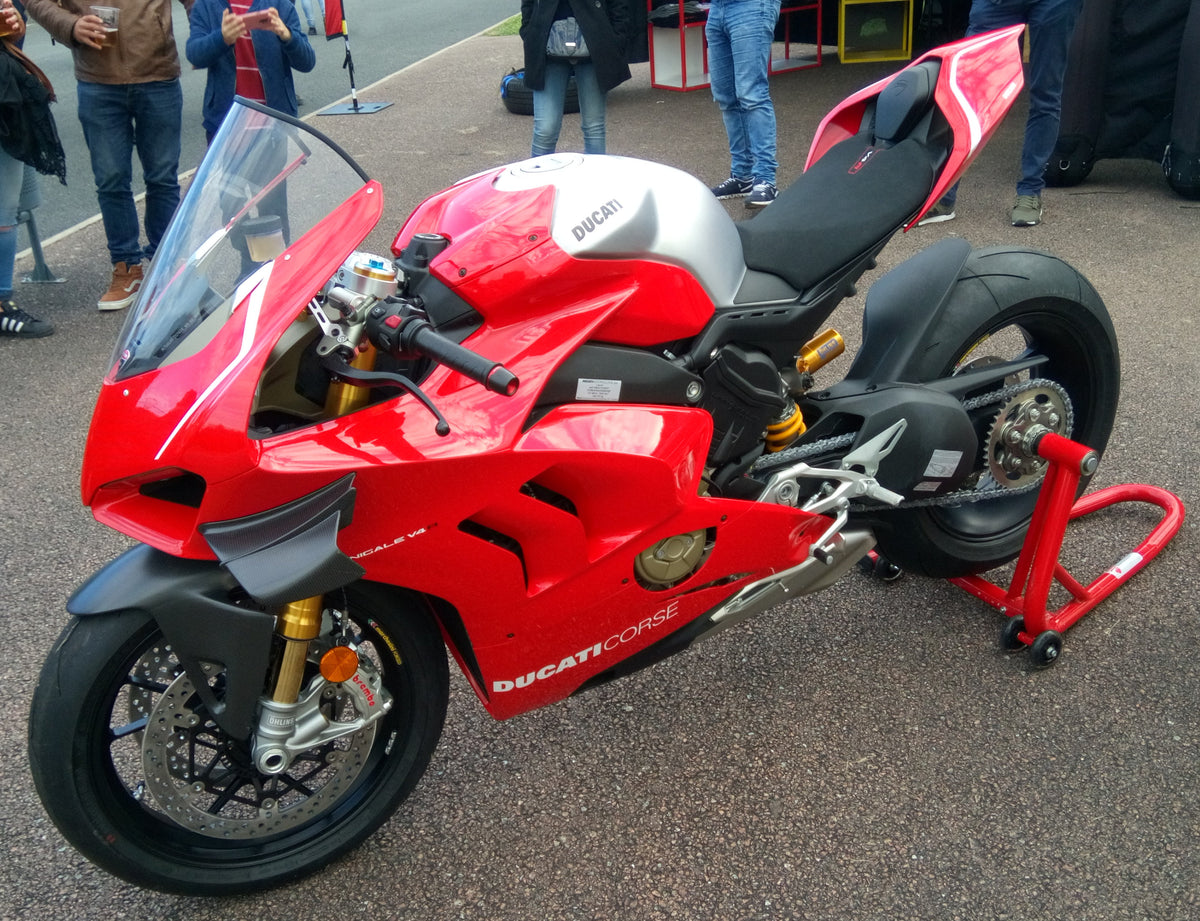
“Panigale V4 fairings, 2018–2024” sounds like a useful search filter. It is not a complete order specification. A rider's motorcycle might be a V4, V4 S or another variant; its bodywork might be original, converted, repaired or paired with a different exhaust. A painted outer panel is only one part of that configuration. Wing elements, inner ducts, heat guards, brackets, fasteners and lighting interfaces may be separate pieces, and a photo of a finished motorcycle cannot reveal all of them.
The practical answer is to send a configuration packet before selecting the replacement: identify the exact motorcycle, photograph its current exterior and the relevant existing inner parts, mark what will stay, and ask the supplier which interfaces the specified product supports. If the exhaust has changed, treat the exhaust documentation and its associated heat protection as a second, linked verification. Do not assume a heat barrier is present, included or suitable because a listing shows a glossy lower fairing.
This is an evidence-gathering guide, not a cross-year interchange chart or installation procedure. If a guard is missing, there is heat damage, or any clearance is uncertain, stop and have a qualified Ducati specialist check the actual bike. No photograph or article can certify a safe installed gap.
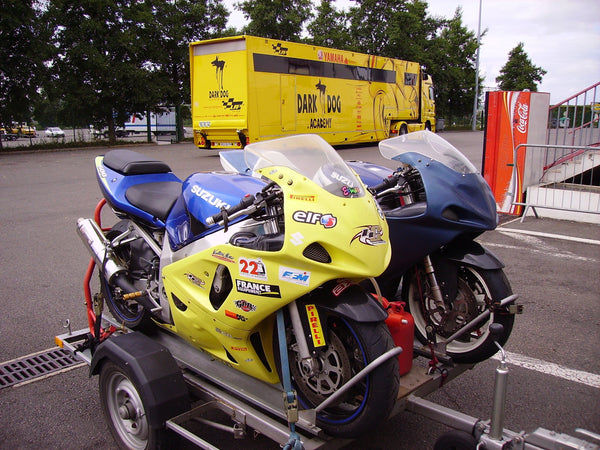
Cover photograph: Cjp24 / Wikimedia Commons, CC BY-SA 4.0, used without editing. It shows a 2019 Panigale V4 R at Magny-Cours. The V4 R is a specific variant; its wings, exhaust and bodywork are not a reference for every V4 or V4 S. This is not a NiceFairings product image or installation evidence.
Why “Panigale V4” alone does not settle the bodywork
Ducati itself describes meaningful design changes within this period. Its 2020 Panigale V4 announcement says that model gained elements from the V4 R aerodynamic package, including aerofoils, a different nose and larger side fairings. Ducati's 2022 Panigale V4 introduction describes more compact double-profile wings and redesigned lower extraction openings. Those are examples of why a catalog year range cannot be stretched into an assertion that all panels, wings and ducts interchange. They also do not tell us whether any particular NiceFairings kit fits a modified 2018 motorcycle.
An early V4 may also wear later-look panels, a race conversion or an exhaust system installed after sale. A previous owner may have retained a factory bracket while changing the exterior. Your order needs to describe the motorcycle as it is now, not as a generic image of its model year. For general questions about whether a replacement resembles factory aero, read our separate Panigale V4 OEM-aero evidence guide. This article's different job is to create a specific parts-and-evidence handoff before a bodywork choice.
Do not infer a year from a decal or a V4 R-style wing. A seller photograph might show a display bike, a conversion or parts not included in the price. Verify the VIN-derived model information and market, then compare the bike to the applicable Ducati owner-manual selector and a dealer's year/variant-specific parts record. The correct document belongs to a defined motorcycle.
Page one: identify the motorcycle and the proposed product
Start a one-page record before loosening any bodywork. Include the model designation as shown in the motorcycle's records; the model year and market; the VIN for private supplier/dealer verification; and the current exhaust make/model, if it differs from stock. Do not post a full VIN publicly with your photographs. Note whether the fairings or wings were previously changed. “Unknown” is a valid answer; guesswork is not.
Then attach the exact product page, option, finish and date of capture. A generic NiceFairings Panigale V4 collection is a browsing entry, not an application statement for every listing inside it. Save screenshots of the selected listing's stated years, variants, panel photographs and included-parts wording. Ask the seller to identify any separately required inner components or hardware. The fairing-kit contents guide is useful here: “complete” needs a written inventory, not a number of pieces copied from another model's kit.
Keep your configuration record separate from a color brief. A finish can be approved while a mounting question remains open; neither approval resolves the other. If you request a custom color, send the configuration packet first, then use the NiceFairings custom-fairings request page for the visual brief and final product-specific confirmation.
Page two: make a retained-parts map
Photograph both sides, front, rear and the lower area before removal. If a qualified person removes a panel, photograph its inner side and the corresponding motorcycle-side interface without shifting brackets to make the picture look tidy. Add a simple removable label outside the contact area or annotate a copy of the photograph. Describe each item with four statuses: present and intended to retain; damaged and needs assessment; absent; or identity unknown.
Use the following worksheet. It is a question set, not a declaration that every 2018–2024 variant has every listed component.
| Area to document | Photograph or record | Question for the supplier or installer | What the image does not prove |
|---|---|---|---|
| Front outer fairing and lamps | Full front and oblique views; light openings; existing neighboring pieces | Does this exact listing support my identified road-light assembly and current front-end configuration? | Legal road use or correct lighting aim |
| Wing or wing-shaped parts, if fitted | Both sides, top/bottom attachment views, marks or part numbers | Are these retained, replaced, included, or excluded? Which attachment parts are required? | Factory-equivalent downforce or secure fit from appearance alone |
| Side outer panels and extraction openings | Complete left/right profiles and inside surfaces | Which ducts, inserts or neighboring trim pieces remain in place? | Equivalent cooling or cross-year interchange |
| Lower fairing and exhaust neighborhood | Entire lower panel, inner surface, existing shields, exhaust route and visible brackets | Does this product require retained guards or a different supplied inner part for my exhaust configuration? | Safe clearance, temperature or heat resistance |
| Tail and under-seat area | Tail profile and documented existing guards or inner pieces | Which pieces are part of the selected bodywork offer, and which remain OEM? | That a guard shown on another variant belongs on this one |
| Fasteners and supports | Labelled groups from actual removal, worn or broken items separately | What is reused; what is supplied; what must be sourced through Ducati? | That an arbitrary screw or bracket is equivalent |
Some components are hidden until competent disassembly. Do not pry open a questionable panel solely to complete a blog checklist. If the motorcycle has evidence of a fall, collision, overheating or previous improvised installation, a qualified inspection takes priority over a new paint order. Our Panigale fairing-alignment diagnosis treats a crooked panel as a symptom to investigate, not a gap to force closed.
Page three: trace the exhaust and heat-hardware boundary
A modified exhaust changes the question. The supplier may know its fairing application for a stock exhaust yet have no verified answer for a particular pipe, collector, hanger or guard fitted later. Record the exhaust brand, model or part number, any installation instructions and the original guards that were removed or retained. If documentation is missing, write that plainly. An exhaust brand sticker alone is not enough to identify every section of a system.
Ducati's 2022 Panigale V4 introduction describes alternative racing exhaust systems with different layouts. That is a reason to record the actual exhaust rather than treating a side photograph as a configuration sheet. It is not a clearance specification for an aftermarket fairing. Use the instructions matching your exhaust and motorcycle, or ask the installer/dealer to identify the retained guards, brackets and hardware.
Do not translate that observation into “add reflective tape everywhere.” Heat shielding is product- and location-specific; adhesives, substrate preparation, spacing and attachment may have their own requirements. A shield placed incorrectly might detach, interfere with another part or conceal a problem. Likewise, do not enlarge a vent, cut a lower panel or remove a factory guard based on an article. Any required remedy should be specified for the actual configuration by a competent person using applicable documentation. Our broader belly-pan clearance after an exhaust change guide explains the observation categories, but it is not a Panigale-specific dimension sheet.
What can the owner record safely? Photograph discoloration, blistering, softened edges, contact marks, loose fasteners or a shield that appears absent from where the documented assembly expects it. Include the complete area as well as detail shots. Record whether the observation predated the replacement. Avoid diagnosing the heat source from a single spot: road debris, rubbing, solvent damage and coating issues can resemble thermal damage. Stop riding if there is contact, smoke, melting, unsecured bodywork or any other unresolved safety concern. Have the motorcycle assessed rather than attempting a temperature experiment.
Our older Panigale V4 heat and fitment article covers the broader project. Its prices and procedures are not proof of your current product's cost or suitability.
The seven-photo packet that gets a useful answer
A supplier cannot identify a hidden component from a dramatic side portrait alone. Try this minimum set and add images for any damage or modification:
- A complete left-side view with the whole motorcycle visible and a note of its known year and variant.
- A complete right-side view from a similar distance, showing the current exhaust exit and lower bodywork.
- A straight-on nose view showing the light assembly and any wing elements fitted.
- A close view of the left wing/side interface, if present, with one wider context shot.
- The equivalent right-side interface, rather than assuming it mirrors the left.
- The entire lower fairing's inner surface if already removed safely, photographed flat with existing guards and mounting features visible.
- A wider view of the motorcycle-side exhaust/heat-guard neighborhood only when safely cool and accessible; do not reach past hot or energized components.
Label each file with the bike, side, area and date. If the panel cannot be removed safely, say so and ask what additional evidence the supplier needs. A clean file naming convention such as V4S-2022-RH-lower-inner-01 is more useful than IMG_2849, but never let the file name substitute for a written model confirmation.
Do not crop away scratches, dust or previous repairs; they may explain poor fit. The finished-fairing photo checklist helps with later visual approval, but pre-shipment photos cannot verify hidden clearances.
Separate three decisions that sellers often receive as one message
First is application: is the exact offered panel intended for this year, variant, market and front/rear configuration? Second is scope: which outer and inner pieces, wing attachments, brackets, fasteners and guards are included, transferred or separately sourced? Third is appearance: which color and graphic treatment do you want? A seller may answer the appearance question immediately, while application and scope need photographs or a parts check.
Write questions that can be answered with a specific record. “Will it fit perfectly?” invites a vague assurance. Better: “My motorcycle is a 2022 V4 S with the exhaust documented in the attached instruction sheet. I am retaining the photographed ducts and guards. Does listing X, option Y, explicitly support those retained interfaces? Which pieces shown in your sample image are not included?” Ask for the answer in writing with the product link and date. If a seller cannot confirm an important interface, keep that item unresolved; do not upgrade silence into compatibility.
For installation, the fairing pre-fit checklist is a handoff framework, not a Ducati torque chart. This article intentionally gives no universal screw sequence, gap threshold, heat-shield recipe or clearance dimension. The applicable Ducati and product instructions, qualified inspection and actual motorcycle control those details. A panel that looks aligned in a stationary photograph still needs a complete installation assessment before use.
Two decisions that must not be confused
A 2018 V4 owner considering a later-looking winged kit needs a written answer about the selected product's intended application and separately required wing or duct pieces. A 2023 V4 S owner with a discolored lower edge after an exhaust change needs a qualified assessment of the existing condition before choosing replacement plastic. These are hypothetical examples, not customer cases: one begins with parts compatibility, the other with a possible safety problem. Neither can be resolved by copying a photograph of another Panigale.
Before you approve the order
Before checkout, mark every pictured part included, reused, separately purchased or unresolved. Keep the motorcycle photos, Ducati/dealer references, exhaust instructions, supplier replies and final visual proof together. A conversion, nonstandard exhaust or unresolved heat concern needs a specific answer; a collection filter and attractive outer shell are not enough. The NiceFairings FAQ covers general ordering questions, while the exact application and contents must be confirmed for the selected listing.
FAQ
Do all 2018–2024 Panigale V4s use the same winglet arrangement?
No such blanket statement follows from the model name. Ducati documented a 2020 aero-package change and a 2022 fairing/wing update. Verify the exact year, variant, market and current modifications against relevant Ducati and supplier documents. A later-style image is not a cross-year fitment guarantee.
Does a new fairing kit normally include heat guards, ducts and wing hardware?
There is no universal contents list. Read the exact offer and get written confirmation of included, transferred and separately required pieces. Product photographs may show assembled motorcycles rather than every item in the box.
Can a photo prove exhaust clearance or tell me where to add shielding?
No. It can show a broad route or visible damage, not hidden gaps or thermal behavior. Do not copy a shield from another bike; use the documents and qualified inspection appropriate to your actual motorcycle and exhaust.
What if I cannot identify one inner part?
Mark it unknown, photograph it with context and ask the supplier, dealer or qualified installer to identify it. The most valuable packet is honest about gaps. An unresolved part may be the reason to pause an order, especially if it sits near the exhaust or supports a wing or duct.