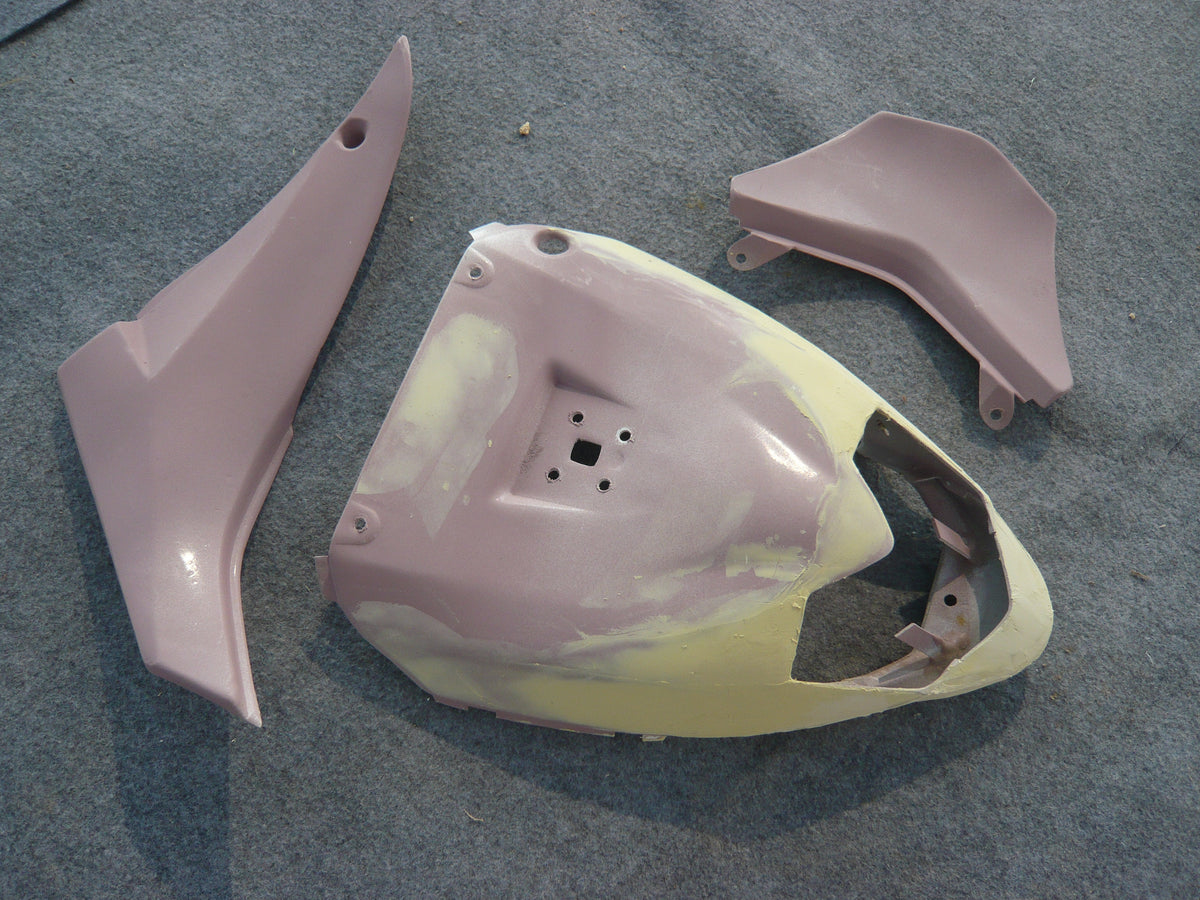
Cover: NiceFairings production photograph of separate panels during surface preparation. These are production parts, not evidence of crash damage or a completed repair.
The bike is upright. You are okay. One fairing panel has a new scuff, a crack, or a broken tab. Once immediate safety concerns are handled, a practical question follows: should you buy an OEM replacement or consider aftermarket fairings?
The answer depends on how much bodywork needs replacing and what you care about. If several panels are damaged and you want a new color, an aftermarket kit is worth pricing. If only one panel needs replacement and you want to preserve the original appearance, an OEM piece is a useful starting point. Neither route wins automatically.
New plastic does not establish roadworthiness. Have crash damage and the mounting structure assessed before making a cosmetic purchasing decision. After that, compare replacement scope, originality, material claims, heat and finish requirements, and the support offered by each seller.
Start With a Panel-by-Panel Replacement Scope
Before you compare prices or read molding claims, you need to know which exterior parts actually need replacement. Scope is the first filter: buying one panel and buying a coordinated set are different projects.
One Scratched Panel vs. Several Damaged Pieces
Picture two hypothetical riders, both of whom have already had the bike assessed. The first rider dropped a bike at low speed in a parking lot. The left side panel took a scuff across the middle. The rest of the bodywork is sound. The nose, tail, and right side still look the way they did before the drop.
The second rider has a different situation. Several exterior pieces show damage. The side panel is cracked near a mounting point, the nose has a deep gouge, and the tail lost a small piece of plastic at the edge. This rider also wants a new color. The original paint has faded or the rider simply wants a change.
These riders face different buying decisions. The first can compare keeping the cosmetic mark, professional refinishing, or replacing that single panel, as appropriate to the assessed condition. The second has a reason to compare several individual replacements with a coordinated kit. A scuff alone does not make a complete kit necessary.
What Actually Needs Replacing
A fresh fairing can hide a bent bracket or a damaged mounting point underneath. This article does not diagnose mechanical problems or walk through repairs. Ask the technician to distinguish cosmetic appearance from damaged panels and supporting parts, and use that assessment to make a parts list.
Record each affected exterior piece separately, including its side and location. Note scuffs, cracks, and damaged tabs or holes without assuming that every mark requires replacement or that a photograph proves the part is safe. A broken tab is a reason for professional evaluation, not a basis for a universal repair-or-replace rule.
This sorting matters because it tells you what to request in a quote. Two damaged tabs on one panel do not necessarily mean two additional panels. Equally, an attractive replacement shell does not include a damaged stay or bracket unless the seller explicitly lists it. Keep the cosmetic purchase and the underlying repair scope clear.
What the OEM Premium Buys in Your Case
For a rider preserving the original appearance, the attraction of an OEM panel is its factory part identity and intended finish for that model. The value of any extra cost depends on what the actual replacement includes and how well it meets your goal. An unpainted part, a separately sold decal, and a painted assembly are different purchases.
OEM is a choice to price out, not a promise of a perfect fit or color match. A newly painted panel may not match years of fading on the remaining bodywork. Part numbers can also be superseded. Ask the parts supplier to confirm the correct number, finish, decals, and any supersession for your motorcycle before ordering.
Single-Panel Originality vs. Complete-Kit Refresh
A single-panel OEM purchase can help preserve an original scheme when the damage is limited to one piece. Check how the supplied finish will work with the existing set instead of assuming the new panel will blend invisibly.
A complete-kit refresh changes the comparison. When several panels need replacement, individual quotes add up, and a coordinated aftermarket set may suit a new color direction. But “complete” needs a written contents list. Aftermarket panels may need careful alignment or adjustment; bent stays, damaged brackets, and missing spacers or grommets can also cause apparent misalignment. Check the mounting structure first rather than attributing every gap to the new plastic.
Comparing Total Installed Cost
Total installed cost includes more than the panel price. Add any required paint or color matching, decals, hardware, labor, shipping, and applicable import charges. A panel that arrives unpainted needs a different budget from a finished panel. Bolts, clips, and grommets may be separate. Compare quotes for the same bike and the same intended result; our guide to comparing motorcycle fairing quotes covers the detailed worksheet.
Use the situations below to choose what to quote, rather than treating a universal price multiplier as a buying rule.
| Situation | Route to compare | Question that decides it |
|---|---|---|
| One affected panel; original appearance matters | Correct OEM single panel and any suitable refinishing option | What finish, decals, and matching work are included? |
| One panel needs replacing; originality is flexible | OEM versus an available aftermarket single piece | Will its shape, finish, and adjoining edges suit the existing bodywork? |
| Several panels need replacing; a color change is welcome | Individual replacements versus a coordinated aftermarket kit | Does the kit cover the required pieces, and what is the full installed cost? |
There is no fixed “four times the price” answer here. Actual quotes, kit contents, availability, and the condition of the bike determine whether the saving is worthwhile.
Turn the Assessment Into a Clear Parts Request
Separate the required repair from optional appearance changes. A list headed "replace everything" makes it difficult to see which items were actually assessed as needing replacement. Use one line for each panel and keep supporting parts on separate lines.
| Record | What to write |
|---|---|
| Panel identity | Location and side, viewed from the seated rider; verified reference if available. |
| Observed condition | A neutral description and photograph; keep the technician's recommendation separate. |
| Required scope | Retain, professionally refinish, replace, or still awaiting assessment. |
| Finish goal | Keep the current appearance, accept a deliberate contrast, or change the complete scheme. |
| Supporting parts | Separately identified brackets, clips or other items; state who supplies each. |
Hypothetical example: a technician identifies one side panel for replacement and a separate support item, while another panel only needs a cosmetic estimate. Request those lines independently. If you also want a new color, ask for that as an optional alternative instead of quietly turning it into part of the required repair.
Ask What Happens at the Edges of the New Panel
A single replacement joins existing bodywork. Ask the supplier to review the exact motorcycle, the current kit if it is not original, and the adjoining pieces. An aftermarket single panel should not be assumed to mix with every OEM or aftermarket set simply because the model name matches.
For an appearance match, photograph the adjacent panels under comparable light and explain whether the remaining paint is aged or previously refinished. A paint name alone is not an agreement about how a new panel will look beside the old one. Keep any matching or refinishing work visible in the quote.
Keep the Decision Small Enough to Check
Before paying, obtain the proposed panel list, finish, supporting items, estimated production and shipping timing, and the process for resolving a mismatch. Mark unresolved compatibility questions clearly. A technician's repair assessment and a supplier's written parts scope serve different purposes; you need both where relevant.
Our OEM and aftermarket overview covers the broader comparison. This worksheet stops at deciding what to request after an assessment. It does not supply a repair method or certify a motorcycle for use.
Use the NiceFairings contact page to discuss the identified pieces and exact bike, then check the current ordering FAQ. Ask whether the requested single pieces or set are available before planning around them. The right order is the one that covers the confirmed job, including the details that are easy to leave out.