The mistakes to avoid with matte bodywork are unsuitable gloss-enhancing products, abrasive cleaning and unapproved chemicals. They can change the appearance instead of simply removing dirt. The effect depends on the finish, product and treatment, so a shiny patch is a reason to stop and assess the surface—not a diagnosis by itself.
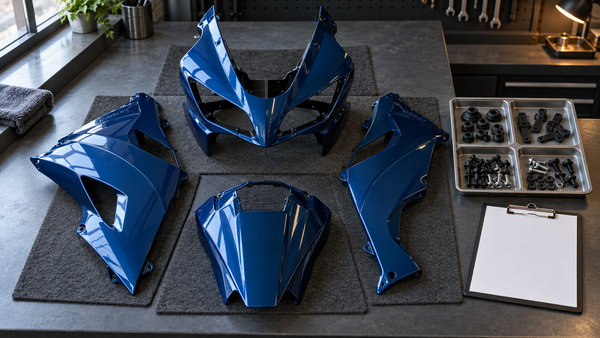
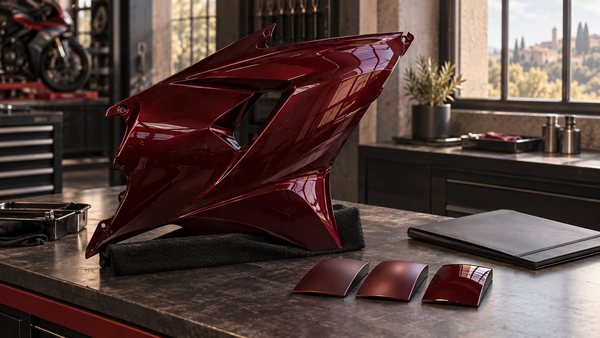
Images are AI-generated editorial illustrations, not photographs of the supplied product or evidence of model-year fitment, dimensions or safe installation. Use actual product documentation and motorcycle records for technical decisions.
Not every change lasts forever. Dirt often washes off with the right product. Damage to the texture needs a professional to check it.
Matte paint, vinyl wrap, and PPF each have their own manufacturer instructions. There is no single cleaner or mixing recipe that works for all. Make matte motorcycle fairing cleaning easy: know your finish, follow the supplier's care steps, and use only products made for that finish type.
Key Takeaways
Don't use wax, polish, or rough tools on matte fairings, because they can cause shiny spots.
Find out what kind of finish you have: matte paint, vinyl wrap, or PPF. Then follow the care steps for that type.
Use a pH-neutral soap made for matte finishes and a soft mitt to clean gently.
Rinse with low-pressure water first to remove loose dirt before washing.
Dry gently using clean, soft material approved for the finish. Do not assume a household blower is suitable for motorcycle detailing.
Address bugs and bird droppings promptly using the actual finish supplier’s cleaning instructions, without scraping or increasing pressure.
Stop cleaning and get help from a professional if the finish changes.
Use suitable storage and a compatible cover only under the motorcycle and finish guidance.
Identify Your Finish and Supplier Instructions
Matte Paint vs. Vinyl Wrap vs. PPF
Surface Texture Differences
Matte paint, matte vinyl wrap and matte PPF can look similar, but they are different finish systems. Vinyl and PPF also come in other finishes; the product name alone does not mean matte. Identify the actual coating or film before choosing a cleaner. Surface appearance does not reveal every layer underneath.
A product that works on one finish may harm another. A matte-safe spray for paint might leave streaks on vinyl. A vinyl cleaner might dull a PPF top coat. You cannot treat these three surfaces as one group.
Manufacturer Care Differences
Indian Motorcycle’s detailing guide discusses care of its motorcycle finishes, including avoiding abrasive polishing on matte surfaces. It is a manufacturer reference, not approval for every aftermarket coating. For your own panels, identify the applicable coating or film instructions.
Read the care sheet that came with your fairing, wrap, or film. Follow the dilution, tool, and temperature limits that supplier states. Do not borrow a routine from a different finish type.
Where to Find Official Care Guidance
Owner's Manuals and Supplier Documentation
Start with the motorcycle owner’s manual, then the documentation for any replacement coating or film. If you bought painted panels, ask the seller for the applicable care information. The NiceFairings team can answer questions about an actual order; do not assume that a general blog is a product-specific care sheet.
Keep the exact product names and instructions with your records. If documents conflict, ask the relevant supplier to clarify before treating the surface. A general article cannot determine the terms of your warranty.
Why Forum Anecdotes Are Not Proof
Forum posts often describe one rider's result on one bike. That rider may have a different finish, a different climate, or a different water supply. A single success story does not prove a product is safe for your fairing.
Treat forum tips as leads, not facts. Verify every claim against the manufacturer's own guidance. When a forum post and the supplier document disagree, follow the supplier.

Mistakes in Cleaning Motorcycle Fairings
A matte finish depends on its intended surface appearance. Abrasive treatment and inappropriate surface products can alter that appearance. Instead of assuming every mark has the same cause, distinguish a visible deposit from suspected coating damage and avoid experimenting with stronger treatments.
Glossy Products and Abrasive Polishes
Wax, Polish, and Rubbing Compound
Do not use ordinary gloss-enhancing wax, polishing compound or abrasive finishing methods on matte bodywork unless its manufacturer expressly permits the exact product and process. Routine washing is a different task from correcting paint.
Polishing and adding surface products can change gloss. Choose care according to the actual finish instructions rather than the general idea that a product protects automotive paint. Protection designed to enhance gloss may be unsuitable when your goal is to retain a matte appearance.
The useful question is not whether a bottle uses a particular chemistry buzzword. It is whether the coating or film maker approves that exact product for that exact finish. A generic explanation of wax or silicone cannot establish compatibility, residue removal or a repair method for your panel.
An abrasive compound can change a matte surface rather than clean it. If that has happened, a qualified refinisher should assess the options. Do not assume that another polish, a detailer spray or adding film will restore the original appearance.
Abrasive Tools and Rough Towels
Brushes, Sponges, and Dry Wiping
Tools can carry grit from one area to another. A dirty rag or abrasive brush creates unnecessary risk, even when the cleaner is appropriate. Avoid wiping a dusty panel dry; first use the approved method to remove loose contamination.
A scuffed or unusually reflective patch needs assessment in context. Photos, the product used and the cleaning history are more helpful than guessing that every mark has been scratched flat. Do not assume a routine thickness reading can determine the cause or repairability of a matte appearance change.
Soft microfiber towels and clean wash mitts reduce this risk. They lift grit instead of grinding it into the surface.
Harsh Chemicals and Hot Water
Household Solvents, Degreasers, and Dish Soap
A household label does not establish suitability for painted motorcycle panels. Avoid improvised solvent or degreaser mixtures, and follow the finish supplier’s temperature and cleaning limits. A cleaner acceptable for one component may be unsuitable for nearby paint, film, rubber or trim.
Do not turn a general recommendation into a universal chemistry claim: detergent formulas and coating systems vary. Use the cleaner and dilution approved for your particular finish. If the instructions are missing, obtain them before substituting a household product.
Treat each actual coating or film according to its own instructions. Some products may be approved for more than one surface, but do not assume a universal cleaner or borrow another finish’s recipe.
Some appearance changes are deposits; others involve coating or film damage. A persistent shiny spot is not proof of one specific cause, and deposited wax is not automatically permanent abrasion. Stop experimenting and have the actual surface assessed before deciding whether cleaning, refinishing or another intervention is appropriate.
Stop and check the surface whenever the finish looks different. If the change disappears after a gentle wash, you removed dirt. If it stays, you may have damaged the texture. At that point, a professional inspection is the right next step.

Gentle Wash Workflow for Matte Motorcycle Fairing Cleaning
A safe wash starts before you touch the bike. Choose a cool, shaded spot away from direct sun. Park on a clean surface, and let the fairing cool if you just rode. A hot panel makes water dry faster, and that works against you.
Cool, Shaded Pre-Rinse
Low-Pressure Water to Remove Loose Grit
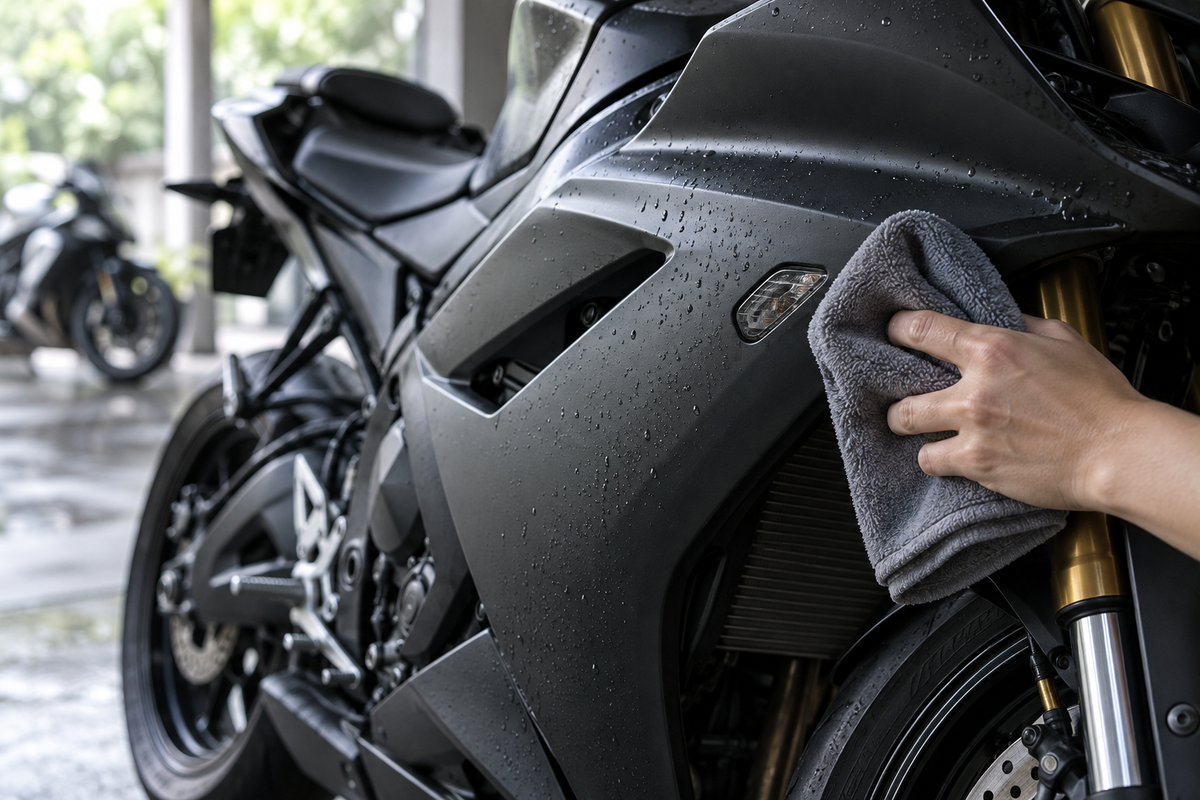
Rinse the fairing with low-pressure water first. This step lifts loose dust, road film, and grit off the surface. Skip it, and you drag that grit around during the wash. Low pressure matters here. A hard spray can push dirt into seams and around decals.
Water that dries on a panel can leave visible residue. Working in shade gives you more control over rinsing and drying. Do not try to polish away a remaining mark on a matte surface merely because that approach is used in some gloss-paint correction work.
Muc-Off’s motorcycle cleaning guidance highlights cooling the bike, avoiding direct sun and keeping dirty wash tools away from paint. Treat it as general cleaning guidance; the exact finish maker’s instructions still govern product compatibility.
Best Motorcycle Fairing Cleaners for Matte Surfaces
Finish-Approved Matte Care Product
Use a pH-neutral soap that the maker labels for matte surfaces. Check the label against your finish type. Matte paint, vinyl wrap, and PPF each carry their own manufacturer guidance, and a soap approved for one may not suit another. Follow the dilution the supplier states on the bottle. Do not mix your own recipe or borrow one from a forum post.
Two-Bucket Method with Soft Wash Media
Set up two buckets: one with soapy water, one with clean rinse water. Load a soft wash mitt with soap, wash one small section, then rinse the mitt in the clean bucket before you reload it. This keeps grit out of the soap bucket and off the fairing. Work top to bottom, and rinse the mitt often.
Check the applicable finish instructions before preparing the wash. If you need clarification about a NiceFairings order, send its details and finish description to the team instead of relying on a photo to identify the coating.
Clean Separate Cloths and Gentle Drying
Microfiber Towels and Air Dryers
Keep clean drying materials separate from wheel and heavily soiled lower-area tools. Gently blot where the supplier recommends it; do not scrub a drying panel. If using purpose-made air-drying equipment, follow its instructions and the motorcycle manual. A household leaf blower is not automatically the gentlest or safest option.
Stop If the Finish Changes
Watch the surface as you work. If you notice an unexpected gloss or texture change, stop treatment and record what happened. A professional can assess the finish and explain the uncertainty. Do not keep applying stronger products or rubbing the same patch while trying to prove a cause.
Build the routine around the actual finish and motorcycle instructions: suitable temperature and location, approved products, clean materials and gentle handling. A two-bucket method can help separate dirty rinse water, but no routine guarantees an unmarked finish. Record unexpected changes and seek advice instead of escalating to stronger treatments.

Bugs and Localized Contamination on Matte Fairings
Immediate Removal of Bugs and Bird Droppings
Soften Contamination Only as the Finish Instructions Permit
Bugs and bird droppings should not be left on the finish unnecessarily. Their effect depends on the contamination, surface and exposure. Address them promptly with the approved cleaning method; there is no universal same-day deadline that guarantees an unstained panel.
Follow the approved cleaner’s application and contact-time instructions. If the finish supplier permits softening contamination with a damp cloth, use the specified water temperature and avoid rubbing. Do not substitute an invented one- or two-minute dwell time for the product directions, and do not let cleaner dry on the panel.
After the soak, wipe with light pressure. Use a clean, soft microfiber cloth. If the spot does not come off, soak it again. Never scrape with a fingernail or a plastic card. That action scratches the texture and creates a shiny mark.
After cleaning, look at the dry area in consistent light. A remaining ring can have more than one explanation. Record it and seek advice rather than assuming an acid-depth diagnosis or escalating to aggressive chemicals. The goal is to remove contamination without creating a second problem.
Tar, Sap, and Road Grime
Dedicated Matte-Safe Removers
Tar, tree sap, and road grime bond tightly to a matte surface. You need a product made for the job. Look for a dedicated matte-safe tar and sap remover. Check the label against your finish type. Matte paint, vinyl wrap, and PPF each carry their own manufacturer guidance. A remover approved for one may harm another.
Use a spot remover only if the finish supplier permits it, following that product’s application, contact-time, rinsing and safety instructions. There is no universal rule that every remover must be sprayed on a towel, left to dissolve the mark and then rinsed in the same way.
No Household Solvents
Do not experiment with fuel, paint thinner or other household solvents on bodywork. Some specialist film instructions specify particular cleaning agents for particular tasks; that does not authorize using them on a different coating. Product-specific approval matters more than a blanket solvent recipe.
Stick with products the supplier approves for your specific finish. This rule keeps matte motorcycle fairing cleaning safe and simple. Remove contamination fast, use the right product, and work gently. If the finish changes after a spot clean, stop and get a professional assessment.
Drying, Storage, and Documenting Finish Changes
Safe Drying Techniques
Microfiber Towels and Air Dryers
Use the drying method appropriate to the finish and motorcycle. A clean, soft towel can be used gently where approved; do not drag dirty fabric over paint. Purpose-made drying equipment has its own instructions. Keep moisture out of vulnerable components and do not assume that any air blower is suitable.
Work in the shade, just as you did during the wash. Direct sun dries the water before you reach it, and that leaves mineral spots behind. If you must use a towel, keep one cloth for the upper fairing and a separate one for the lower panels. Never use the same towel on wheels and paint. Check the surface as it dries. If a dull patch turns shiny, stop. Some changes come from contamination, and those often wash away with the right product. Other changes come from abrasion, and those need a professional assessment.
Storage and Covering
Breathable Covers, Not Plastic Sheets
Store the clean, dry motorcycle in a suitable sheltered location when possible. Choose a correctly fitted cover compatible with the finish and storage conditions. Allow the bike to cool before covering it. A loose or dirty cover can rub against bodywork; a cover is not a substitute for the manufacturer’s storage guidance.
Check the inside of a cover for grit and make sure it will not rub unnecessarily in wind. Dry the motorcycle before covering it, using its approved care method. Do not seal moisture against the surface or cover hot components simply to protect them from dust.
Documenting Any Finish Changes
Photographing Shiny Spots for Warranty or Repair
Take photos when you spot a change in the finish. Shoot in even, indirect light, and include a close-up and a wider shot. Note the date and what you used on the panel. This record helps a shop assess the damage. It also supports a warranty claim if the finish failed on its own.
Photos and notes assist a discussion; they do not guarantee warranty coverage, a particular repair or a refund. Share the actual product and cleaning history with the supplier or refinisher. Ask for an assessment before performing further spot treatment.

Matte vs. Glossy Care: Quick Comparison
Gloss and matte finishes share basic needs such as clean wash materials and compatible products. Paint correction and gloss-enhancing treatments are a separate matter. The comparison below helps separate routine care from treatments that should not be transferred automatically between finishes.
Task |
Glossy Finish |
Matte Finish |
|---|---|---|
Product |
Finish-approved wash; correction or protection only as specified |
Exact matte-finish-approved wash or care product |
Tool |
Clean finish-approved wash and drying materials |
Soft mitt, clean microfiber |
Technique |
Gentle routine washing; correction is a separate process |
Gentle agitation, no scrubbing |
Product Differences
Wax and Polish vs. Matte-Safe Sprays
A gloss-enhancing treatment is not the same as routine washing. Some waxes leave surface deposits; polishing can alter the finish itself. Do not assume these mechanisms are identical, or that products used on glossy paint should be used on a matte panel.
Check the actual function of the matte-care product, not just its marketing label. Some products clean, while others add a protective treatment. Confirm approval for your exact painted, wrapped or filmed surface and follow the directions rather than assuming all matte sprays leave no residue.
Indian Motorcycle gives owner and detailing advice for its own matte finishes. That advice covers Indian's specific paint systems. It does not okay every aftermarket coating or every matte-safe product. Think of it as one maker's plan, not a rule for all.
Tool Differences
Soft Mitts vs. Brushes and Sponges
Clean soft wash materials reduce avoidable rubbing by trapped grit. Keep them rinsed, replace soiled materials and do not use abrasive tools to chase stubborn spots. The material’s label alone cannot make a dirty cloth suitable for delicate bodywork.
Use different tools for different jobs. Use one mitt for the top fairing and another for lower panels near the wheels. Never use the same sponge on wheels and paint. A clean, soft microfiber towel is good for drying and cleaning spots.
Technique Differences
Gentle Agitation vs. Scrubbing
Routine washing should be gentle on both gloss and matte finishes. Do not assume glossy paint is an invitation to scrub harder. Polishing is a separate corrective operation, and applying its techniques to matte surfaces may change the appearance.
Use the approved product and gentle method. If contamination persists, stop and ask about the next appropriate treatment rather than increasing pressure. A remaining mark needs assessment; it does not establish its own cause or repairability.
This way of cleaning matte motorcycle fairings protects the finish much better than any strong product. Follow the maker's care instructions, and check every tip against the maker's own care sources. Stories from forums are not proof.
Mistakes and Solutions: Matte Fairing Reference
Mistake: Using Car Wax
Solution: Check the Approved Treatment Before Using a Detailer
Avoid introducing an ordinary gloss-enhancing wax when maintaining matte bodywork. A matte-care product may be suitable only if approved for the actual finish. If wax has already changed the appearance, ask how to assess and remove any deposit safely instead of treating a detailer spray as a universal fix.
A matte-labelled detailer has a specific intended function and application. Confirm compatibility and directions for your actual coating or film. Do not assume it removes every deposit, leaves no residue or repairs damage simply because its label mentions matte care.
A detailer spray is not a repair for damaged coating or film. Equally, an appearance change caused by a deposit is not automatically permanent damage. Tell the supplier exactly what was applied and request an appropriate assessment. For product questions, use the NiceFairings contact page.
Mistake: Dry Wiping with a Rag
Solution: Pre-Rinse and Use Lubricated Wash
Dry wiping can drag grit across a panel. Use the approved pre-rinse and wash process instead. If a mark is already present, avoid assuming that every pass causes the same kind of permanent surface change.
Start with low-pressure water to lift loose dust and road film. Then wash with a pH-neutral matte-safe soap and a soft mitt. The soap acts as a lubricant. It lets the mitt glide over the surface and lift grit into its fibers. Rinse your mitt often in a clean bucket. Work top to bottom, and keep separate cloths for upper and lower panels.
If residue persists, follow the actual approved next step or ask the finish supplier for advice. Do not repeatedly soak or rub an unidentified mark to force a result. Contamination and surface damage can look similar, so stop if appearance changes.
Mistake: Using Dish Soap
Solution: Use the Exact Finish-Approved Cleaner
Do not substitute dish detergent merely because it is available at home. Formulas and manufacturer recommendations differ. Choose the specific cleaner approved for your finish, using the stated dilution, rather than claiming that every household detergent has the same effect.
Read the label against your finish type. Matte paint, vinyl wrap, and PPF each have their own maker instructions. A soap approved for one may harm another. Follow the dilution the supplier states on the bottle. Do not mix your own recipe or borrow one from a forum post. Forum tips are leads, not facts. Verify every claim against the manufacturer's own care sources.
Keep dirty rinse water and clean wash solution separate where using a two-bucket process. Check the wash materials frequently. Consistent handling and the actual finish instructions matter more than assuming any particular bottle or bucket arrangement guarantees an undamaged result.
The practical lesson is to avoid unapproved surface treatments, abrasive rubbing and improvised chemicals. If appearance changes, stop and assess it. The appropriate response depends on whether the issue is removable contamination, coating damage or something else—not every mark requires repainting or re-wrapping.
Use the instructions for the actual coating or film. A product may cover several documented applications, but no matte label alone proves suitability for every surface.
Build a consistent routine around a cool bike, a suitable washing area, approved cleaning products, clean tools and gentle drying. Record unexpected changes and seek advice before doing more. Prevention helps, but an article cannot determine whether a particular mark is reversible.
Treat matte fairings like a delicate surface. They are not glossy paint. Consistent care preserves the flat finish you bought.
FAQ
Can I use car wax on a matte fairing?
Do not use ordinary gloss-enhancing wax on a matte panel unless its finish maker approves the exact product. If wax has already been applied, seek surface-specific advice. A deposit and abrasion are different problems; neither a spray nor a generic article can establish the right correction.
Is dish soap safe for matte paint?
Do not assume it is suitable. Household detergent formulas differ, and the finish manufacturer’s instructions are the relevant reference. Use the approved cleaner and dilution rather than an improvised recipe.
How do I know if a shiny spot is permanent?
You usually cannot establish permanence just by looking or by trying progressively stronger cleaners. Record the mark in consistent light, note the products used and ask the coating or film supplier or a qualified refinisher to assess it.
Can I use the same cleaner on matte paint, vinyl wrap, and PPF?
Only if the exact product is approved for all the actual surfaces involved. Paint, vinyl and PPF may have different care requirements. Check each product’s documentation rather than assuming a matte label makes it universal.
What should I do if a bug splatter sits on my fairing for days?
Follow the finish supplier’s approved contamination-removal process promptly, without scraping or aggressive rubbing. Use the actual cleaner instructions for contact time and temperature. If a mark remains, stop and seek assessment rather than diagnosing etching from appearance alone.
Are forum tips reliable for matte fairing care?
Forum posts describe one rider's result on one bike. That rider may have a different finish, climate, or water supply. A single success story does not prove a product is safe for your fairing. Treat forum tips as leads, not facts. Verify every claim against the manufacturer's own guidance.
Does a matte-safe detailer spray repair existing damage?
It is not a repair for damaged paint or film. Its ability to remove contamination depends on the product and finish. Do not treat an unidentified shiny spot as proof of permanent abrasion or assume one spray can correct every deposit.
How should I dry a matte fairing without scratching it?
Use clean, soft drying materials and the method permitted for the finish. Work gently and avoid dirty cloths or abrasive rubbing. Use purpose-made air equipment only in accordance with its instructions and the motorcycle’s care guidance, not a blanket household-blower recommendation.